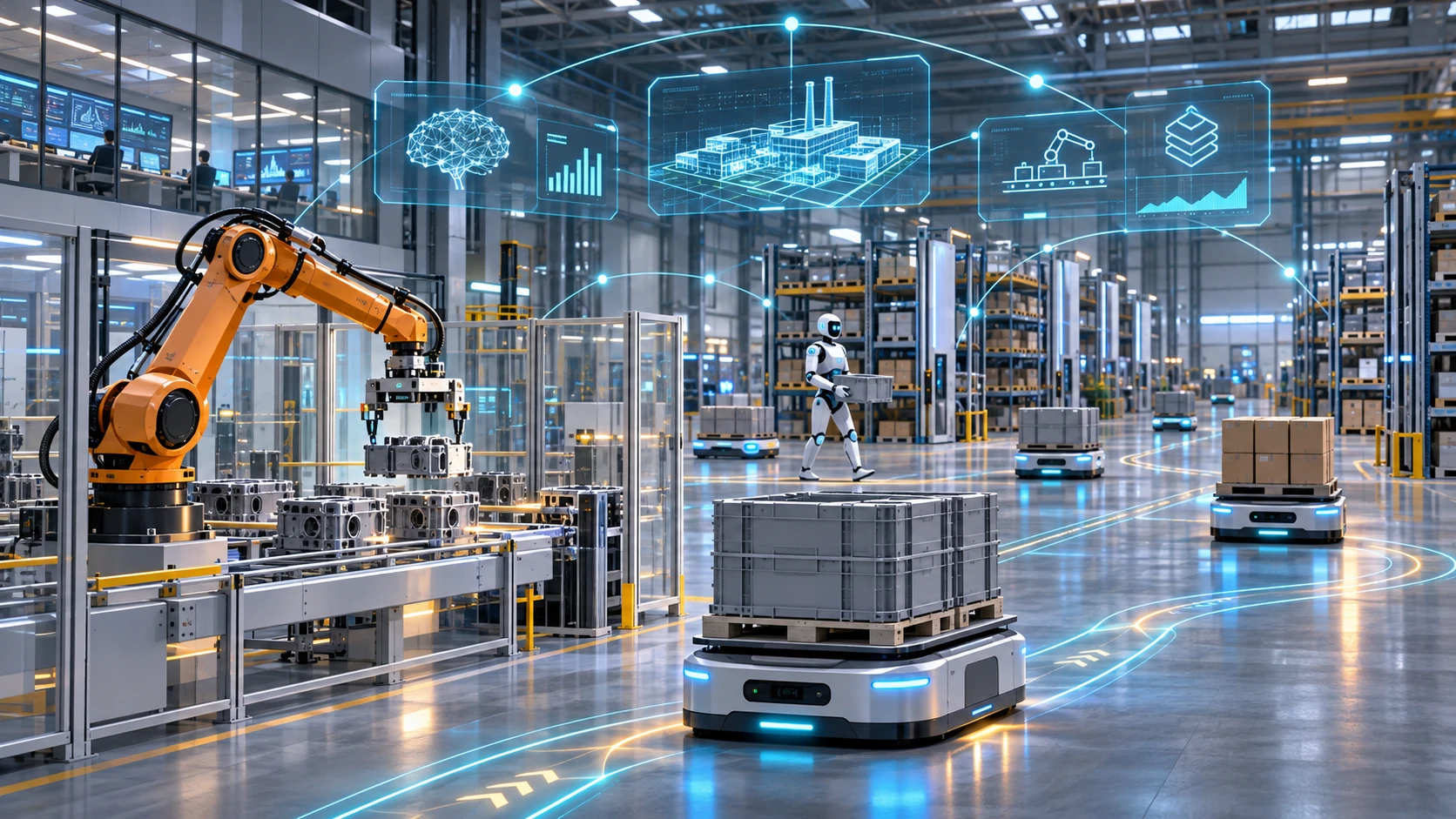
The robotics industry is sending a clear signal: Physical AI is moving beyond better robots toward complete industrial systems.
Several recent announcements illustrate the shift from different angles.
AWS launched a Physical AI Toolchain for developing, training, simulating and deploying intelligent machines. AGCO and Agility Robotics announced plans to pilot the Digit humanoid robot in manufacturing. Toyota Automated Logistics is combining major warehouse automation businesses under one global platform. ABB is making AI-powered robot training easier to deploy on factory floors. And Boston Dynamics continues to engineer Atlas for increasingly dexterous physical work.
Taken individually, these are technology announcements.
Taken together, they reveal something bigger:
The next phase of robotics will be about scaling complete autonomous operations, not individual machines.
1. Physical AI Is Building Its Own Infrastructure Stack
AWS launched its Physical AI Toolchain to address the infrastructure needed to move robotic intelligence from data collection and simulation into real-world deployment.
That matters because Physical AI is fundamentally different from AI that exists only in software.
An autonomous machine must connect intelligence to sensors, compute, movement, control systems and the physical environment.
As the industry matures, the conversation is therefore expanding from:
How intelligent is the robot?
to:
What infrastructure allows intelligent robots to operate reliably at scale?
That shift creates a much larger technology stack around robotics.
2. Humanoids Are Moving Toward Real Manufacturing Work
AGCO and Agility Robotics announced a commercial agreement to pilot Digit at AGCO’s Hesston, Kansas manufacturing facility beginning in 2027.
The initial applications are practical industrial tasks, including parts sorting, stacking and moving totes.
That distinction is important.
Physical AI becomes commercially meaningful when robots move beyond impressive demonstrations and begin performing repeatable work inside real production environments.
Agility is also preparing Digit for broader commercial availability in manufacturing, warehousing and distribution.
The industry’s challenge is increasingly becoming deployment at scale.
3. Warehouse Automation Is Consolidating Into Integrated Platforms
Toyota Industries has brought Bastian Solutions, Vanderlande’s warehousing business and viastore together under Toyota Automated Logistics.
The new organization describes itself as a global partner for integrated warehouse automation, combining systems, intelligent software and lifecycle services.
This reflects another important market shift.
Customers increasingly do not want isolated pieces of automation.
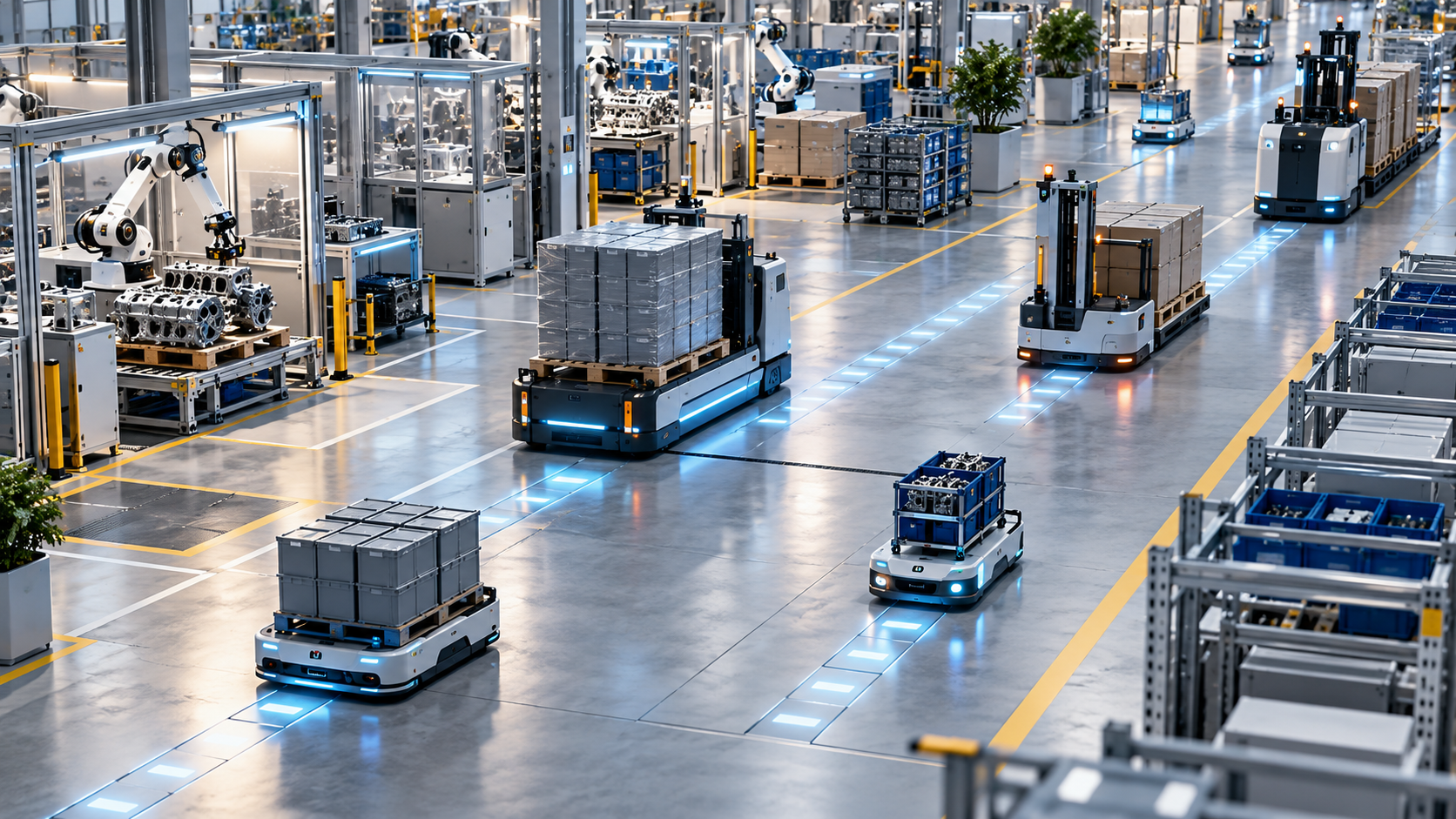
They want complete systems in which robotics, software, material handling and infrastructure work together.
For technology providers, this means integration and scalability become increasingly important competitive advantages.
4. AI Is Moving Closer to the Factory Floor
ABB Robotics recently expanded OmniCore EyeMotion with its AI Robot Trainer.
The system combines image acquisition, AI model training, deployment and continuous improvement in one industrial workflow, with the goal of making AI-powered robotic vision easier to deploy and optimize.
ABB says the solution can significantly reduce commissioning time and allow users without specialized AI expertise to train robotics applications.
This is important because industrial AI cannot remain dependent on small groups of specialists.
To scale, sophisticated technology has to become easier to configure, integrate and maintain.
5. Robots Are Becoming More Physically Capable
Boston Dynamics’ latest Atlas hand provides 13 degrees of freedom and was designed specifically for dexterous physical manipulation and high-fidelity simulation.
That may sound like a component-level development, but it represents a broader trend.
Robots are being engineered to perform increasingly complex physical tasks in environments originally designed for humans.
Greater intelligence is being paired with greater physical capability.
And greater capability means robots can become responsible for a larger share of industrial work.
The Common Thread: Scale
These developments involve different technologies, companies and applications.
But they all point in the same direction.
Robotic systems are becoming:
- more intelligent
- more capable
- easier to deploy
- more integrated
- more autonomous
- more central to industrial operations
This changes what the industry needs from supporting infrastructure.
When a facility operates a handful of robots, inefficiencies can often be absorbed.
When it operates dozens or hundreds of autonomous machines across multiple shifts, every infrastructure constraint is multiplied.
Connectivity matters.
Compute matters.
Orchestration matters.
Floor space matters.
And energy matters.
Energy Becomes an Infrastructure Question
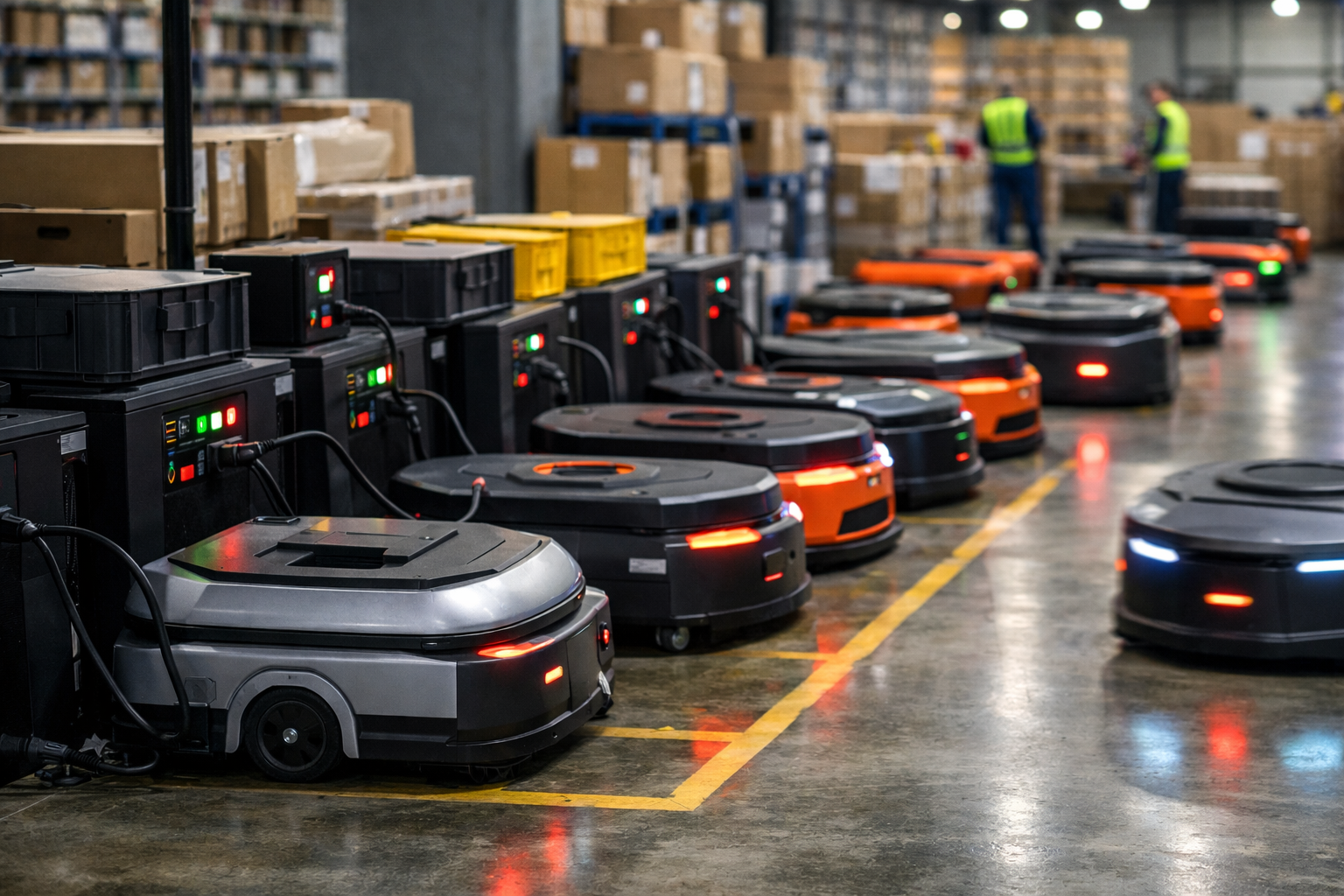
Mobile robots still need energy regardless of how intelligent their software becomes.
Traditionally, that means periodically interrupting productive work to charge.
For large fleets, those interruptions can affect utilization, throughput, fleet sizing and operational capacity.
This is why CaPow approaches energy differently.
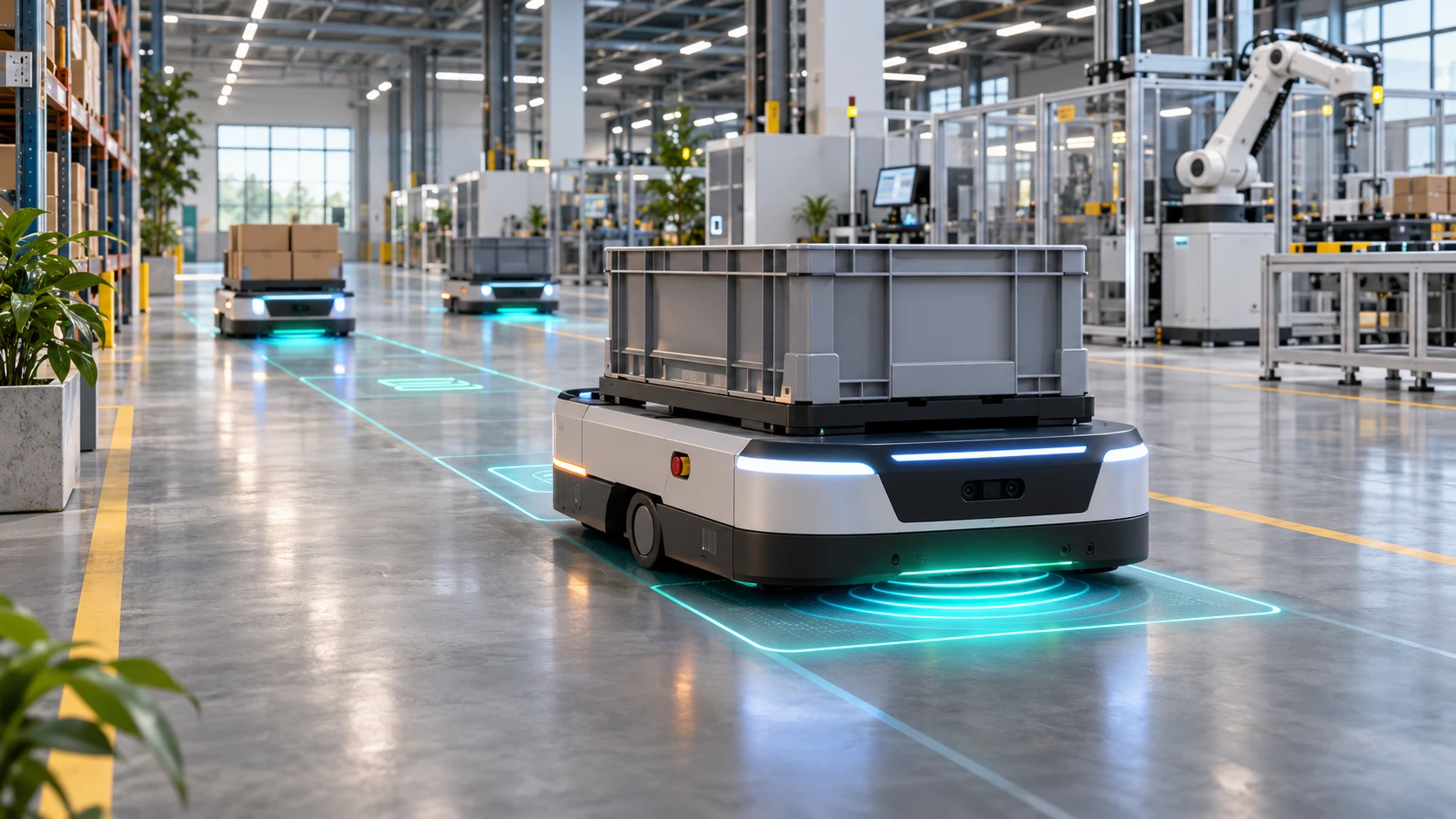
Genesis Power-in-Motion enables AMRs and AGVs to receive energy while moving or stopping naturally along their existing operational routes.
Instead of making the robot adapt its workflow around charging infrastructure, energy is positioned around the workflow.
The distinction becomes increasingly important as robotic operations scale.
The question is no longer simply:
How do we charge more robots?
It becomes:
How do we build an environment in which autonomous robots can remain productive continuously?
From Smarter Robots to Smarter Operations
The next major robotics breakthrough may not come from any single robot.
It may come from combining increasingly capable robots with infrastructure designed specifically for autonomous operations.
AWS is addressing the compute and development layer.
Robotics companies are advancing intelligence and physical capability.
Automation providers are integrating entire facilities.
CaPow is addressing the energy layer.
Together, these developments suggest that Physical AI is becoming less about individual machines and more about the architecture required to operate autonomous systems at industrial scale.
The companies that solve those infrastructure layers may become just as important as the companies building the robots themselves.
References:
AWS – Introducing AWS Physical AI Toolchain
AGCO & Agility Robotics – Humanoid Robot Pilot
Toyota Automated Logistics – Global Warehouse Automation Business
ABB Robotics – AI Robot Trainer and OmniCore EyeMotion
Boston Dynamics – Robot Hands for Modern AI and Real Work