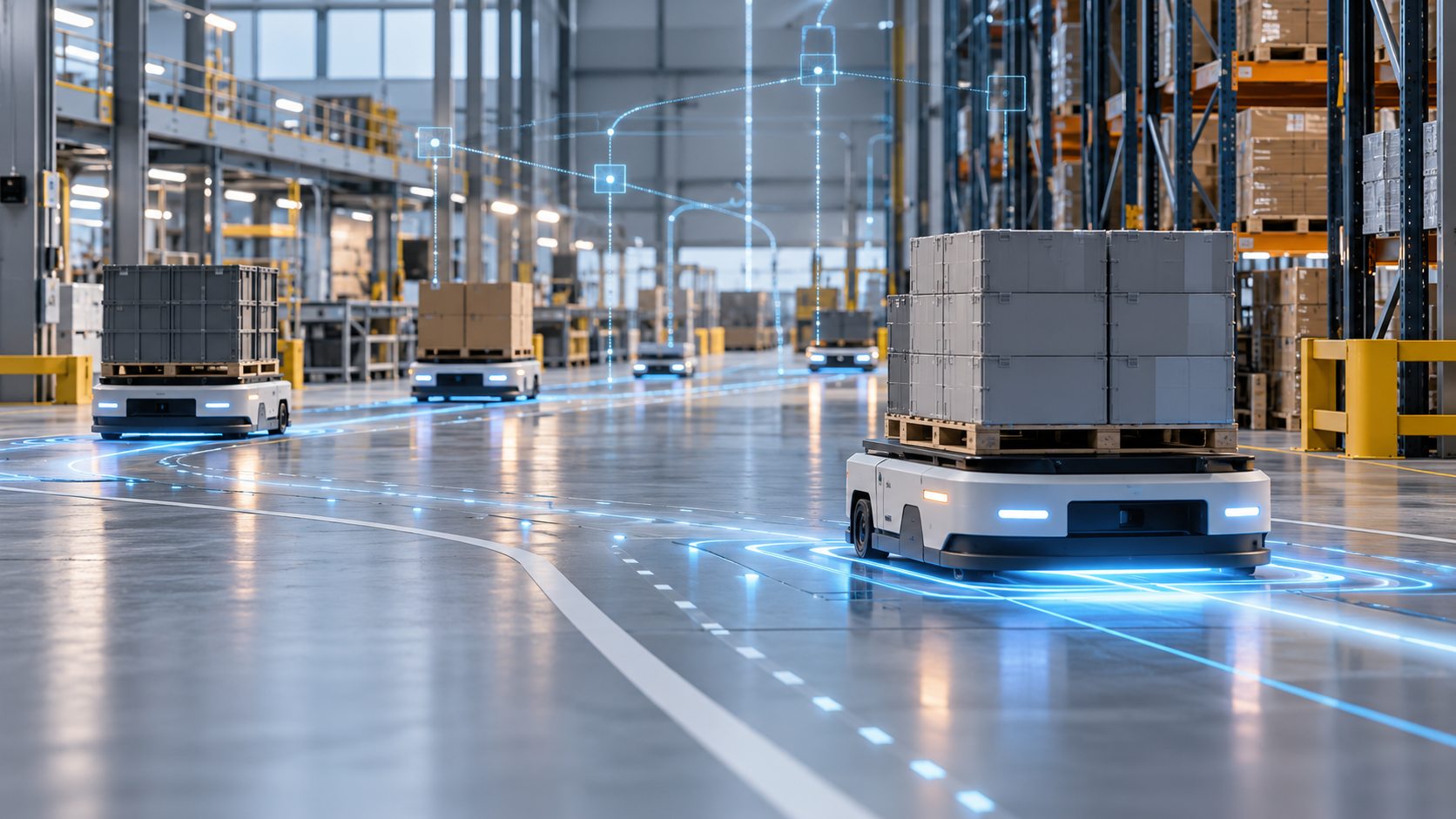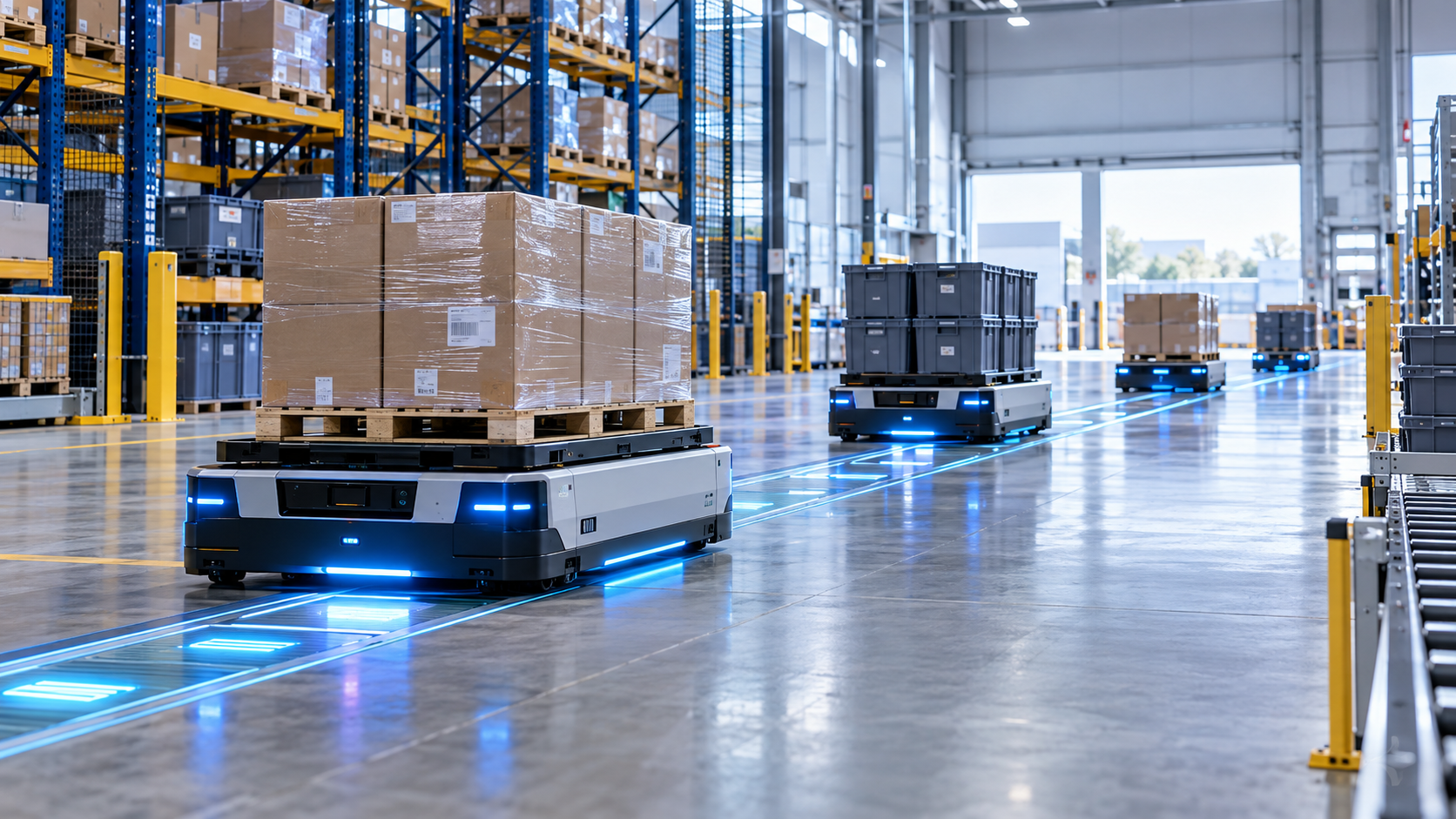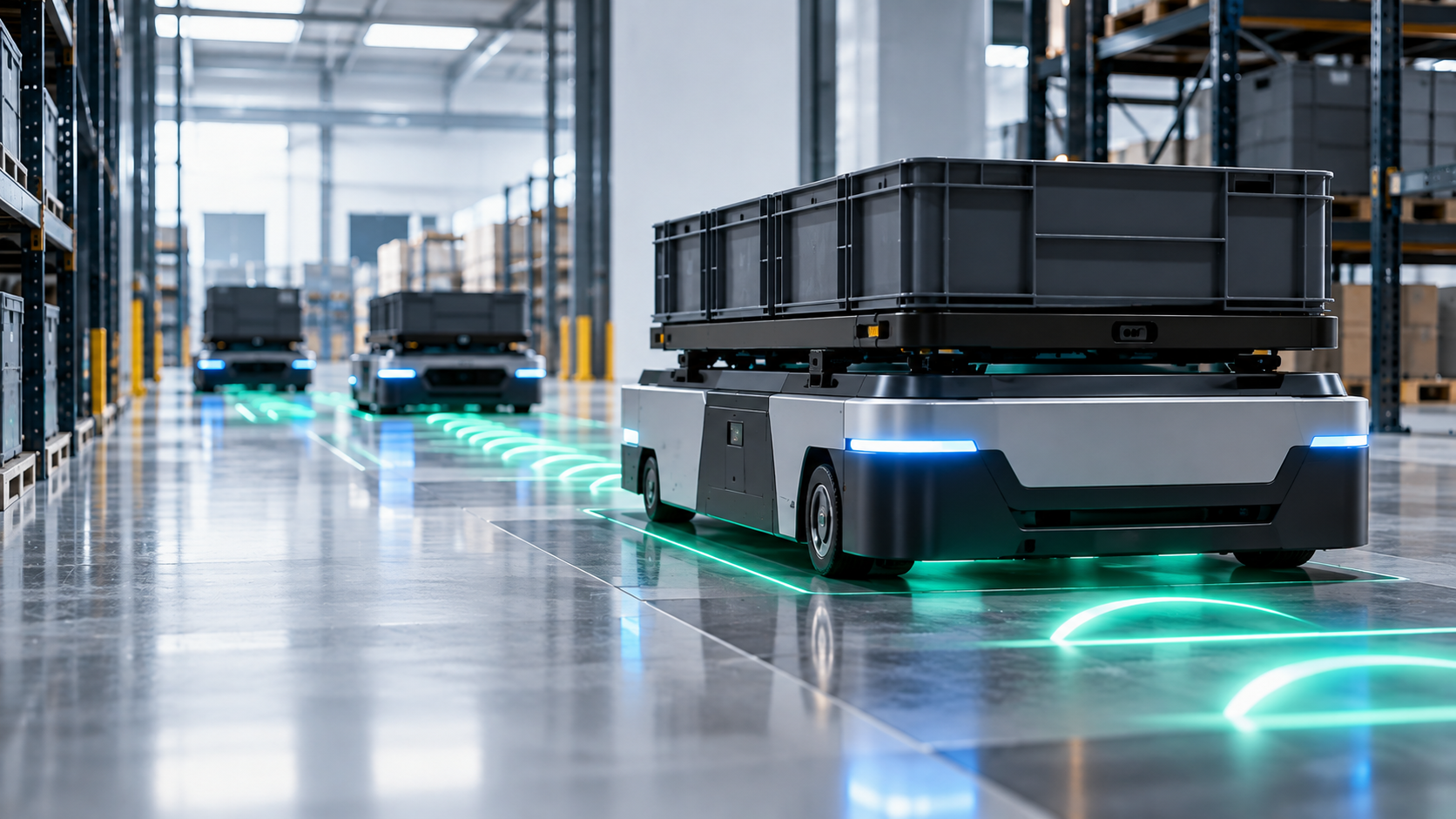
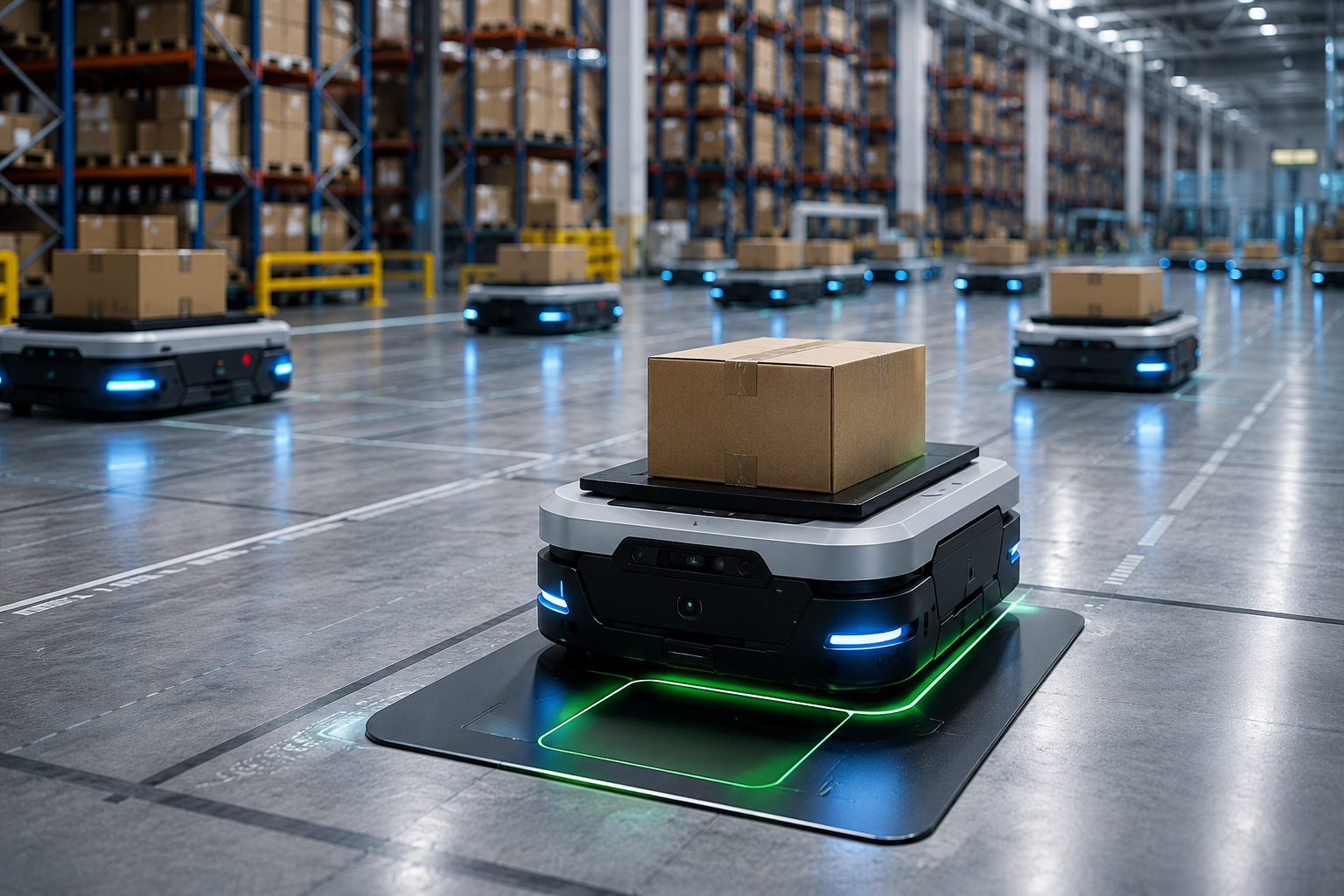
As AI transforms warehouse operations, executives are discovering that intelligence alone cannot overcome infrastructure constraints.
By the end of this decade, the average automated warehouse will likely look dramatically different from today’s facilities. Robots will make more autonomous decisions, AI will orchestrate thousands of simultaneous tasks, and digital twins will continuously optimize operations before changes are implemented on the warehouse floor.
Most discussions about this transformation focus on software.
That’s understandable. Artificial intelligence has become the headline technology across logistics, manufacturing, and supply chain operations. Machine learning is improving inventory management, predictive maintenance, route optimization, and fleet orchestration at an unprecedented pace. According to McKinsey, AI-enabled automation has become one of the primary drivers of productivity improvements across modern warehouses.
But while software continues to evolve rapidly, many physical assumptions about warehouse design have remained largely unchanged.
One of those assumptions deserves far more attention than it receives.
Energy.
Not energy efficiency.
Not electricity costs.
Energy architecture.
Automation has matured. Infrastructure has not.
Warehouse automation has evolved in distinct waves.
The first focused on replacing repetitive manual tasks.
The second introduced increasingly capable autonomous mobile robots (AMRs), automated guided vehicles (AGVs), and sophisticated warehouse execution software.
Today’s wave is driven by AI. Robots perceive more, learn faster, and make increasingly autonomous operational decisions.
Meanwhile, global robot adoption continues to accelerate. The International Federation of Robotics reports that annual industrial robot installations remain near record levels as manufacturers and logistics operators continue investing in automation worldwide.
Yet despite this technological progress, many warehouses still rely on an energy model that has changed surprisingly little:
Robots work.
Robots stop.
Robots recharge.
Robots return to work.
That model worked well when fleets consisted of a handful of vehicles.
Its limitations become more apparent as facilities scale toward hundreds of autonomous robots operating simultaneously.
The next operational constraint isn’t computing power
History shows that every technology revolution eventually shifts from solving capability problems to solving infrastructure problems.
The internet didn’t stall because computers stopped getting faster.
It demanded better networks.
Electric vehicles didn’t expose weaknesses in battery chemistry alone.
They highlighted charging infrastructure.
Warehouse automation appears to be approaching a similar transition.
Today’s robot fleets rarely struggle with navigation.
Instead, they increasingly compete for shared operational resources:
- Traffic corridors
- Pick stations
- Elevators
- Human interaction zones
- Charging infrastructure
These are no longer robot problems.
They are system design problems.
MIT researchers recently demonstrated AI systems capable of reducing warehouse traffic congestion by coordinating robot movement more intelligently. Their work reflects a broader trend: software is increasingly being used to optimize around physical constraints rather than eliminate them.
But optimization has limits.
Software can decide which robot should wait.
It cannot remove the need for waiting.
Every interruption carries a hidden operational cost
Most discussions about charging focus on batteries.
Battery size.
Battery chemistry.
Charging speed.
These are important engineering topics.
From an operations perspective, however, the larger question is different.
What matters most is productive availability.
A robot creates value only while performing useful work.
Whenever that robot is stationary for maintenance, charging, or waiting for infrastructure access, its contribution to throughput temporarily disappears.
Viewed individually, those interruptions appear insignificant.
Viewed across hundreds of robots operating thousands of hours each week, they become a system-level variable affecting capacity planning, fleet sizing, and capital allocation.
Researchers studying persistent autonomous robot fleets have shown that scheduling energy itself becomes an optimization challenge as deployments scale, requiring sophisticated algorithms simply to coordinate charging behavior efficiently.
In other words, energy is no longer just an engineering concern.
It is becoming an operational planning discipline.
Why energy architecture matters
Every warehouse project begins with architecture.
Storage architecture.
Material flow architecture.
Software architecture.
Safety architecture.
Energy, however, is often treated as supporting infrastructure rather than a strategic design variable.
That assumption deserves reconsideration.
Imagine designing an airport without considering fuel logistics until after the runways were completed.
Or designing a data center before deciding how electricity would be distributed.
Neither would happen.
Yet many automation projects still optimize robot specifications long before evaluating how energy will move through the system over the next decade.
As fleets grow larger, energy increasingly influences questions such as:
- How many robots are actually required?
- How much floor space should be allocated to charging?
- How should traffic patterns be designed?
- What battery capacity is economically optimal?
- Which operational interruptions are unavoidable and which are architectural choices?
These are strategic questions rather than component-level decisions.
Thinking beyond batteries
Battery technology will continue improving.
Charging systems will become faster.
Fleet management software will become smarter.
All of those developments are valuable.
But they address only part of the equation.
The broader opportunity lies in reconsidering how energy is delivered throughout an automated facility.
Across the industry, companies are exploring multiple approaches, including faster charging, opportunity charging, battery swapping, and in-motion energy delivery. Each approach reflects the same underlying realization: reducing operational interruptions can improve overall system performance, even when individual robots remain largely unchanged.
The important shift is conceptual.
Energy is moving from being a maintenance event toward becoming part of continuous operations.
A new design philosophy
As AI continues making robots smarter, warehouse competitiveness will increasingly depend on the quality of the surrounding infrastructure.
The companies achieving the highest returns from automation may not simply own the most advanced robots.
They may own the best-designed systems.
That includes software.
Workflow.
Material flow.
And increasingly, energy architecture.
Technology revolutions rarely end where they begin.
Artificial intelligence has transformed what warehouse robots can do.
The next challenge is ensuring those robots spend as much time as possible doing it.
References
- McKinsey & Company. Getting warehouse automation right.
- International Federation of Robotics. World Robotics Report.
- MIT News. AI system keeps warehouse robot traffic running smoothly.
- IEEE and arXiv research on persistent robot charging optimization.
- MHI Annual Industry Report on warehouse automation trends.