Physical AI is beginning to move from research labs into real-world operations.
Tesla is building the manufacturing infrastructure for large-scale Optimus production. Autonomous construction company Bedrock Robotics has moved self-driving excavators onto active commercial job sites. ANYbotics is shipping autonomous inspection robots into oil, gas and chemical environments. At the same time, robotics AI companies are attracting substantial investment to build models capable of controlling increasingly capable physical machines.
The direction is clear: robots are becoming more autonomous, more capable and more operationally important.
But scaling Physical AI requires more than better intelligence.
Once robots move from demonstrations and pilots into daily operations, the infrastructure supporting them becomes part of the performance equation.
For mobile robotic fleets in particular, one of those infrastructure layers is energy.
What Is Physical AI Infrastructure?
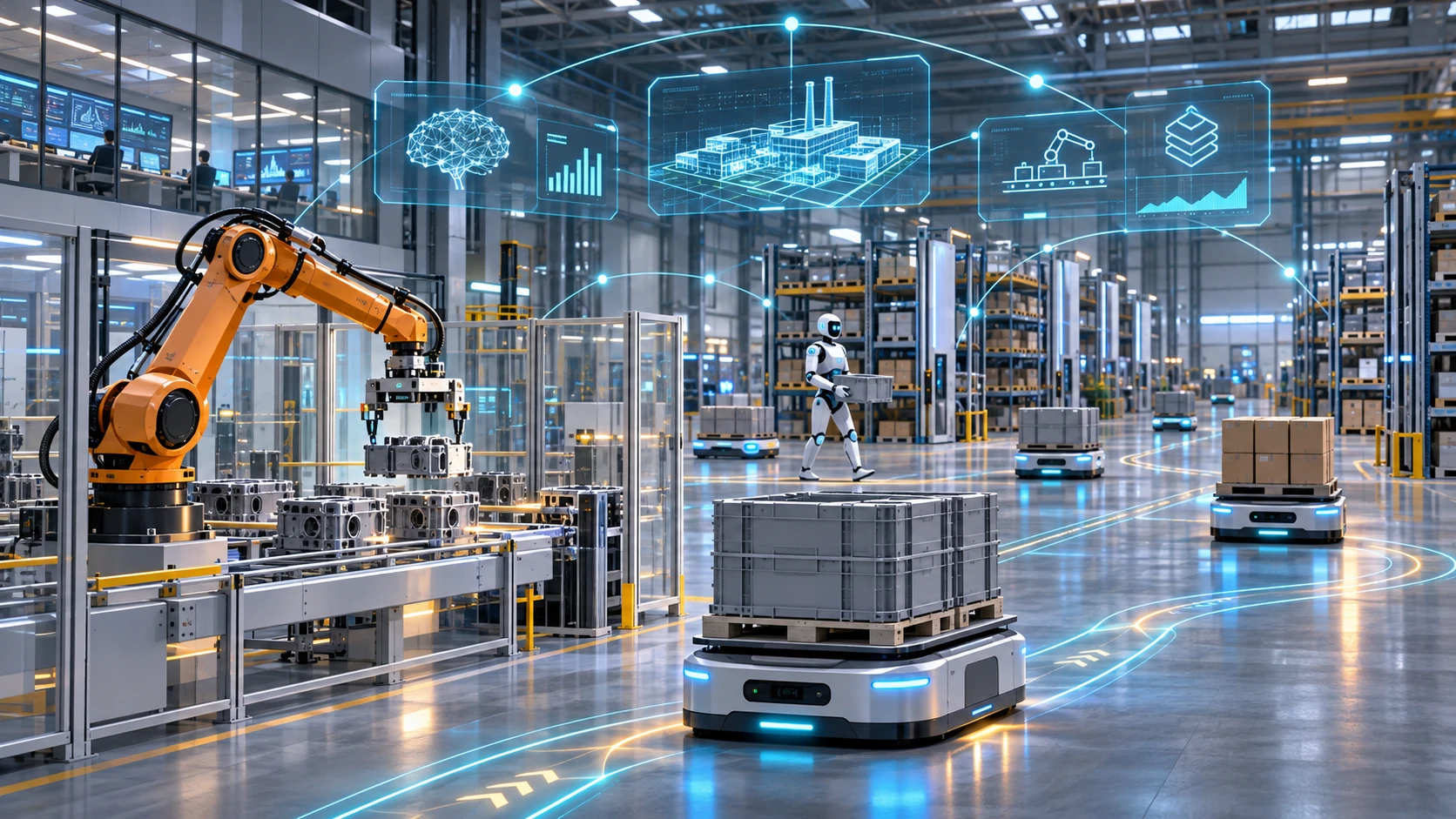
Physical AI infrastructure is the physical and digital infrastructure required for autonomous machines to operate reliably in real-world environments.
It can include:
AI determines what a robot can understand and decide.
Infrastructure helps determine how reliably and continuously that robot can operate.
That distinction becomes increasingly important as robots move from experimental deployments to systems that factories, warehouses and industrial facilities depend on every day.
Physical AI Is Moving Closer to Industrial Scale
Several recent developments illustrate how quickly the robotics market is advancing.
Tesla Is Building Manufacturing Infrastructure for Optimus
Tesla has been building its manufacturing capability for Optimus, its general-purpose autonomous humanoid robot.
In its Q3 2026 filing, Tesla stated that it was making preparations and investments for large-scale Optimus production. Tesla has also described a high-volume Optimus production line in Fremont as part of its manufacturing backbone for future growth.
This matters beyond humanoid robotics itself.
It signals a broader transition from developing robotic capability to considering how robots will actually be produced and deployed at scale.
Autonomous Heavy Equipment Is Already Performing Paid Work
Bedrock Robotics provides another example.
Rather than manufacturing new excavators, Bedrock develops autonomous technology that can be retrofitted onto existing heavy equipment.
In 2026, the company moved autonomous excavators beyond tests and pilots and into paid work on active construction sites. Shortly afterward, it raised a $600 million Series C at a reported $4.1 billion valuation.
The model is significant because it demonstrates another direction robotics can take: adding an enabling technology layer to equipment customers already operate rather than replacing the entire machine.
Autonomous Robots Are Entering More Demanding Industrial Environments
ANYbotics announced in October 2026 that it had begun customer deliveries of ANYmal X, its autonomous legged inspection robot designed for explosive industrial environments.
Customers include Equinor and DSM-Firmenich. The system is designed for autonomous inspections in oil, gas and chemical facilities and follows years of testing with industrial operators.
This is another important shift.
The value proposition of industrial robotics is increasingly moving beyond whether a robot can perform a task.
The question becomes whether it can perform that task reliably, repeatedly and inside the operating environment where the work actually happens.
As Robots Become More Autonomous, Why Does Energy Matter More?
A robot can have advanced perception, sophisticated AI and highly optimized fleet software.
But when it leaves productive operation specifically to recharge, it is unavailable for its primary task.
This is especially relevant to autonomous mobile robots and automated guided vehicles operating in high-utilization environments.
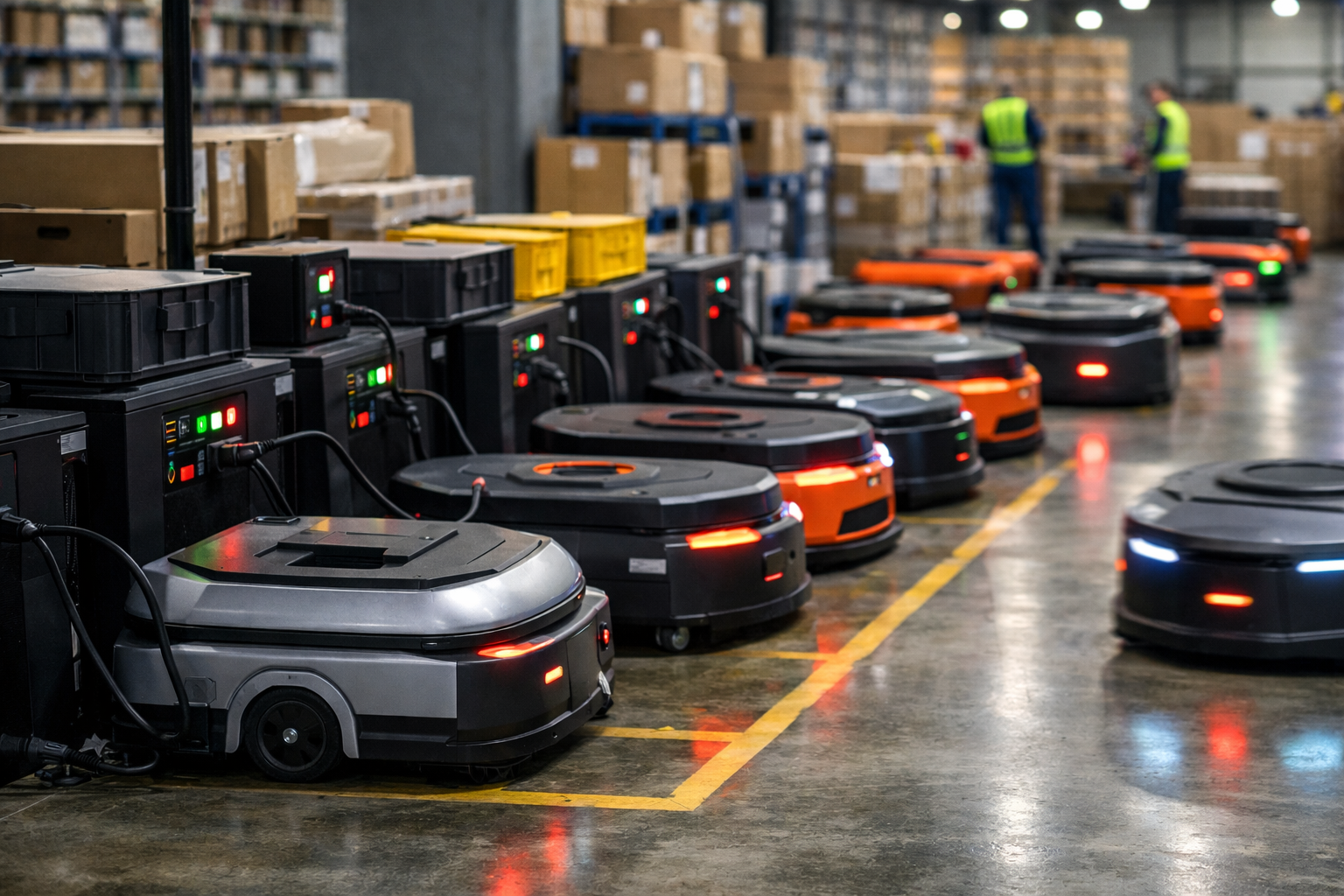
Traditional AMR and AGV charging can require a robot to:
- interrupt productive operation,
- travel to a charging location,
- dock or align,
- remain there while receiving energy,
- and return to its workflow.
The battery problem may be solved.
The productivity interruption remains.
At small scale, this may be manageable.
At fleet scale, repeated charging events can influence robot availability, fleet utilization, traffic, charging infrastructure requirements and potentially the number of robots required to maintain target throughput.
That is why robot energy infrastructure is becoming an operational architecture question, not simply a battery question.
CaPow has explored this distinction in its analysis of AGV and AMR charging, where charging is framed primarily as a fleet productivity issue rather than an isolated energy-management task.
What Is Power-in-Motion?
Power-in-Motion is an energy-delivery architecture that enables compatible mobile robots to receive power during their normal operating cycle rather than relying exclusively on dedicated charging sessions.
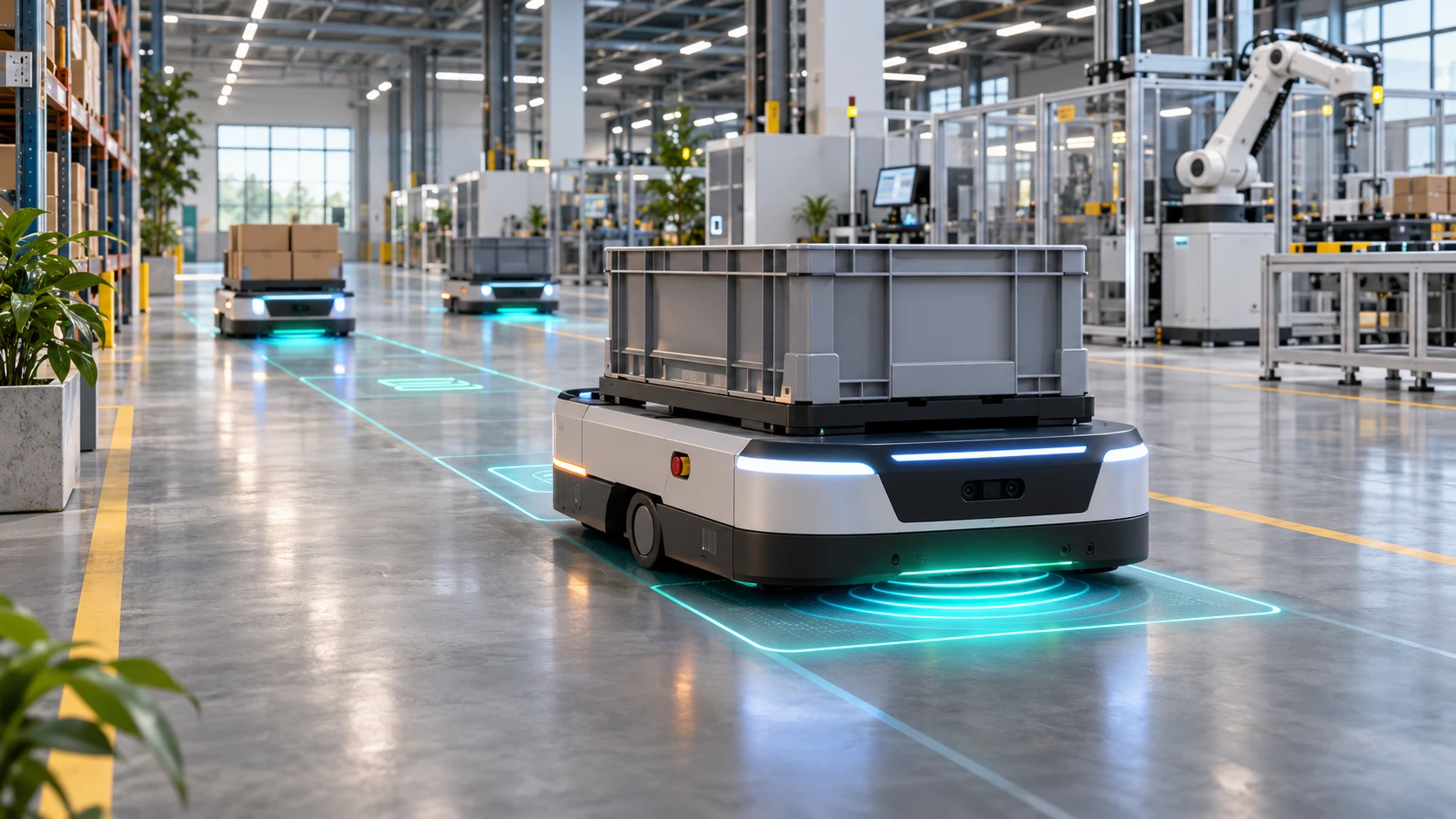
CaPow’s Genesis Power-in-Motion platform uses strategically positioned transmitters along existing robot routes together with receiver hardware on the robot.
The objective is not to cover an entire facility with energy infrastructure.
Power zones can be positioned where they make operational sense, based on factors such as robot traffic, routes, loading and unloading points, dwell locations and energy requirements.
The operating model changes from:
Work → Leave workflow → Charge → Return
to:
Work → Receive energy during normal operation → Continue working
That difference becomes more valuable as robotic systems move toward higher utilization and increasing autonomy.
Why Is This Different From Faster Robot Charging?
Fast charging and Power-in-Motion address different problems.
Fast charging asks:
How can we shorten the charging interruption?
Power-in-Motion asks:
Can energy delivery become part of the operating workflow instead?
The difference is important.
A faster charging station can reduce the amount of time a robot is unavailable.
An energy architecture designed around the robot’s existing route can reduce the need to create a separate charging event in the first place.
For operators, the relevant metric therefore becomes less about charger performance in isolation and more about productive robot availability.
From Robot Charging Equipment to Robot Energy Infrastructure
This shift mirrors something happening elsewhere in robotics.
Bedrock does not need to manufacture an excavator to add autonomy to it. Its technology becomes an enabling layer on existing equipment.
Physical Intelligence is pursuing another form of abstraction: AI models intended to work across multiple robotic systems rather than intelligence built for only one machine. The company was reportedly in discussions in October 2026 to raise at least $1 billion at a valuation of roughly $20 billion, illustrating investor interest in technologies that could become foundational layers within the robotics ecosystem. The financing was still under discussion at the time of reporting and had not been completed.
Energy infrastructure can be viewed through a similar lens.
For industrial mobile robots, the long-term opportunity is not necessarily another isolated charger for every robot type.
It is infrastructure that can support robotic operations across fleets and platforms.
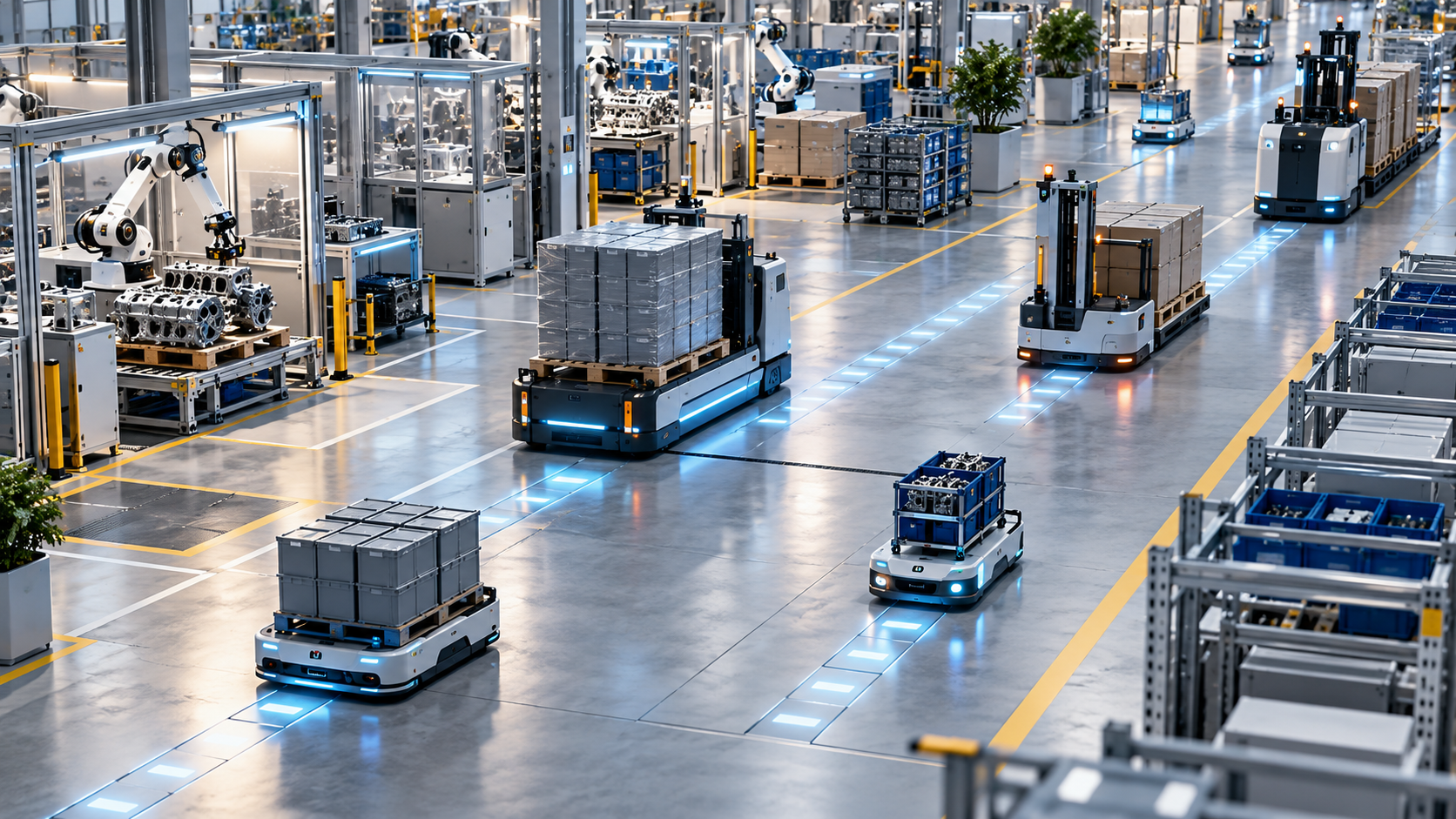
CaPow demonstrated this principle at MODEX 2026 with different robot types operating on the same Genesis Power-in-Motion platform.
Does Every Physical AI Robot Need Power-in-Motion?
No.
Physical AI includes many robot architectures, environments and use cases, and their energy requirements differ.
Power-in-Motion is particularly relevant to mobile robotic systems with repeatable routes, high utilization and charging-related operational constraints, including AMRs and AGVs in manufacturing, warehousing and logistics environments.
The broader Physical AI trend matters because it changes the expectations placed on those robotic fleets.
As robots become capable of performing more tasks with less intervention, infrastructure that forces them to stop performing those tasks becomes more visible.
What Will Determine Whether Physical AI Scales?
Artificial intelligence will be one part of the answer.
But industrial scale also requires systems that can operate reliably in the physical world.
That means robotics companies and operators will increasingly have to optimize not only:
What can the robot do?
but also:
- How consistently can it work?
- How much of the fleet is available?
- What infrastructure does it require?
- How easily can that infrastructure scale?
- How much non-productive time is built into the operating model?
For AMRs and AGVs, energy directly affects several of those questions.
The Next Phase of Robotics Is About Operational Autonomy
The industry has spent years making robots smarter.
That work is accelerating.
Meta is exploring humanoid robotics as a physical extension of AI systems. Tesla is building manufacturing infrastructure for Optimus. Autonomous construction equipment is already performing commercial work. Industrial inspection robots are entering environments previously inaccessible to autonomous machines.
The next challenge is making those systems economically and operationally scalable.
For mobile robotic fleets, that means looking beyond intelligence alone.
A robot is not fully operationally autonomous if its workflow still has to be designed around stopping for energy.
At CaPow, that is the problem behind Power-in-Motion.
Not simply how to charge a robot.
But how to make energy part of the infrastructure that keeps robotic operations moving.
References
Tesla, Q3 2026 Form 10-Q – Tesla discusses its preparations and investment for large-scale Optimus production.
Tesla Q3 2026 filing
Tesla, 2026 shareholder materials – Tesla describes its high-volume Optimus production line in Fremont as part of its manufacturing expansion.
Tesla shareholder materials
TechCrunch, October 26, 2026 – Bedrock Robotics raises $600 million after moving autonomous excavators onto commercial jobsites.
Bedrock Robotics funding and deployments
ANYbotics, October 27, 2026 – Customer deliveries begin for ANYmal X, including deployments with Equinor and DSM-Firmenich.
ANYbotics ANYmal X announcement
Bloomberg, October 27, 2026 – Physical Intelligence in talks to raise at least $1 billion at an approximately $20 billion valuation.
Physical Intelligence funding report
The Information, October 31, 2026 – Meta and Fourier develop the Max humanoid prototype as Meta expands its robotics research.
Meta and Fourier humanoid report
CaPow – AGV and AMR Charging Is Really a Productivity Problem – Analysis of charging architecture, productive availability and Power-in-Motion.
CaPow: AGV and AMR charging productivity
CaPow – Robots Are Getting More Efficient. Why AGV and AMR Charging Infrastructure Needs to Catch Up – Explanation of Genesis Power-in-Motion infrastructure and strategic transmitter placement.
CaPow: AMR and AGV charging infrastructure
CaPow – AI Is Making Robots Smarter. Now Their Energy Infrastructure Needs to Catch Up – CaPow’s explanation of Power-in-Motion, Genesis and multi-platform operation.
CaPow: AI and robot energy infrastructure