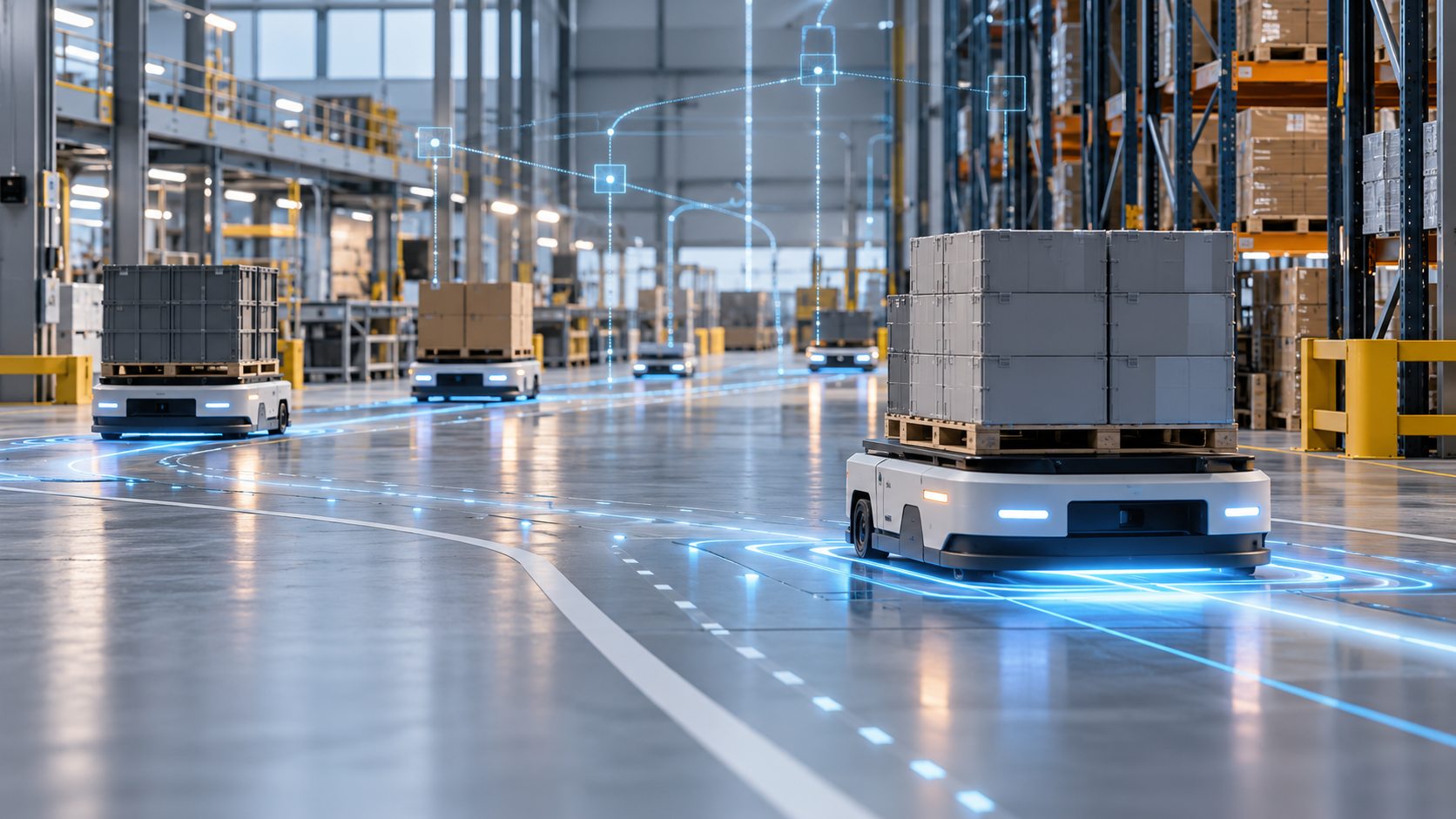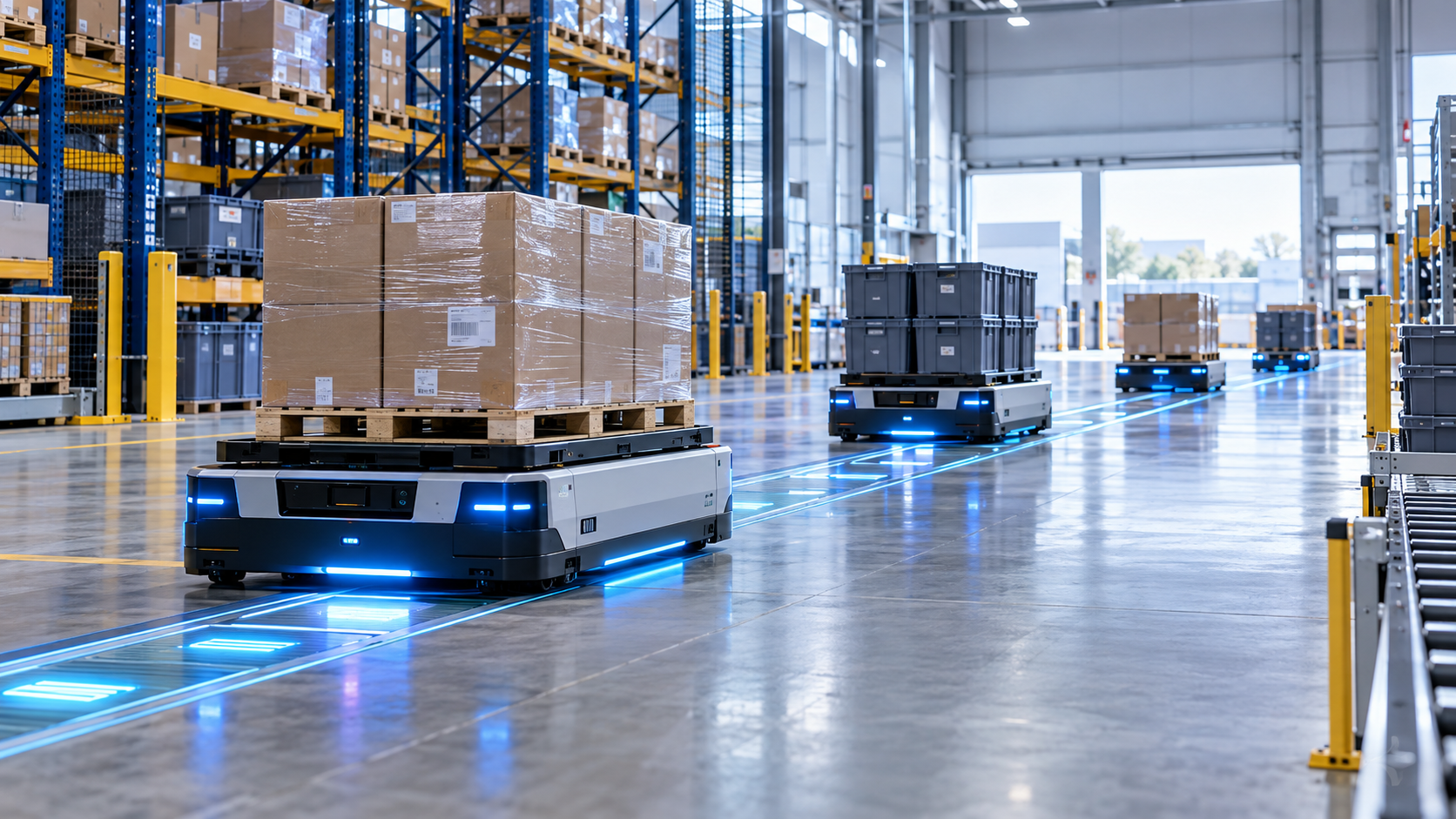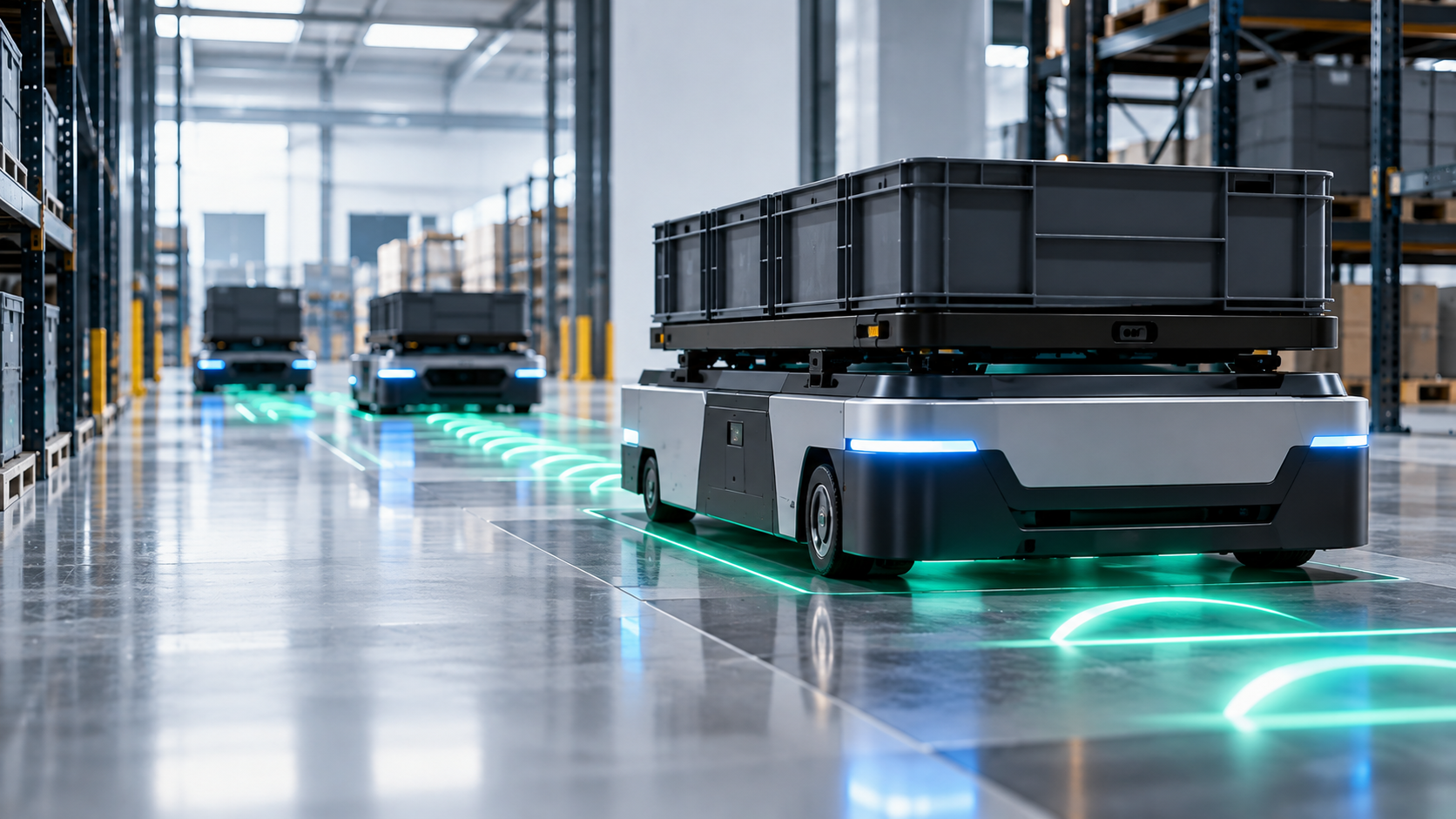
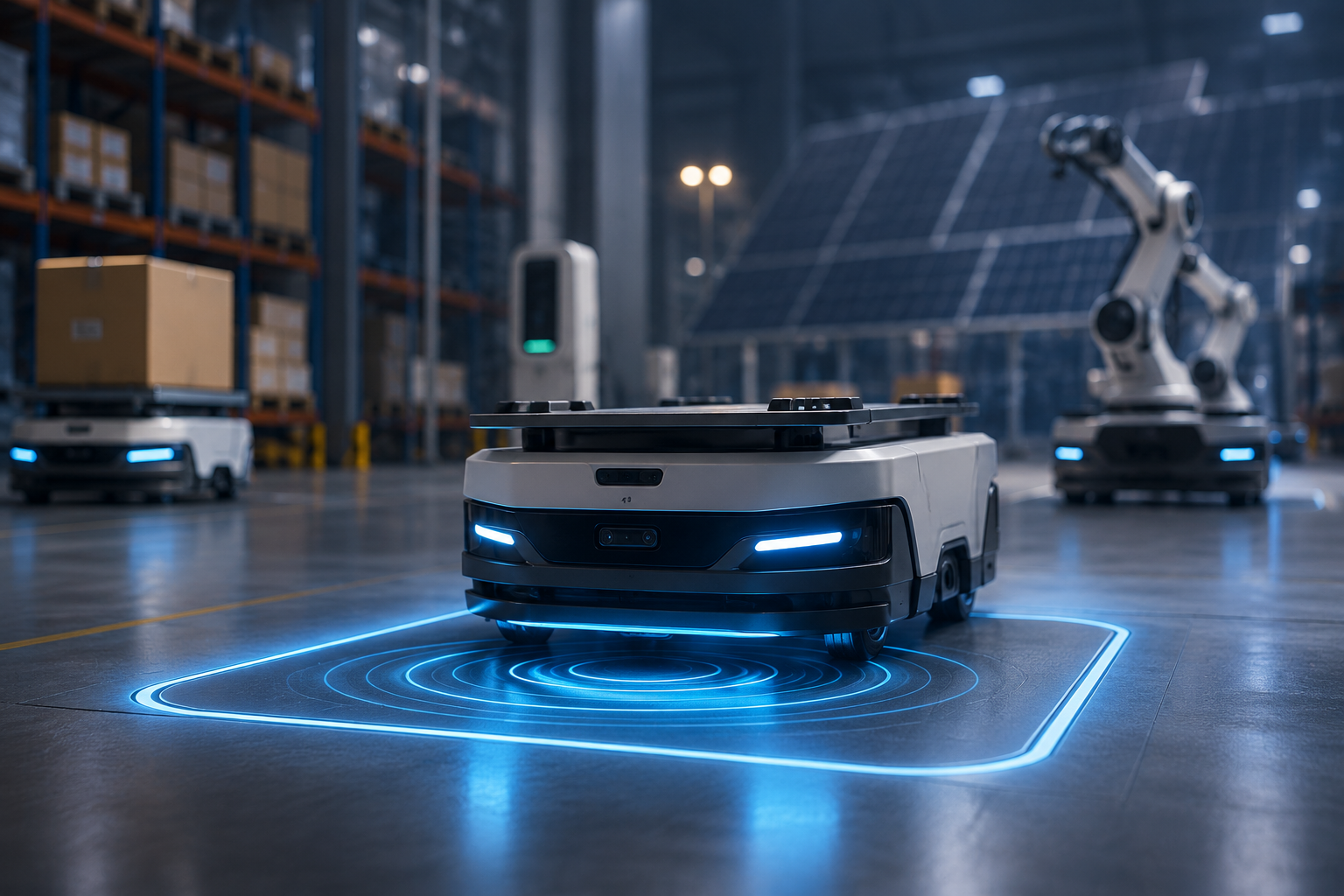
The global deployment of mobile robots across logistics, defense, agriculture, and manufacturing has transformed industrial throughput. However, as autonomous systems evolve to handle increasingly complex computational workloads – including real-time edge computing and multi-sensor spatial awareness – the underlying power infrastructure faces critical physical limitations. Traditional power strategies often compromise a robot’s operational autonomy, creating a stark bottleneck between software intelligence and physical endurance.
Achieving true machine autonomy requires a fundamental shift from simply storing electricity to implementing intelligent, continuous energy integration. This 2026 perspective reviews the core energy options available for mobile robots, examines emerging breakthroughs in wireless power transfer, and provides engineering teams with an actionable framework to optimize fleet uptime.
What Are the Current Energy Solutions and Their Boundaries?
Designing autonomous mobile robots (AMRs) or unmanned ground vehicles (UGVs) requires balancing energy density against physical constraints like payload, cycle life, and thermal output. Three primary technologies dominate the modern industrial landscape, each with specific design trade-offs.
1. Advanced Battery Technologies
Lithium-ion (Li-ion) and lithium iron phosphate (LiFePO4) chemistries remain the baseline for industrial automation due to their reliable power delivery and established supply chains. While LiFePO4 variants offer improved thermal stability and a cycle life exceeding 3,000 charges, their lower energy density compared to traditional Li-ion alternatives demands a strict trade-off: carrying more weight or accepting shorter operational cycles.
The primary drawback of standard battery power is the dependency on stationary charging docks. A systematic review published in Applied Sciences points out that battery-powered mobile robots typically lose 15% to 25% of their active operational window solely to stationary charging cycles and transit to charging docks. This recurring downtime limits total daily utility and forces fleet managers to purchase extra backup robots to maintain constant operational coverage.
2. Hydrogen Fuel Cells
Proton-exchange membrane (PEM) hydrogen fuel cells provide a compelling alternative for large-scale outdoor applications, such as agricultural automation and heavy logistics. By converting chemical energy directly into electrical energy, these systems deliver an energy density significantly higher than standard chemical batteries.
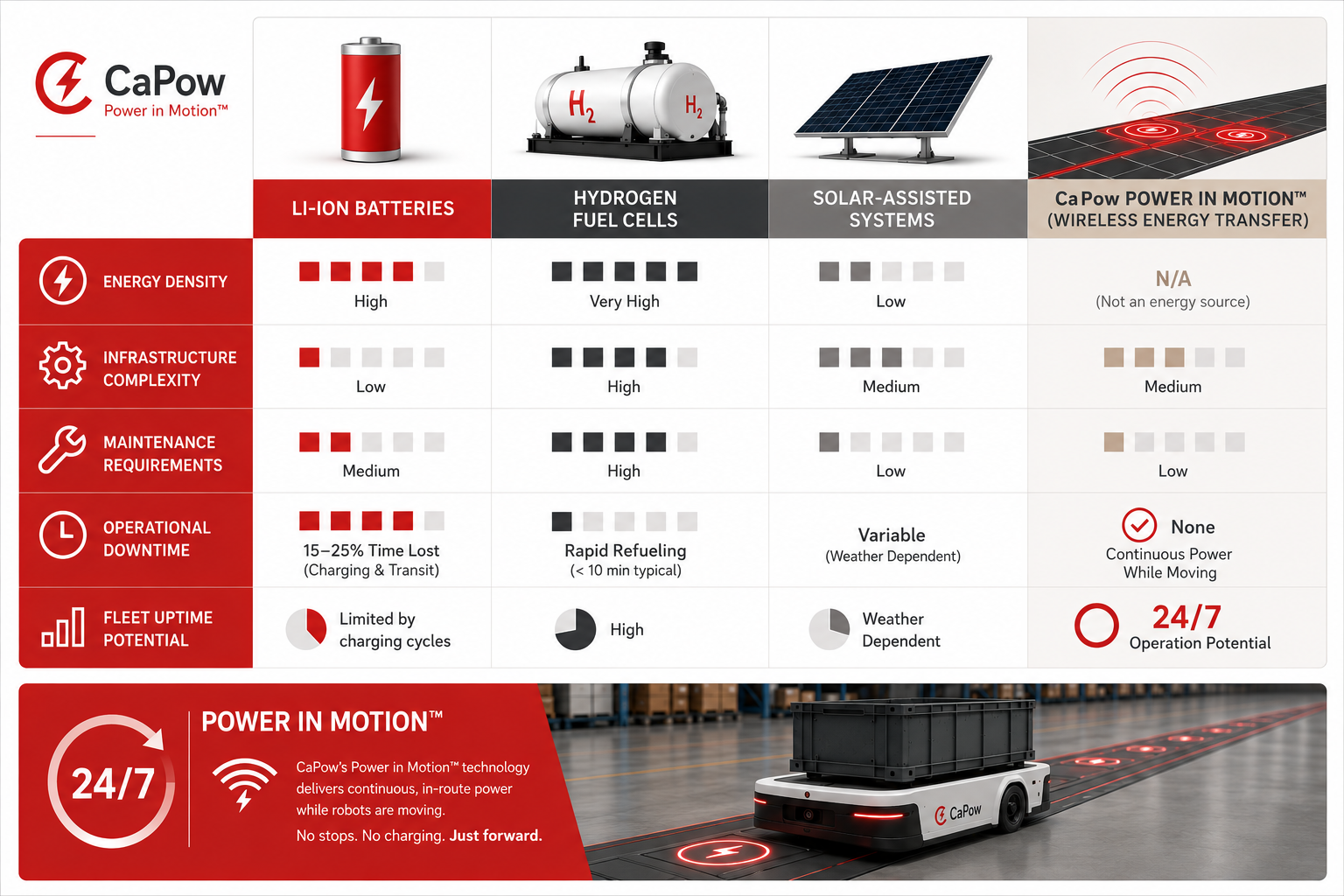
While hydrogen systems allow for rapid refueling – often taking under ten minutes – they introduce substantial infrastructure costs and complex thermal management requirements. Additionally, their lower peak power responsiveness means developers usually must build a hybrid setup, pairing the fuel cell with a smaller lithium battery to handle sudden power surges during acceleration or heavy lifting.
3. Solar-Assisted Systems
Photovoltaic arrays offer localized energy harvesting for long-endurance environmental monitoring and agricultural robots. Modern multi-junction solar cells achieve conversion efficiencies near 30%, extending outdoor runtimes under optimal conditions.
However, solar energy remains fundamentally limited by environmental variables like weather, dust accumulation, and geographic latitude. Because solar panels cannot act as a primary, high-draw power source for heavy industrial automation, they are best used as a supplemental charging option to extend secondary operational systems.
How Are Emerging Technologies Overcoming Traditional Power Limits?
To eliminate the costly downtime associated with traditional plug-in docks, the robotics industry is moving toward continuous, dynamic charging models. The most significant shift is occurring in wireless energy transfer (WET) and advanced solid-state battery integrations.
1. Dynamic Wireless Energy Transfer
Modern wireless energy systems use capacitive in-motion energy transfer to transfer industrial power levels across air gaps, removing the need for physical contact pads that wear down or require precise mechanical docking.
Rather than stopping at a designated charging bay, robots can recharge dynamically as they pass over or pause at high-traffic zones, such as loading areas or scanning checkpoints. This process, often called “in-route charging,” lets robots replenish their power during brief, normal stops in their daily workflow, effectively enabling continuous 24/7 operation.
2. High-Efficiency Resonant Coupling
Unlike older inductive charging pads that require perfect alignment within millimeters, 2026 resonant architectures handle spatial misalignments of several inches along the X, Y, and Z axes without major drops in efficiency. Industrial systems regularly achieve end-to-end power transfer efficiencies between 90% and 94%. By wiping out the physical wear, arcing risks, and debris interference common to exposed copper contacts, wireless power delivery lowers long-term maintenance costs and boosts overall system safety in hazardous or cleanroom environments.
Case Studies: Real-World Applications and Innovations
Transitioning from theoretical energy models to actual factory floor deployment demonstrates how advanced power management directly impacts corporate productivity.
Case Study 1: Transforming Fulfillment Logistics
A major automated distribution facility faced severe bottlenecks because its 50-robot fleet spent roughly 20% of each shift traveling to and sitting at stationary charging docks. To maintain required throughput, the facility had to buy 10 extra robots just to cover for units offline during charging.
By installing wireless charging pads directly into the standard picking lanes, the facility transitioned to a continuous opportunity charging model. Robots received quick power boosts during their brief, routine stops to pick and drop goods. This upgrade completely eliminated dedicated charging travel time, extending the fleet’s average daily active window from 18 hours to over 23.5 hours and saving the company significant capital expenditure on unneeded backup hardware.
Case Study 2: Heavy-Duty Manufacturing Deployments
In a heavy automotive assembly plant, heavy-payload AGVs transport chassis components across long distances. Traditional battery swap programs required dedicated maintenance personnel and large, specialized storage areas for heavy spare batteries.
The assembly plant replaced these battery-swapping stations with high-power capacitive in-motion energy transfer using modular floor antennas directly in the main assembly line floors. This allowed the heavy AGVs to charge while moving at normal production speeds, eliminating manual battery handling, reducing physical wear on components, and cutting automated line stoppage costs to zero.
10 Critical Questions to Assess Energy Sources for Mobile Robots
When evaluating or upgrading your autonomous robot fleet’s energy infrastructure, engineering and operations teams should review this structured assessment:
- 1. What is the real energy density required? Calculate the peak power needed under maximum payload and terrain friction to choose an appropriate battery or fuel cell weight.
- 2. What percentage of the shift is lost to stationary charging? Audit your fleet’s current transit times to charging stations to find the hidden costs of non-productive movement.
- 3. What are the environmental constraints of the deployment zone? Assess temperature swings, moisture exposure, and dust levels, which can degrade exposed copper contacts or alter battery chemistry performance.
- 4. How does misalignment impact charging efficiency? Check if your docking systems require precise alignment, which can lead to frequent docking errors and human intervention.
- 5. What are the true maintenance costs of exposed connectors? Track the costs of cleaning, contact wear, and mechanical alignment failures over a two-to-five-year period.
- 6. Can the current facility power grid handle sudden charging peaks? Review if simultaneous fast-charging across your fleet creates expensive peak-demand utility charges.
- 7. What is the expected cycle life before capacity drops to 80%? Compare the long-term capital costs of replacing batteries frequently versus investing in advanced power distribution networks.
- 8. Are there safety hazards like electrical arcing or gas emissions? Ensure compliance with local industrial regulations regarding combustible gases from hydrogen fuel cells or battery thermal runaway risks.
- 9. How scalable is the charging footprint as the fleet grows? Determine if adding more robots requires giving up valuable warehouse floor space for large physical docking bays.
- 10. What is the projected return on investment (ROI) of continuous opportunity charging? Quantify the financial return of eliminating backup robots and recapturing lost charging hours as active operational time.
The Path Forward for Industrial Autonomy
Overcoming traditional energy constraints is no longer just about buying larger batteries; it requires building smarter, more integrated power ecosystems. Removing physical charging contacts and adopting dynamic wireless energy solutions allows modern operators to maximize fleet utilization, cut down on maintenance, and achieve continuous machine uptime. As industrial demands scale, upgrading your underlying power architecture is essential to unlocking the full value of your automated assets.
To see how advanced, contact-free power solutions can transform your current fleet operations and reduce system downtime, contact our engineering advisory group at capow.energy for a detailed operational analysis.