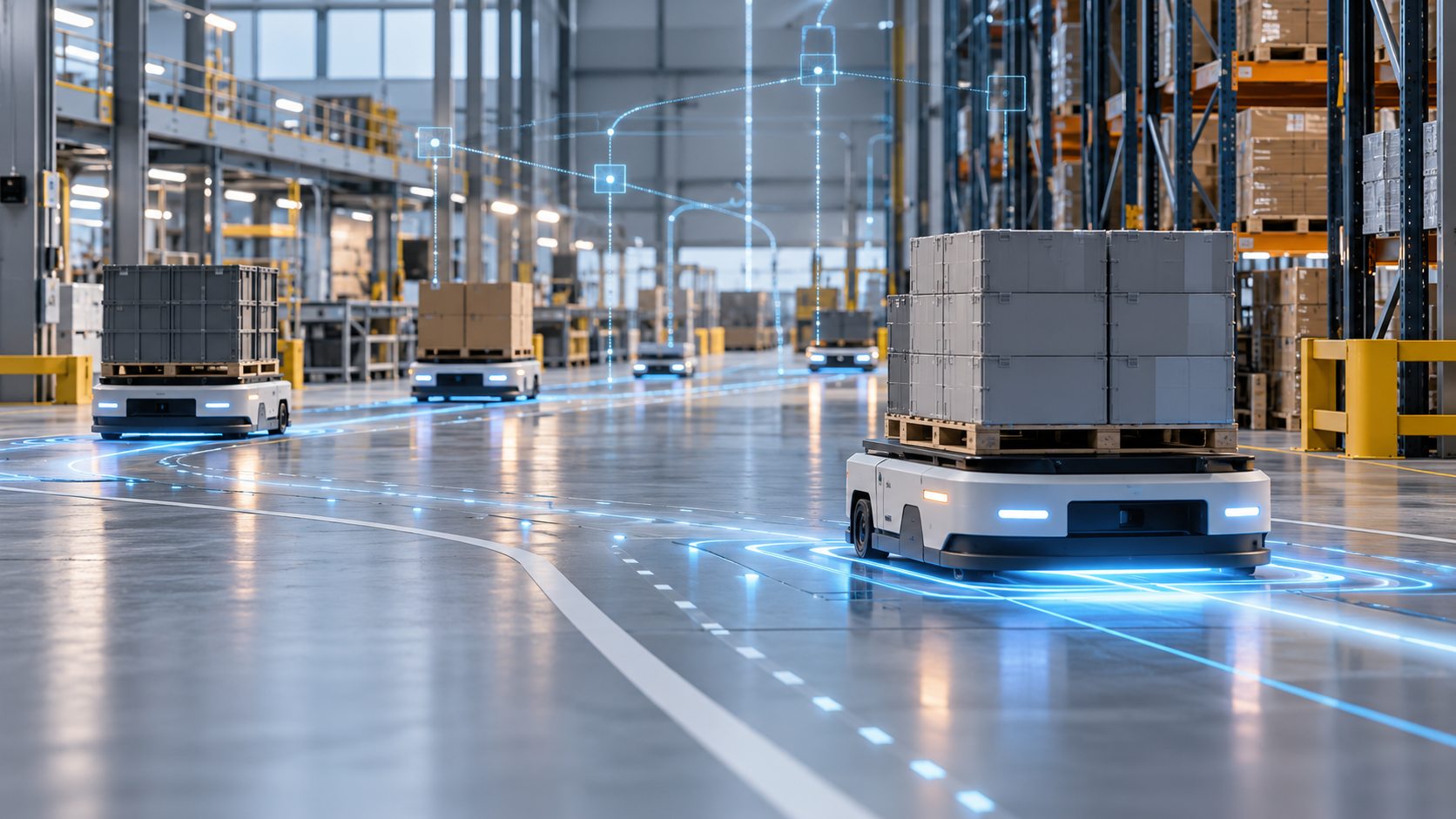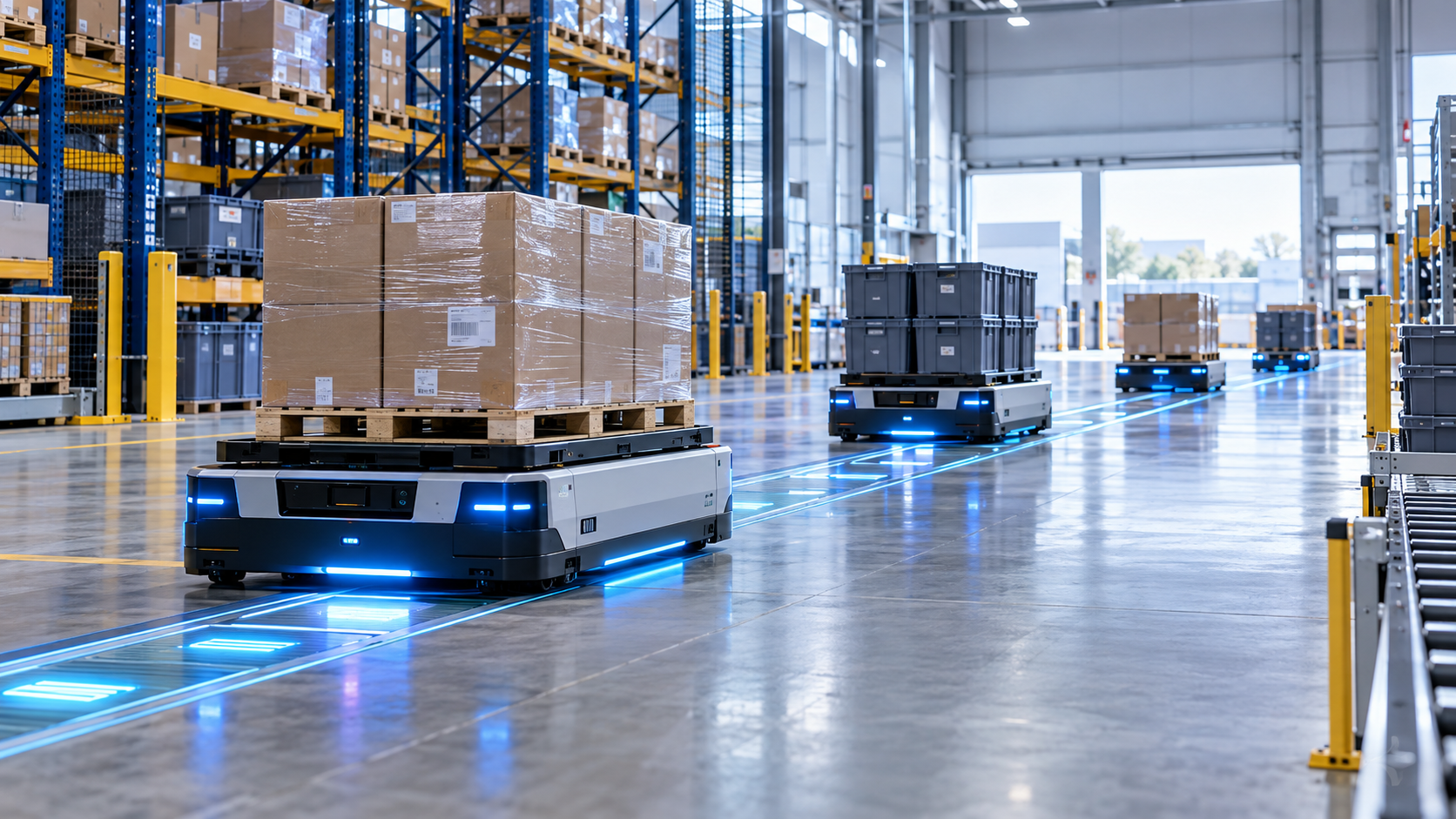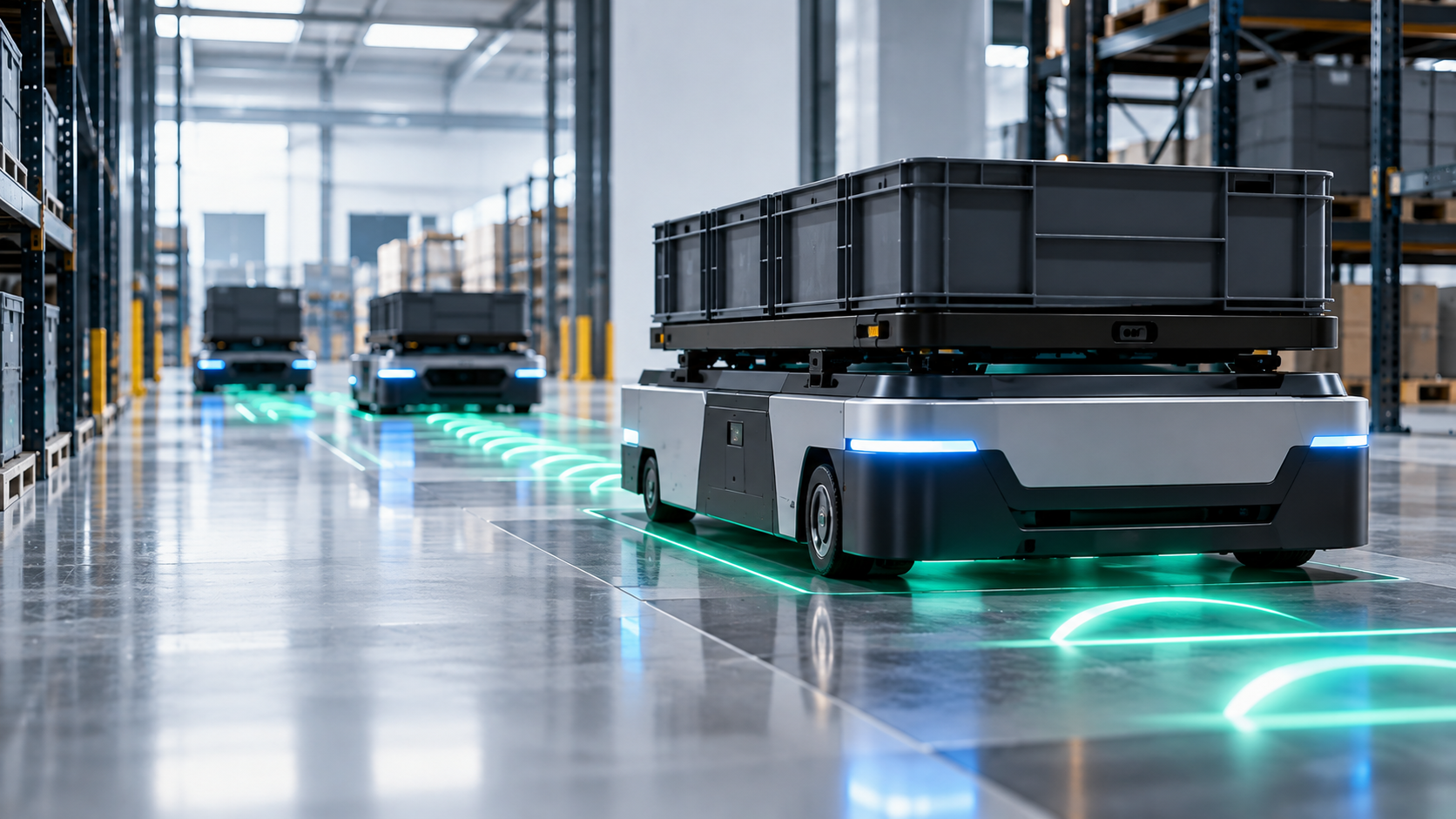
Autonomous mobile robots (AMRs) and automated guided vehicles (AGVs) have transformed modern logistics and manufacturing. They move materials, transport inventory, and help facilities operate with greater efficiency than ever before.
Yet despite advances in robotics, AI, and automation software, one critical limitation remains largely unchanged:
Robots still need to stop working in order to recharge.
For many operators, charging is viewed as a routine operational requirement. In reality, it creates a hidden productivity gap that impacts fleet sizing, infrastructure requirements, battery life, and overall return on automation investment.
At CaPow, we believe the next phase of automation growth depends on solving this challenge.
The Hidden Cost of Robot Charging
Every autonomous robot relies on stored energy. When battery levels fall, robots must leave their productive routes, travel to charging stations, and remain idle until sufficient energy is restored.
Typical robot operations often operate around work-to-charge ratios of 5:1, and in some environments even lower. This means a significant portion of a fleet is unavailable at any given moment due to charging requirements.
The consequence is straightforward:
If a facility requires 100 active robots to sustain production targets, it may need to purchase additional robots simply to compensate for charging downtime.
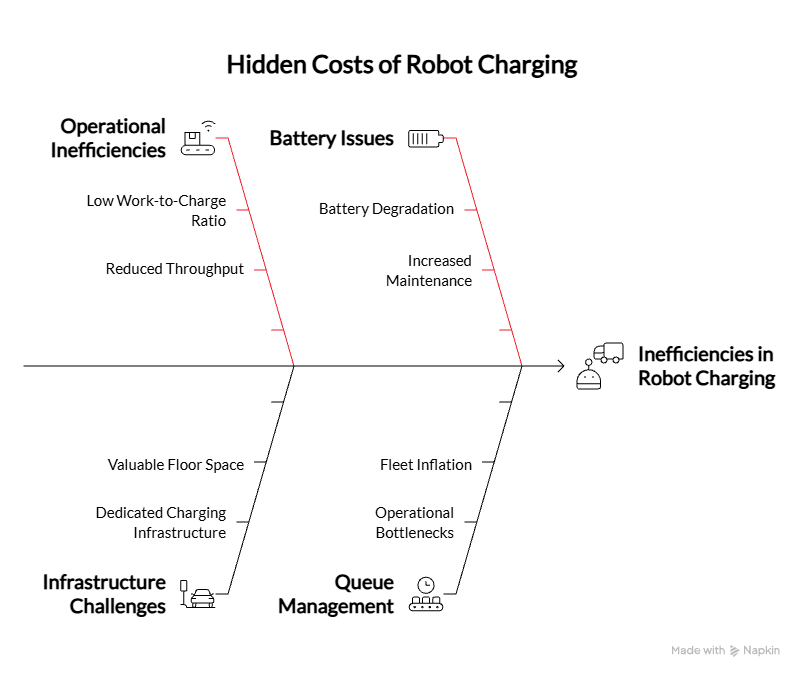
Beyond fleet inflation, charging introduces additional challenges:
- Reduced operational throughput
- Dedicated charging infrastructure
- Valuable floor space occupied by charging stations
- Battery degradation from repeated charge-discharge cycles
- Increased maintenance requirements
- Operational bottlenecks around charging queues
As automation deployments scale, these inefficiencies become increasingly difficult to ignore.
Rethinking Energy Delivery
Most charging solutions focus on making charging faster.
CaPow approaches the problem differently.
Instead of asking robots to stop and recharge, the Genesis platform enables robots to receive energy during normal operation.
The objective is simple:
Keep robots on value-generating routes while maintaining a positive energy balance.
Rather than driving to dedicated charging stations, robots receive small amounts of energy at strategic points throughout the facility. These locations are selected based on robot traffic patterns, operational workflows, and facility layout analysis.
Every time a robot passes through a power zone, waits at a workstation, pauses for loading, or slows down in a high-traffic area, it receives what CaPow calls a “sip of energy.”
These incremental energy transfers accumulate throughout the robot’s operational cycle, eliminating the need for dedicated charging stops.
How Power-in-Motion Works
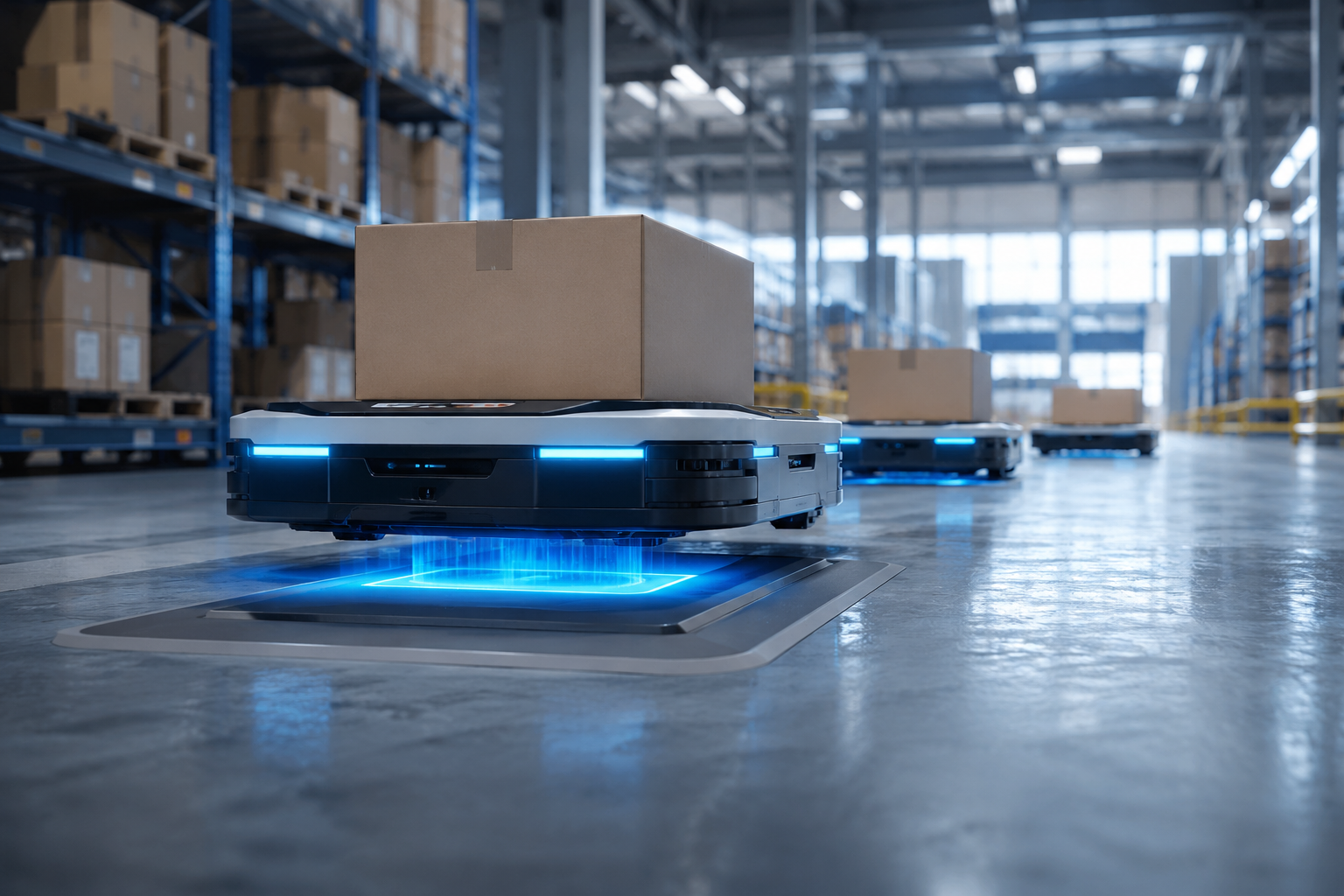
The Genesis platform is based on Capacitive Power Transfer (CPT), a technology that enables energy transfer between a floor-mounted transmitter and a receiver installed on the robot.
Unlike conventional charging systems that require direct contact or precise alignment, Genesis continuously adapts energy transfer conditions in real time.
CaPow developed an adaptive tuning mechanism that automatically adjusts transmitter and receiver characteristics to maintain optimal power transfer conditions, even as robots move, change position, or experience varying alignment conditions. The system performs these adjustments in less than a millisecond.
This capability enables several important advantages:
- Energy delivery while robots are moving
- Tolerance to alignment variations
- Flexible deployment across different facility environments
- Compatibility with multiple robot platforms
- Minimal impact on existing operations
The result is a practical, industrial-grade energy delivery system designed specifically for autonomous automation environments.
Strategic Power Zones Instead of Full-Floor Coverage
A common misconception about dynamic power systems is that they require extensive infrastructure deployment.
In practice, Genesis focuses only on operationally valuable locations.
For logistics environments, power zones are often deployed at:
- Picking stations
- Inbound and outbound transfer points
- Home stations
- High-traffic corridors and convergence points
For manufacturing facilities, power zones are frequently positioned where robots naturally pause during loading and unloading operations.
Because robots already spend time at these locations, energy can be delivered without introducing additional delays or workflow changes.
The objective is not to power every square meter of the facility.
The objective is to deliver energy only where it creates operational value.
Beyond Uptime: Improving Battery Health
Charging downtime is only part of the challenge.
Repeated deep charging and discharging cycles gradually degrade lithium-ion batteries, reducing capacity and shortening operational lifespan.
Genesis addresses this issue by maintaining batteries within a narrower operating window. Instead of allowing batteries to discharge significantly before recharging, robots receive frequent low-rate energy replenishment throughout the day.
This approach provides several benefits:
- Reduced battery stress
- Lower heat generation
- Fewer deep charge cycles
- Extended battery lifespan
- Improved safety margins
By avoiding aggressive charging behavior, facilities can reduce battery replacement costs while improving long-term reliability.
Designed for Industrial Environments
Automation environments demand more than innovative technology.
They require reliability, safety, and compliance.
According to CaPow’s development team, achieving industrial deployment required years of productization beyond the original technology concept. The company worked alongside certification laboratories to establish testing methodologies and compliance frameworks suitable for capacitive power transfer systems.
Today, Genesis complies with major international standards, including UL, FCC, and IEC requirements.
The system is certified for general population environments, meaning it meets stringent safety requirements beyond those typically required for controlled industrial settings.
Durability is equally important.
Genesis floor infrastructure is designed to withstand heavy industrial traffic, including repeated forklift crossings, while maintaining operational performance.
Seamless Integration into Existing Operations
Introducing new infrastructure often raises concerns about disruption.
CaPow designed Genesis to minimize integration complexity.
The system can be installed without modifying existing workflows, robot missions, or facility processes. In many deployments, robots continue operating with their existing charging logic, but never reach battery thresholds that would trigger charging missions.
Installation is equally streamlined.
According to CaPow, a deployment at an automotive manufacturing facility in Michigan was completed in less than a day, allowing the customer to begin receiving operational benefits immediately.
The platform has also demonstrated compatibility across more than twenty robotic families, reinforcing its robot-agnostic approach.
Real-World Results
The value of any industrial technology is ultimately measured by operational outcomes.
One deployment highlighted by CaPow involved a manufacturing facility in Michigan operating around the clock. More than a year after deployment, the robots reportedly had not returned to traditional charging stations, while maintaining continuous operation.
The broader impact extends beyond eliminating charging events.
When robots remain productive throughout their operational cycles, facilities can:
- Recover previously lost productive time
- Reduce fleet inflation
- Improve throughput
- Reclaim floor space
- Extend battery life
- Improve automation ROI
Most importantly, operators can unlock additional capacity from existing automation investments before purchasing additional robots.

The Future of Autonomous Automation
Warehouse and manufacturing automation continues to accelerate.
Robot intelligence is improving. Software platforms are becoming more sophisticated. Facilities are investing heavily in autonomous operations.
Yet every robot remains dependent on energy.
As automation scales, energy management increasingly becomes a strategic operational challenge rather than a maintenance function.
The next generation of automation performance will not be driven solely by smarter robots.
It will come from ensuring those robots can remain productive without interruption.
Power-in-Motion represents a shift from managing charging downtime to eliminating it altogether.
Because in autonomous operations, the most productive robot is not the fastest robot.
It is the robot that never has to stop.