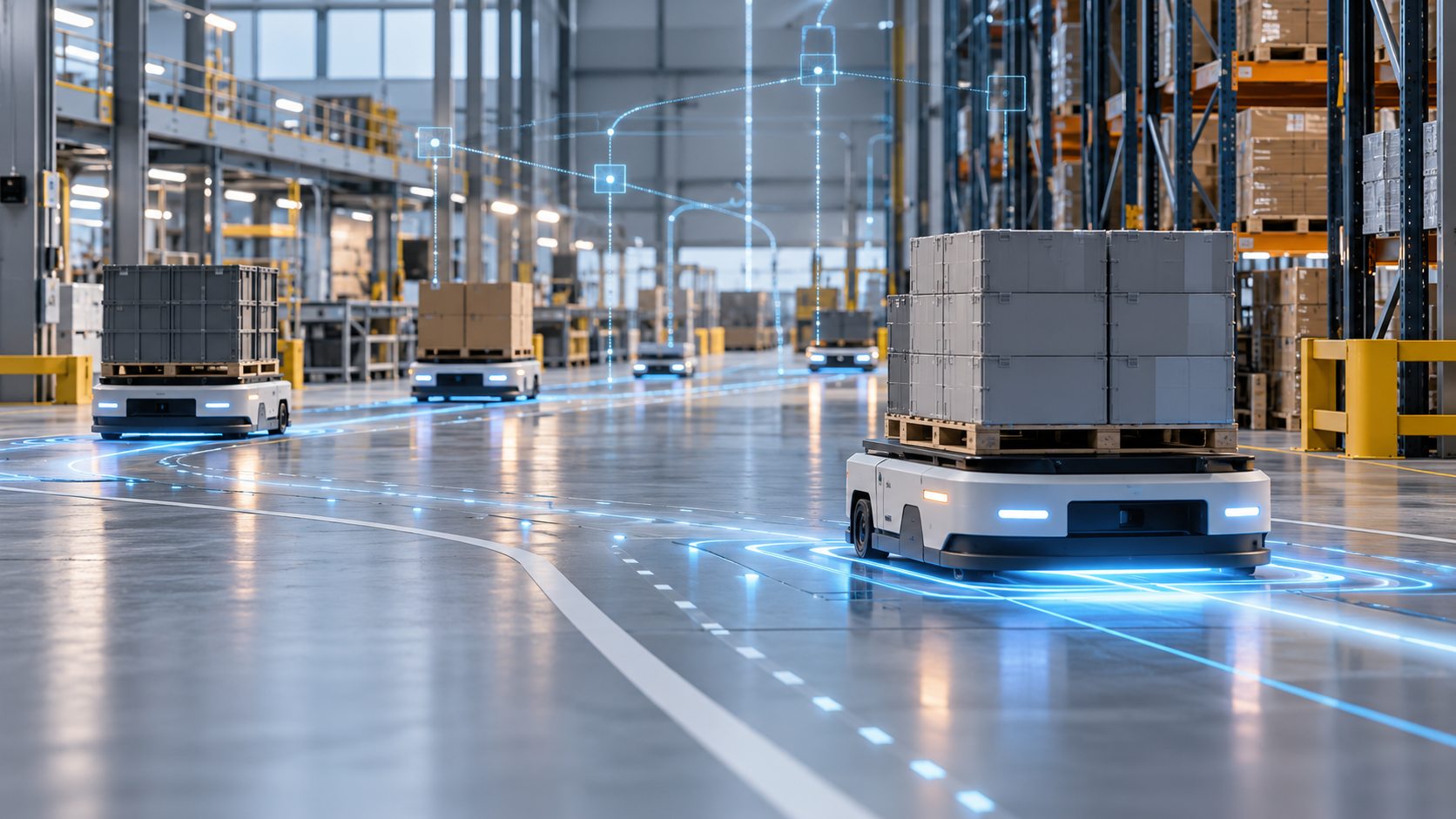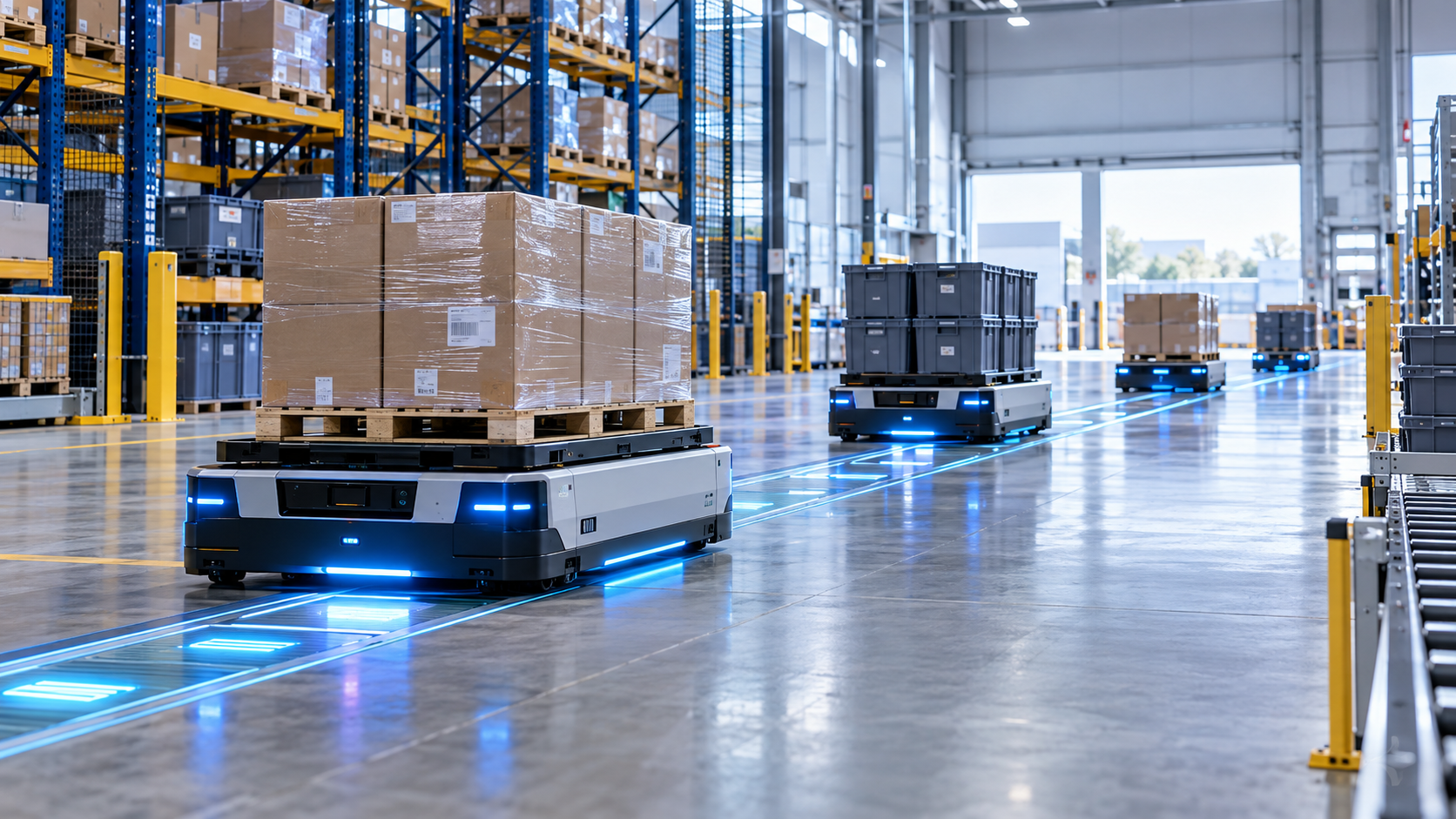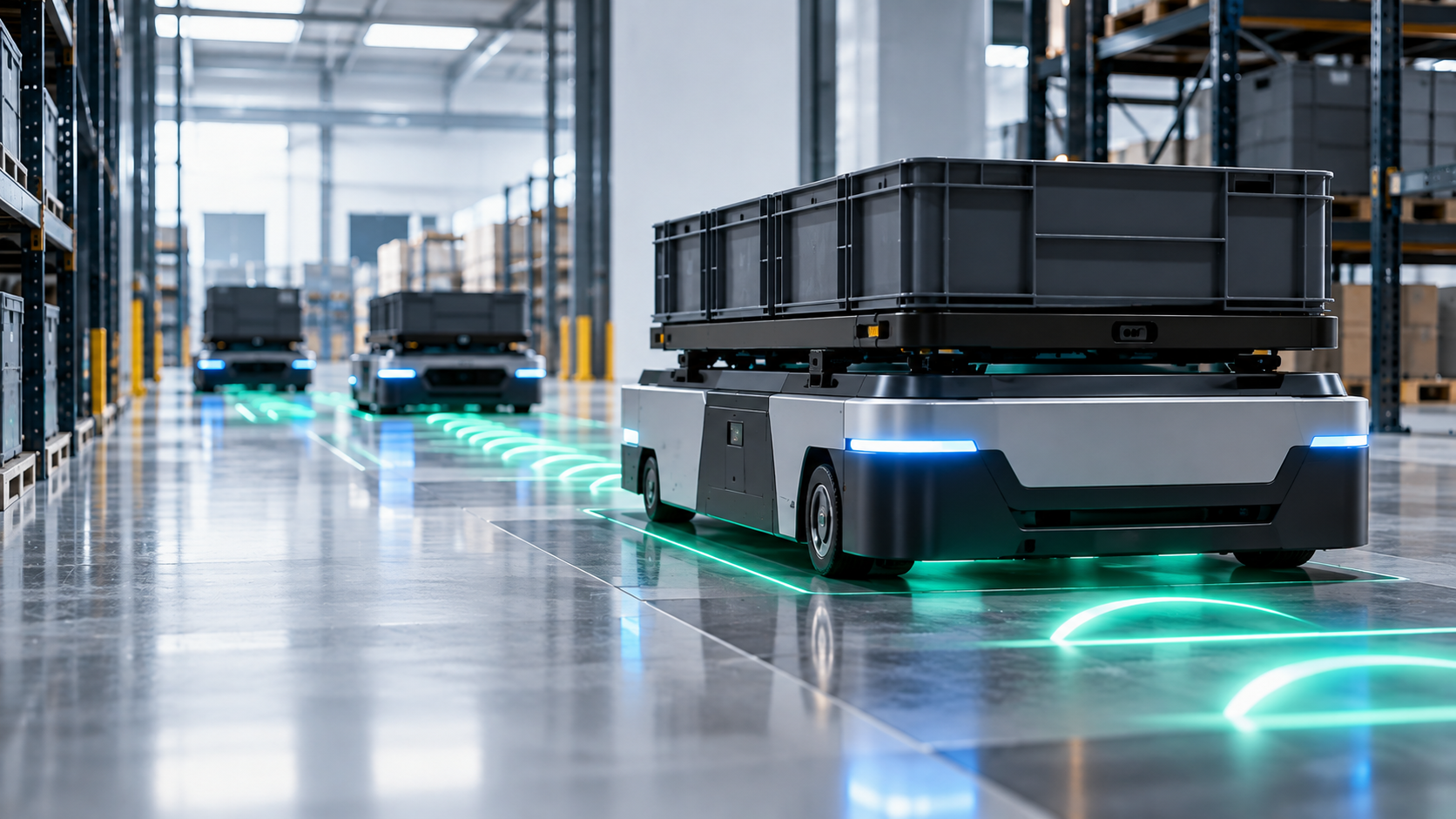
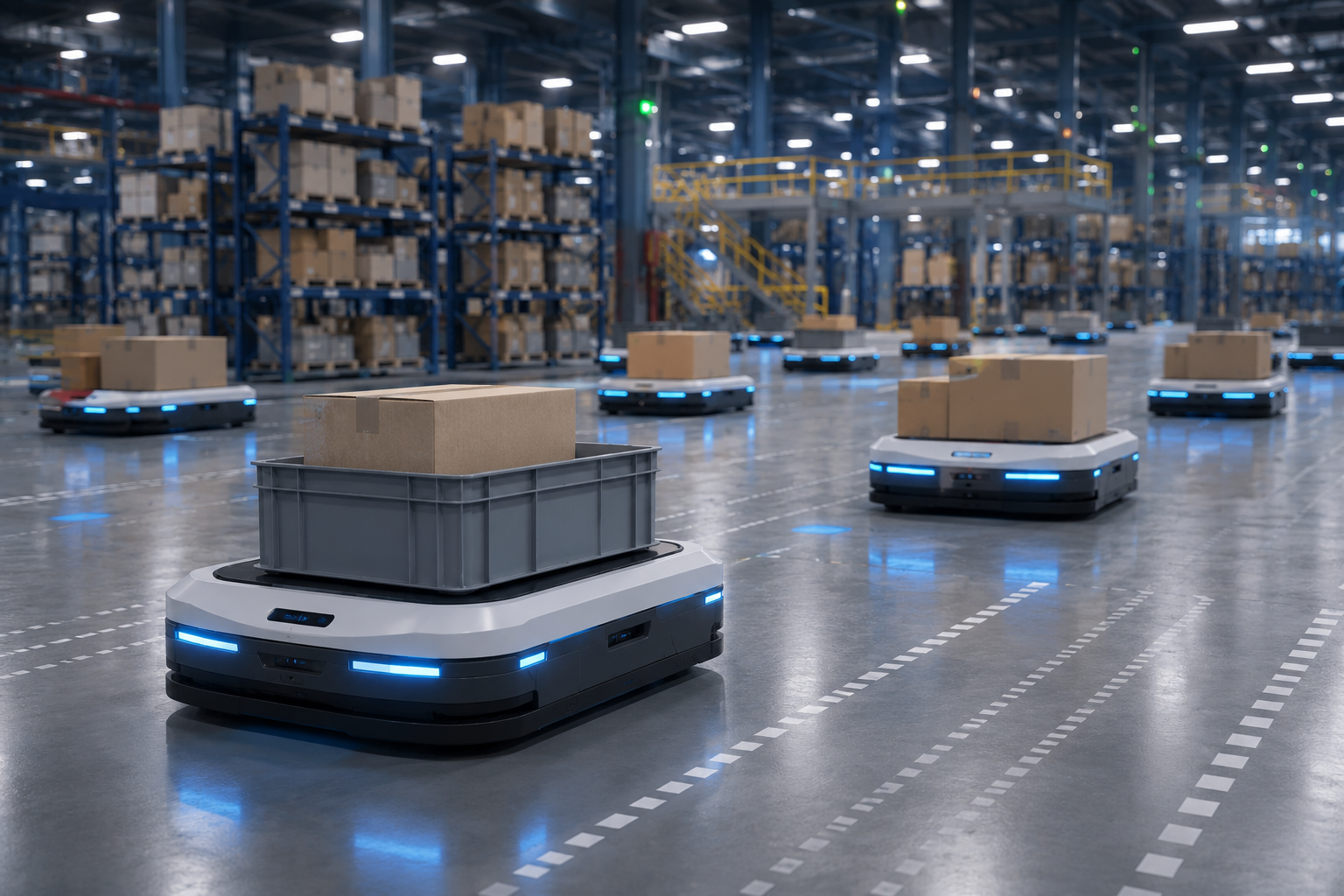
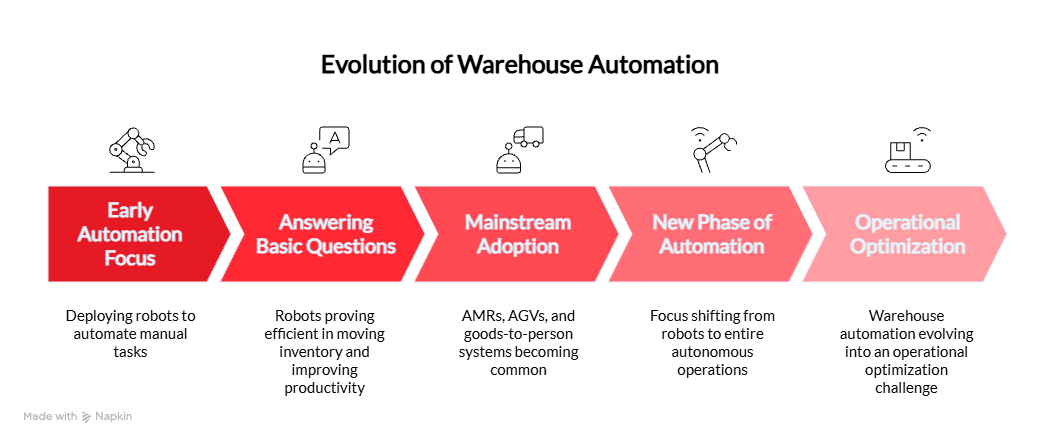
For years, warehouse automation strategies focused on a straightforward objective: deploy robots to automate manual tasks.
The early questions were simple.
Can robots move inventory efficiently?
Can they reduce labor dependency?
Can they improve productivity?
Today, those questions have largely been answered.
Autonomous mobile robots (AMRs), automated guided vehicles (AGVs), and goods-to-person systems have become mainstream across distribution centers, fulfillment operations, and manufacturing facilities worldwide.
As adoption grows, however, the industry is entering a new phase.
The conversation is no longer centered on robots alone.
It is increasingly focused on how entire autonomous operations perform.
In other words, warehouse automation is evolving from a robotics challenge into an operational optimization challenge.
1. From Robot Count to Throughput
A decade ago, automation success was often measured by deployment size.
How many robots are operating in the facility?
How large is the fleet?
How much automation has been installed?
Today, operators are asking different questions.
- How many orders can be processed per hour?
- How many picks can be completed per shift?
- How much capacity can be generated from existing assets?
- What is the return on automation investment?
This shift reflects the growing maturity of the market.
Robots are no longer viewed as the end goal.
They are viewed as tools for achieving business outcomes.
As a result, operational metrics such as throughput, utilization, and productivity are becoming increasingly important.
2. From Individual Robots to Fleet Performance
The performance of a single robot tells only part of the story.
As fleets expand from dozens to hundreds of units, operators must manage increasingly complex interactions between robots, software, infrastructure, and workflows.
Modern automation systems rely on coordinated fleets rather than standalone machines.
This has driven growing interest in:
- Fleet orchestration
- Traffic management
- Workflow optimization
- Task allocation
- Predictive maintenance
The focus is shifting from maximizing the performance of individual robots to maximizing the performance of the entire system.
For many operators, the question is no longer whether robots can perform a task.
It is whether the fleet can consistently deliver the expected operational outcomes.

3. Infrastructure Is Becoming Part of the Automation Strategy
Early automation projects often focused primarily on robots and software.
Today, infrastructure decisions are becoming increasingly strategic.
Warehouse leaders are paying closer attention to:
- Network architecture
- Connectivity
- Data collection
- Traffic flow
- Space utilization
- Energy infrastructure
These elements may not receive the same attention as robots themselves, but they play a significant role in determining operational performance.
As automation scales, infrastructure can either enable efficiency or become a limiting factor.
The most successful facilities increasingly evaluate automation as a complete ecosystem rather than a collection of individual technologies.
4. Uptime Is Emerging as a Competitive Metric
Historically, automation discussions focused on capabilities.
Can the robot perform the task?
Can the software manage the workflow?
Can the system achieve the desired level of automation?
As deployments mature, availability is becoming equally important.
Every minute a robot spends performing productive work contributes value to the operation.
Every minute spent waiting, idling, recovering from faults, or leaving workflows reduces potential output.
This is driving greater attention toward:
- System reliability
- Fleet availability
- Predictive maintenance
- Operational continuity
For operators managing high-volume environments, uptime is increasingly viewed as a direct contributor to throughput and operational efficiency.
5. Energy Management Is Moving Closer to the Workflow
One of the less discussed developments in warehouse automation is the growing role of energy management.
For years, charging was treated as a separate operational process.
Robots completed tasks, traveled to charging locations, replenished energy, and returned to work.
As fleets scale, operators are taking a closer look at how energy impacts overall performance.
Energy availability influences:
- Fleet utilization
- Infrastructure requirements
- Space allocation
- Maintenance planning
- Operational continuity
Rather than viewing energy solely as a maintenance concern, many organizations are beginning to evaluate it as part of broader workflow optimization.
This has created interest in new approaches that integrate energy delivery more closely with robot operations, reducing the need for productivity interruptions and helping maximize the utilization of existing assets.
6. The Industry Is Optimizing Operations, Not Just Automation
Perhaps the most significant shift occurring today is philosophical.
Warehouse leaders are increasingly moving beyond the question:
“How do we automate?”
Toward:
“How do we optimize the operation?”
Automation remains a critical part of the answer, but it is no longer the entire answer.
Organizations are evaluating every aspect of performance, including:
- Labor efficiency
- Asset utilization
- Inventory flow
- Space optimization
- Infrastructure requirements
- System availability
- Energy management
The objective is not simply to deploy technology.
The objective is to generate measurable business outcomes.

Looking Ahead
Warehouse automation has entered a new stage of evolution.
Robots will continue becoming smarter.
Artificial intelligence will continue improving decision-making and orchestration.
Software platforms will continue delivering greater visibility and control.
Yet the facilities that achieve the greatest results may not be the ones with the most robots.
They may be the ones that optimize the entire operational ecosystem surrounding those robots.
The future of warehouse automation is no longer defined solely by robotics innovation.
It is increasingly defined by operational excellence.
And that shift is reshaping how organizations think about productivity, infrastructure, availability, and the role of automation in the modern supply chain.