The rapid evolution of warehouse automation is transitioning from a competitive advantage to an absolute operational necessity. By 2026, integrating advanced robotics, AI-driven analytics, and sustainable energy practices will be critical for supply chains to maintain efficiency, navigate labor shortages, and achieve scalability.
Key Takeaways
- AI and IoT are critical multipliers: Robotics alone is not enough; pairing AMRs with predictive analytics and real-time tracking yields the highest operational efficiency.
- Sustainability is built into modern automation: By optimizing energy consumption and utilizing continuous power solutions, warehouses can reduce operational energy waste and improve resource efficiency.
- The human element remains vital: Successful automation requires upskilling workers to manage and maintain robotic fleets, transforming manual laborers into tech-empowered supervisors.
- Scalability is key: When evaluating solutions, prioritize modular systems that can adapt to changing order volumes and facility layouts without massive overhauls.
What technologies are shaping the future of warehouse management?
The future of warehouse management is being shaped by three foundational technologies:
Autonomous Mobile Robots (AMRs), Artificial Intelligence (AI) for predictive analytics, and the Internet of Things (IoT) for real-time asset tracking. Together, these systems create a highly responsive, interconnected ecosystem that maximizes throughput and minimizes downtime.
As we look toward 2026,
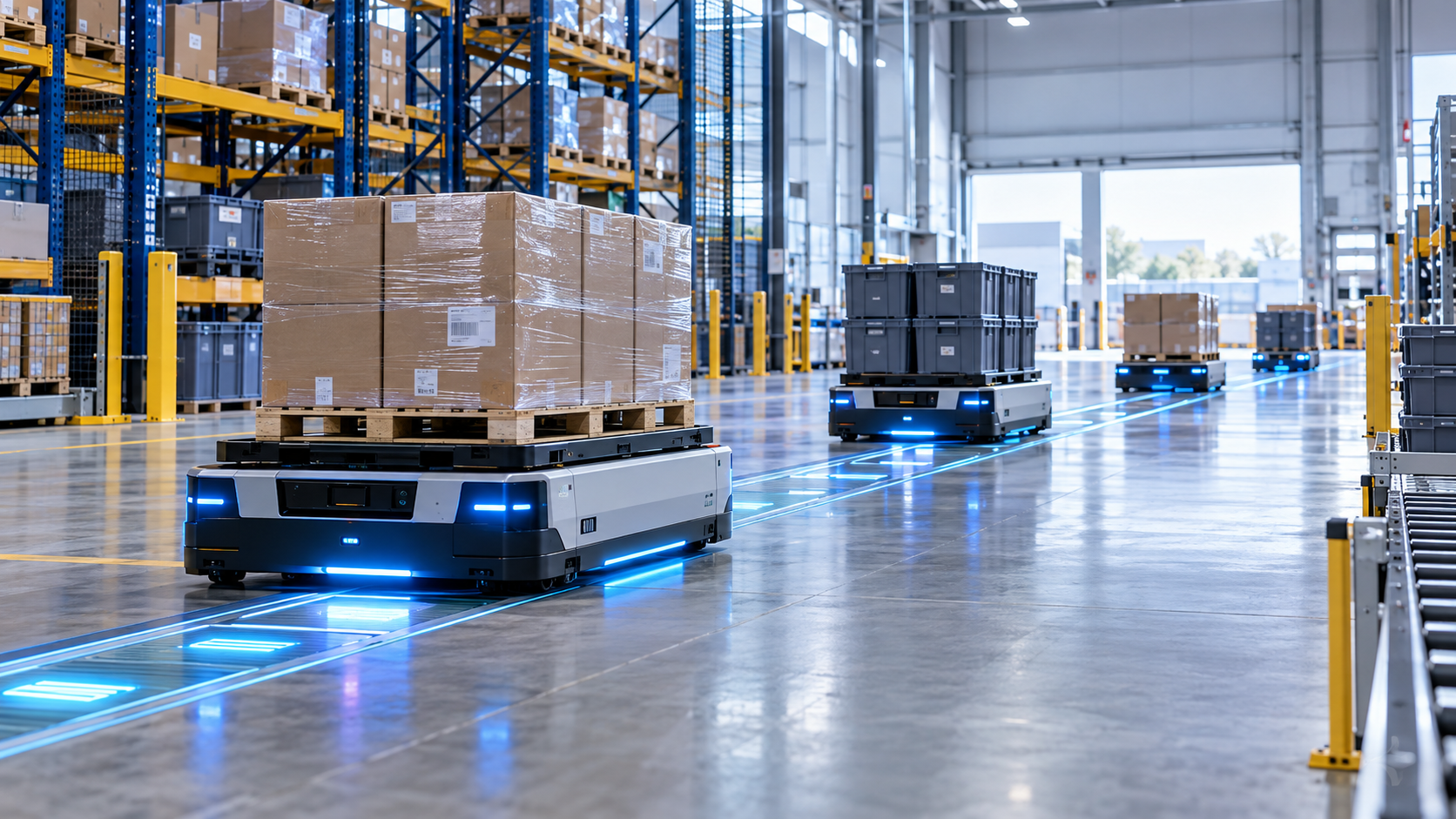
robotics in warehousing is shifting from isolated, single-task machines to collaborative, multi-functional fleets. AMRs equipped with advanced LiDAR and computer vision can now navigate dynamic environments safely alongside human workers. These robots
handle repetitive tasks such as material transport, goods-to-person picking, and inventory counting, significantly increasing operational speed.
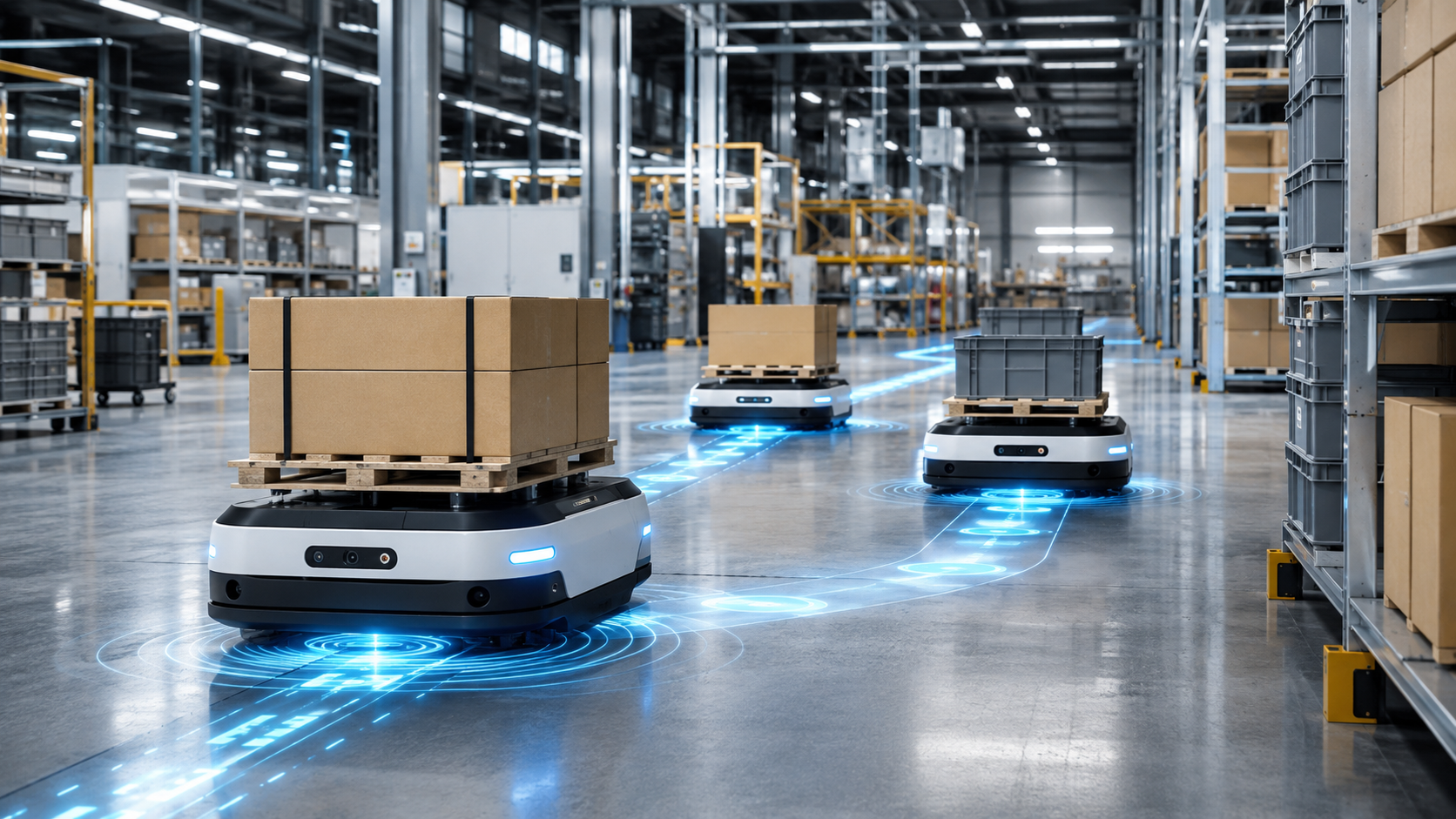
Meanwhile, AI acts as the brain of the modern warehouse. Predictive analytics algorithms analyze historical data and real-time inputs to anticipate demand spikes, optimize inventory placement, and even predict equipment failures before they happen. When combined with IoT sensors embedded throughout the facility, managers gain unprecedented visibility into every asset, from a single SKU to the performance metrics of an entire robot fleet.
Figure 1: The interconnected warehouse ecosystem of 2026, showcasing AI, IoT, and AMR integration.
How can automation improve sustainability in warehouses?
Automation can improve sustainability in warehouses by optimizing energy usage, reducing material waste, and streamlining logistics routing. Electrification and smarter automation can also help facilities reduce energy-intensive inefficiencies and improve resource utilization.
Sustainable logistics is increasingly important for enterprise operations and regulatory planning. Modern warehouse automation can improve energy efficiency, and Automated Storage and Retrieval Systems (AS/RS) can operate in denser footprints with less dependence on lighting and human-oriented aisle design.
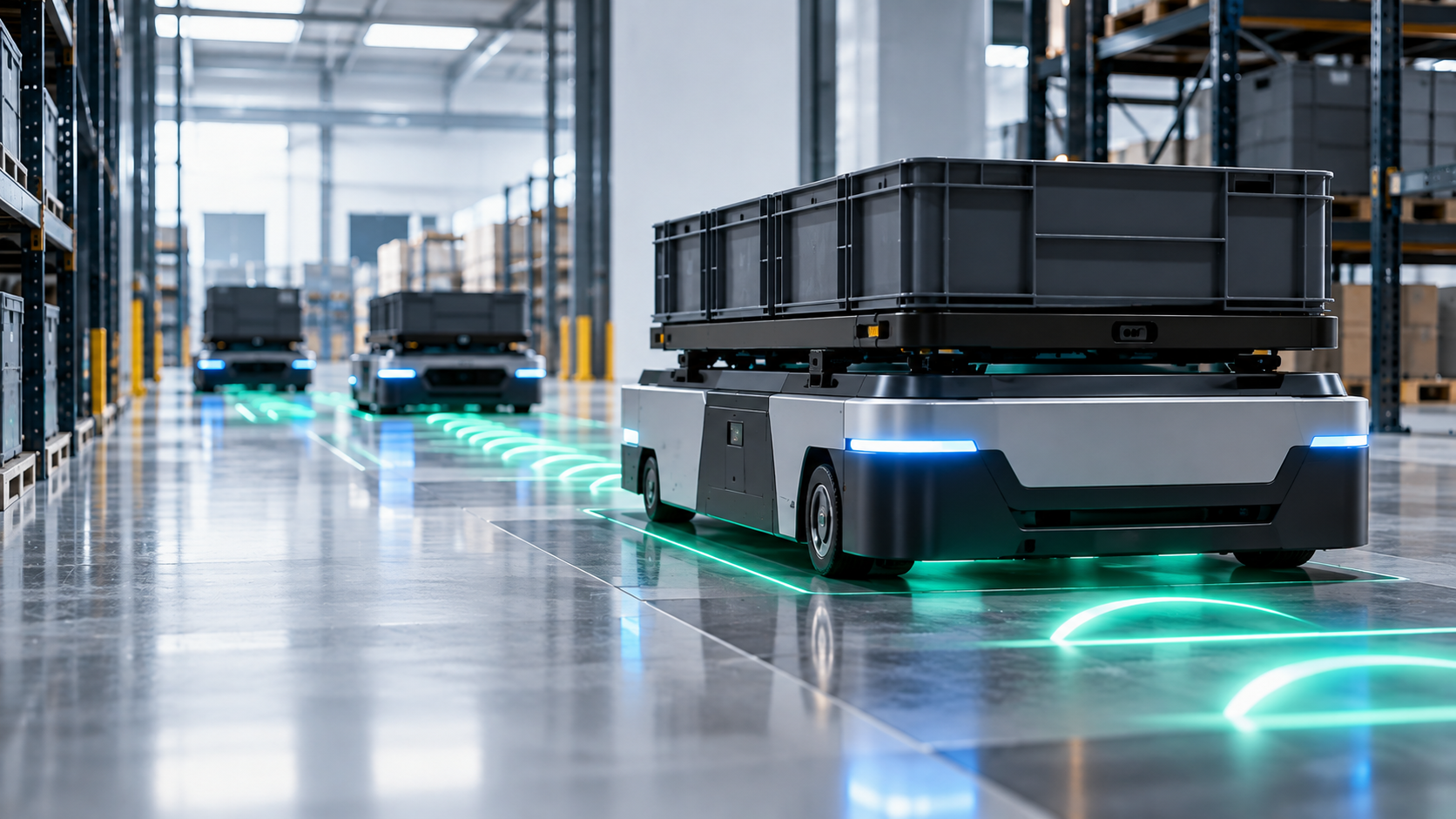
Furthermore, innovative power management solutions are transforming how robotic fleets are sustained. Continuous
power delivery allows robots to receive energy during normal operation instead of leaving the workflow for dedicated charging. With the right deployment, this can eliminate charging-related downtime, reduce fleet overprovisioning, and reduce dependence on oversized onboard batteries.
Data analytics also plays a massive role in sustainability. AI algorithms optimize picking routes, meaning robots and conveyors travel shorter distances, consuming less power. Advanced packaging automation customizes box sizes to exact order dimensions, reducing cardboard waste and maximizing trailer space, which translates to fewer trucks on the road and lower fuel emissions.
What are the challenges of integrating robotics in warehousing?
The primary challenges of integrating robotics in warehousing include upskilling the existing workforce, managing the human-robot collaboration interface, and overcoming initial employee resistance to automation. While the operational benefits are immense, the transition requires thoughtful change management and specialized training.
One of the largest hurdles is the shift in workforce dynamics. As
warehouse automation solutions take over physically demanding and repetitive tasks, the roles of human workers must evolve from manual labor to supervisory and technical positions. This creates an immediate need for comprehensive upskilling programs. Facility operators must train their staff to become “fleet managers” who can monitor dashboards, troubleshoot minor robotic errors, and optimize workflow algorithms.
Additionally, achieving seamless human-robot collaboration is critical. While modern “cobots” (collaborative robots) are designed with advanced safety sensors to prevent collisions, the physical layout of the warehouse often needs to be reconfigured. Clear traffic rules, designated zones, and proper communication protocols must be established to ensure safety and efficiency.
“The most successful automation implementations are those that treat robots not as replacements for human workers, but as powerful tools that elevate the workforce’s capabilities and daily experience.” — Industry Insight
Finally, leadership must actively address employee apprehension. Clear communication about how automation removes the physical toll of warehousing—such as walking 10-15 miles a day on concrete floors—helps reframe the narrative. By focusing on safety improvements and the creation of higher-value tech roles, companies can foster a culture that embraces technological advancement.
How to evaluate warehouse automation needs
Evaluating warehouse automation needs requires a systematic approach that aligns technological capabilities with specific business bottlenecks and long-term growth objectives. Following a structured framework ensures that capital investments deliver a rapid and sustainable ROI.
Step 1: Conduct a Bottleneck Analysis
Identify exactly where your operations are slowing down. Is it during receiving, put-away, picking, or packing? Mapping your current workflow with time-studies helps pinpoint tasks that yield the highest return when automated.
Step 2: Define Clear KPIs and Success Metrics
Before selecting technology, establish what success looks like. Common metrics include units picked per hour (UPH), order cycle time, error reduction rates, and energy savings.
Step 3: Evaluate Infrastructure and Energy Requirements
Assess your facility’s layout, flooring, electrical capacity, network connectivity, and power distribution. Consider advanced power solutions like CaPow’s Power-in-Motion to eliminate charging-related downtime and optimize floor space.
Step 4: Research and Select Scalable Solutions
Avoid rigid systems that cannot grow with your business. Prioritize modular robotics and cloud-based software that allow you to add capacity during peak seasons without a complete facility overhaul.
Step 5: Plan for Workforce Transition
Develop a comprehensive training timeline. Ensure your team understands how to operate, troubleshoot, and work alongside the new systems safely prior to full deployment.
Common Use Cases for Warehouse Automation
Warehouse automation solutions are not one-size-fits-all. Different industries leverage these technologies to solve highly specific operational challenges. Here are the most prominent applications:
- High-Volume E-commerce Fulfillment: Used to manage massive daily order volumes and unpredictable demand spikes. AMRs transport bins directly to picking stations, drastically reducing the time workers spend walking aisles and increasing units picked per hour.
- Cold Storage Operations: Employed to protect human workers from harsh freezing environments. Automation systems designed for sub-zero conditions can maximize vertical space utilization and reduce the need for prolonged human exposure.
- Sustainable Logistics Hubs: Implemented by companies prioritizing energy-efficient operations. Intelligent routing and continuous-power robotics can reduce unnecessary robot travel, charging infrastructure, and fleet overprovisioning.
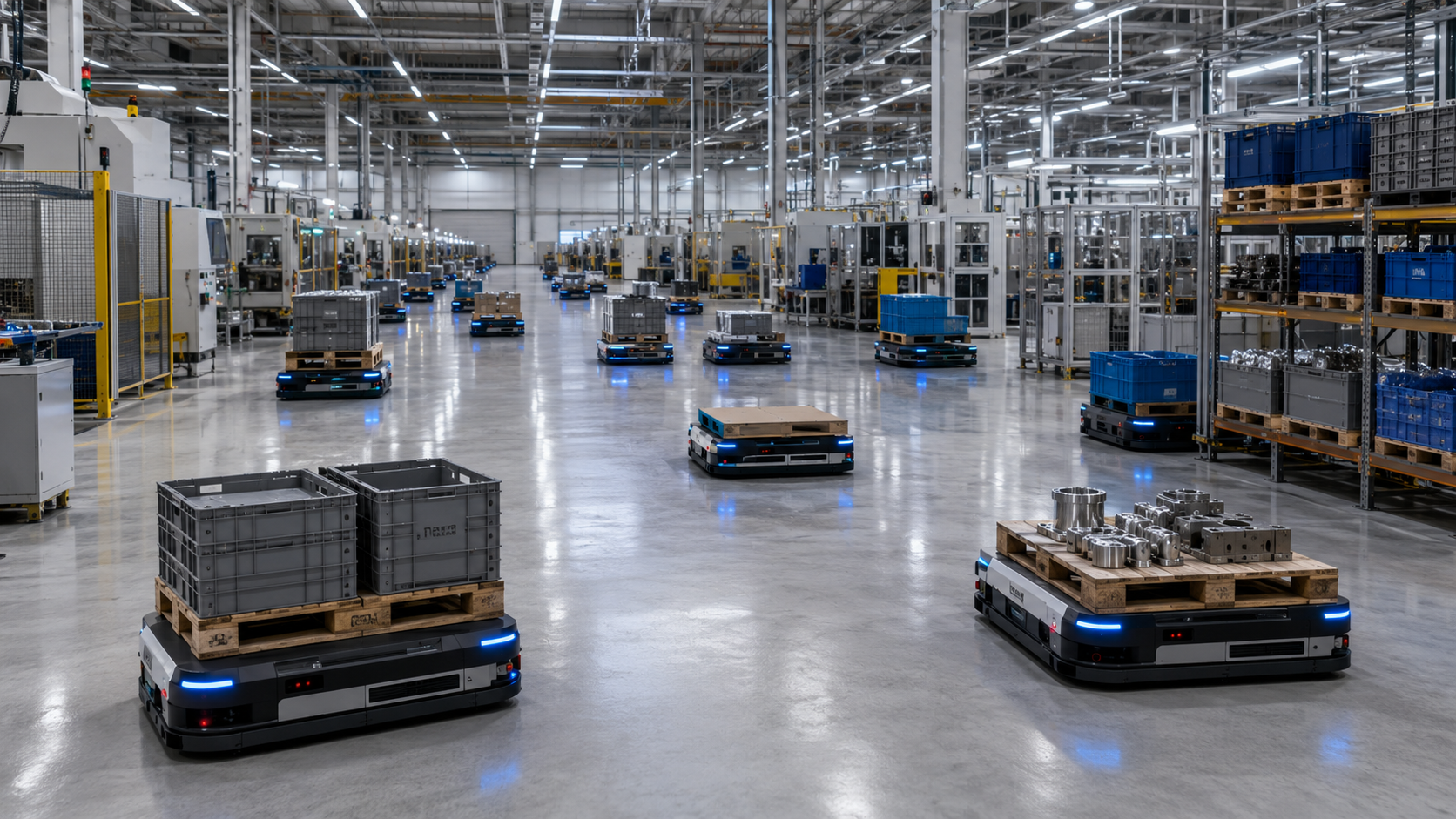
- Manufacturing Parts Sequencing: Used in automotive and electronics manufacturing. Automated guided vehicles (AGVs) deliver exact components to assembly line stations exactly when needed (Just-In-Time delivery), preventing line starvation and minimizing floor clutter
Empower Your Future Operations
Navigating the evolving landscape of 2026 warehouse automation requires strategic planning, deep industry insight, and the right technological partnerships. By integrating intelligent robotics, prioritizing sustainable logistics, and empowering your workforce, your facility can turn logistical challenges into a distinct competitive advantage.
Are you ready to eliminate operational bottlenecks and optimize your fleet’s energy consumption? Explore how CaPow’s Power-in-Motion technology enables mobile robots to receive power while they operate, eliminating charging-related downtime and supporting continuous fleet operation. Contact us today to evaluate your automation infrastructure and build your roadmap for success.