Warehouse robotics is moving into a new era of industrial deployment.
Across manufacturing, fulfillment and logistics, companies are no longer evaluating automation solely through individual robot capabilities. Increasingly, they are evaluating how complete robotic systems perform under real operational conditions.
In November 2026, DHL Supply Chain reported deploying more than 9,000 robots across its global network and completing more than 1.5 billion robotic picks.
Around the same time, GXO and Apptronik announced plans for further trials beginning in 2027, with the potential to deploy up to 1,000 humanoid robots over four years, subject to agreed performance and safety requirements.
These developments highlight a fundamental challenge for warehouse operators:
How do you move from a successful robotics pilot to an economically sustainable deployment at scale?
The answer involves much more than increasing the number of robots.
Why Scaling Warehouse Robotics Is Different From Running a Pilot
A pilot typically operates within defined conditions. Workflows are selected, variables are controlled and performance can be closely monitored.
Industrial deployment introduces a different level of complexity.
Robots must operate alongside existing warehouse management systems, employees, equipment and infrastructure. They must accommodate fluctuations in demand, unexpected interruptions and the operational requirements of an entire facility.
A solution that works with ten robots may face different constraints when expanded to fifty, one hundred or several hundred units.
These constraints are not always visible during initial testing.
Successful warehouse robotics scaling therefore requires a system-level approach covering software, physical infrastructure, integration, operational reliability and financial performance.
Five Factors That Determine Robotics Deployment Readiness
1. Integration with Existing Warehouse Systems
Warehouse robotics rarely operates independently.
Automation must interact with warehouse management systems (WMS), warehouse execution systems (WES), fleet management platforms and existing material-handling equipment.
As fleet sizes increase, integration requirements become more complex.
Operators should evaluate whether the automation architecture supports:
- Reliable communication between systems
- Task allocation and real-time operational visibility
- Recovery from communication or equipment failures
- Coordination between robots and existing workflows
- Expansion without extensive system redesign
Integration readiness should be evaluated before fleet expansion, rather than addressed after operational complexity increases.
2. Measurable Performance Under Real Conditions
One of the most important distinctions between a pilot and a commercial deployment is the quality of performance evidence.
Pilot results should be evaluated against operating conditions that reflect the intended production environment.
Important considerations include demand fluctuations, operating shifts, equipment availability, maintenance requirements and changes in task complexity.
Relevant operational KPIs may include throughput, completed missions, system availability, task completion time and cost per completed operation.
Hai Robotics, for example, reported a large U.S. fulfillment installation involving 323 robots, with an outbound throughput of 8,265 totes per hour and picking accuracy above 99%.
These vendor-reported figures illustrate the type of system-level performance data operators increasingly expect, although outcomes will vary by application and facility.
3. Infrastructure That Can Support Fleet Expansion
Infrastructure requirements often change significantly as robotic deployments scale.
A larger fleet may place additional demands on facility connectivity, traffic management, maintenance processes, available floor space and energy supply.
These systems must be assessed as part of the deployment architecture.
For mobile robotic fleets, energy planning deserves particular attention.
Operators should understand how energy is supplied, how robots access it, and whether the infrastructure can continue supporting the fleet as operational requirements change.
Traditional charging strategies, opportunity charging and in-motion power delivery each create different infrastructure and scheduling requirements.
The appropriate approach depends on robot compatibility, duty cycles, routes, power demand and facility conditions.
The key is to evaluate energy infrastructure before it becomes a constraint on expansion.
4. Operational Resilience and Repeatability
A commercially mature deployment must deliver reliable outcomes beyond ideal operating conditions.
Warehouse operators need to understand how the system responds when demand increases, equipment fails or workflows change.
This requires examining the entire operation, not only robot-level specifications.
Questions worth addressing include:
- How quickly can the system recover from interruptions?
- Can the operation maintain target throughput during peak demand?
- Are maintenance requirements predictable and manageable?
- Can the same deployment approach be replicated across other facilities?
- Does expansion introduce new operational dependencies?
Repeatability is particularly important for organizations planning automation across multiple locations.
A solution that can be deployed consistently may offer greater long-term value than one requiring extensive customization at every site.
5. A Business Case That Remains Valid at Scale
A technically successful robotics deployment does not automatically guarantee attractive economics.
Beyond initial equipment costs, operators must consider integration, maintenance, software, facility modifications, infrastructure and ongoing operating expenses.
A meaningful financial evaluation should examine total cost of ownership (TCO), cost per completed task, productive capacity and the investments required for future expansion.
The objective is to determine whether greater automation produces sustainable operational value.
Importantly, deployment economics should reflect the entire system rather than the purchase price of individual robots.
A Practical Robotics Deployment Readiness Checklist
Before expanding an autonomous mobile robot (AMR) or automated guided vehicle (AGV) fleet, automation leaders should establish clear answers across five areas:
| Area | Core question |
|---|
| Integration | Can the system operate reliably with existing infrastructure and software? |
| Performance | Has the solution demonstrated measurable outcomes under representative production conditions? |
| Infrastructure | Can the facility support additional robots without creating new constraints? |
| Resilience | Can the operation maintain service levels as demand and complexity increase? |
| Economics | Does the business case remain attractive when all deployment and operating costs are included? |
A negative answer does not necessarily mean the deployment should stop.
It identifies an area requiring further validation before scaling.
Where Energy Infrastructure Fits Into the Scaling Equation
For AMR and AGV fleets, energy infrastructure is one element of broader deployment readiness.
As robotic operations expand, charging strategy can influence route planning, fleet scheduling, traffic patterns, facility layout and available productive capacity.
These considerations should be assessed alongside software orchestration and operational planning.
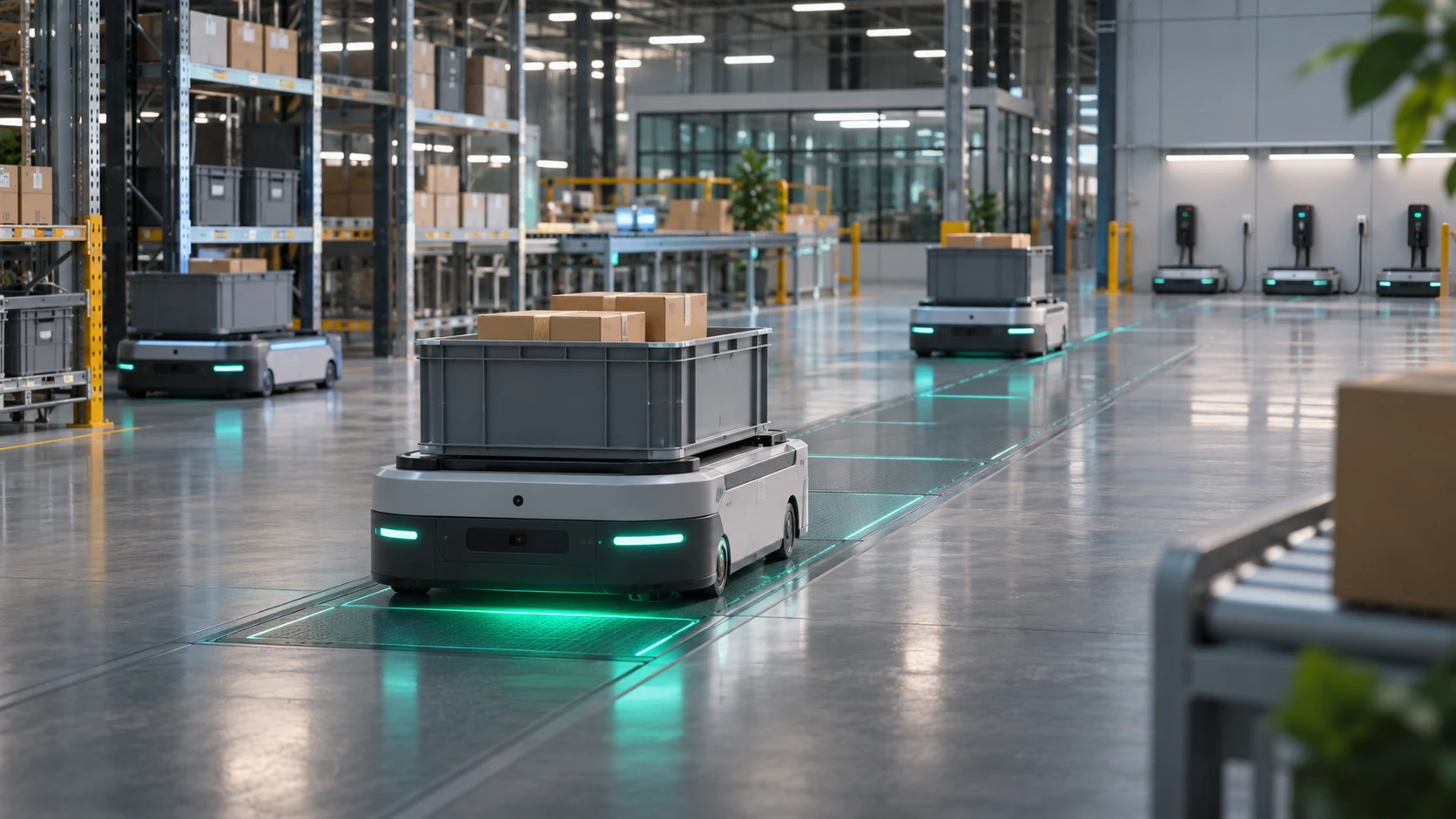
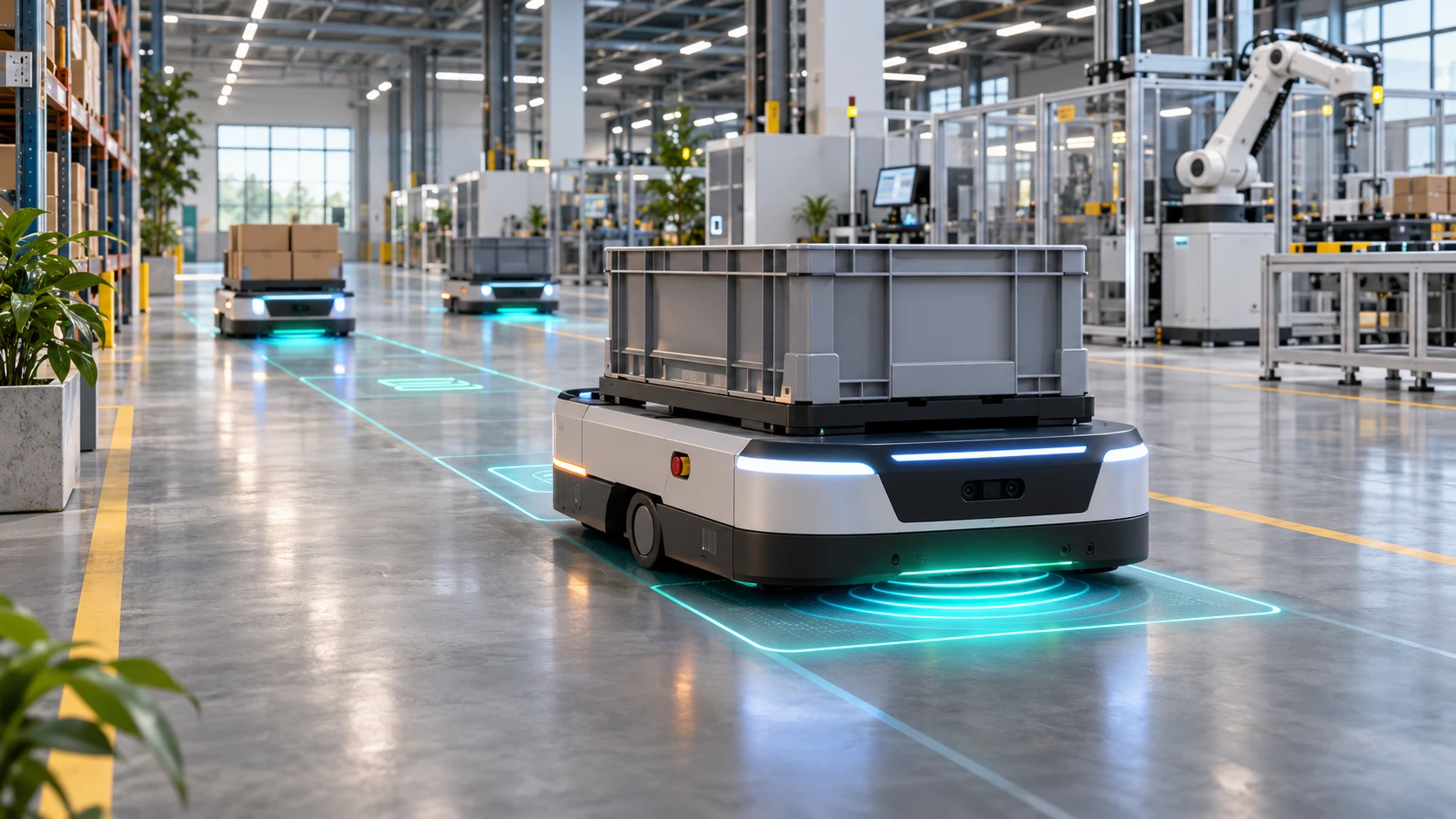
CaPow’s Genesis Power-in-Motion platform approaches the energy challenge by delivering power to compatible mobile robots along selected sections of their normal operating routes.
Rather than requiring energy delivery to function exclusively as a separate charging activity, the system enables energy transfer during normal robot movement and operational dwell periods.
CaPow’s GEMS software adds monitoring and visibility into energy delivery and system performance.
Together, these capabilities provide an approach for integrating energy infrastructure into robotic fleet operations.
For operators evaluating fleet expansion, the broader consideration is whether their chosen energy architecture will support the operating model they intend to scale.
From Robotics Adoption to Industrial Performance
The next phase of warehouse automation will be defined by the ability to deliver repeatable operational results across increasingly complex environments.
DHL’s large-scale deployment activity and GXO’s performance-dependent humanoid robotics plans illustrate different stages of this transition.
The industry is progressing beyond proving that robots can perform tasks.
The next challenge is proving that complete robotic systems can deliver reliable, measurable and economically sustainable results.
For warehouse operators, system integrators and automation leaders, that means evaluating scalability from the beginning.
Because successful robotics deployment is not simply about adding more robots. It is about building an operation capable of supporting them.