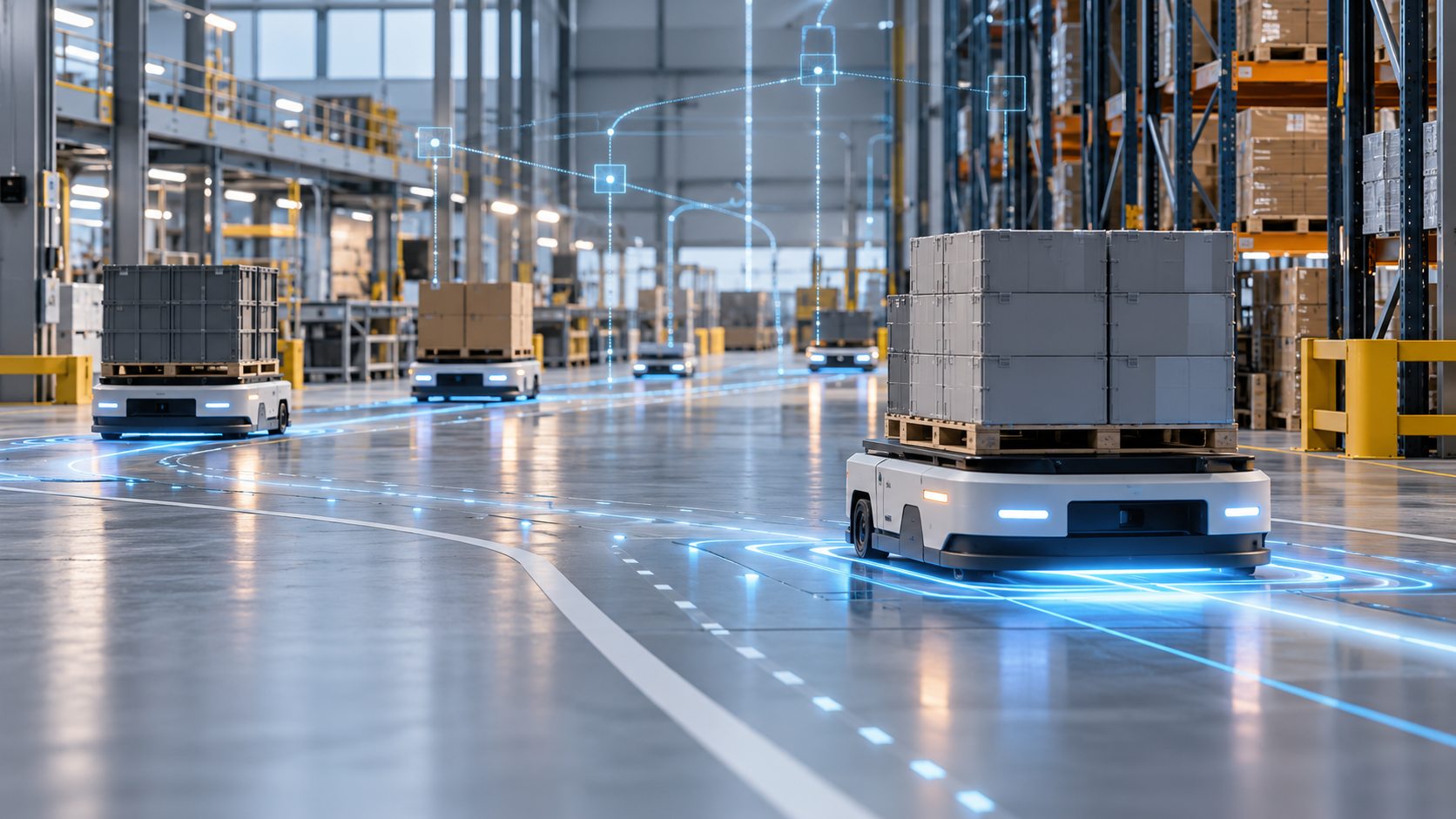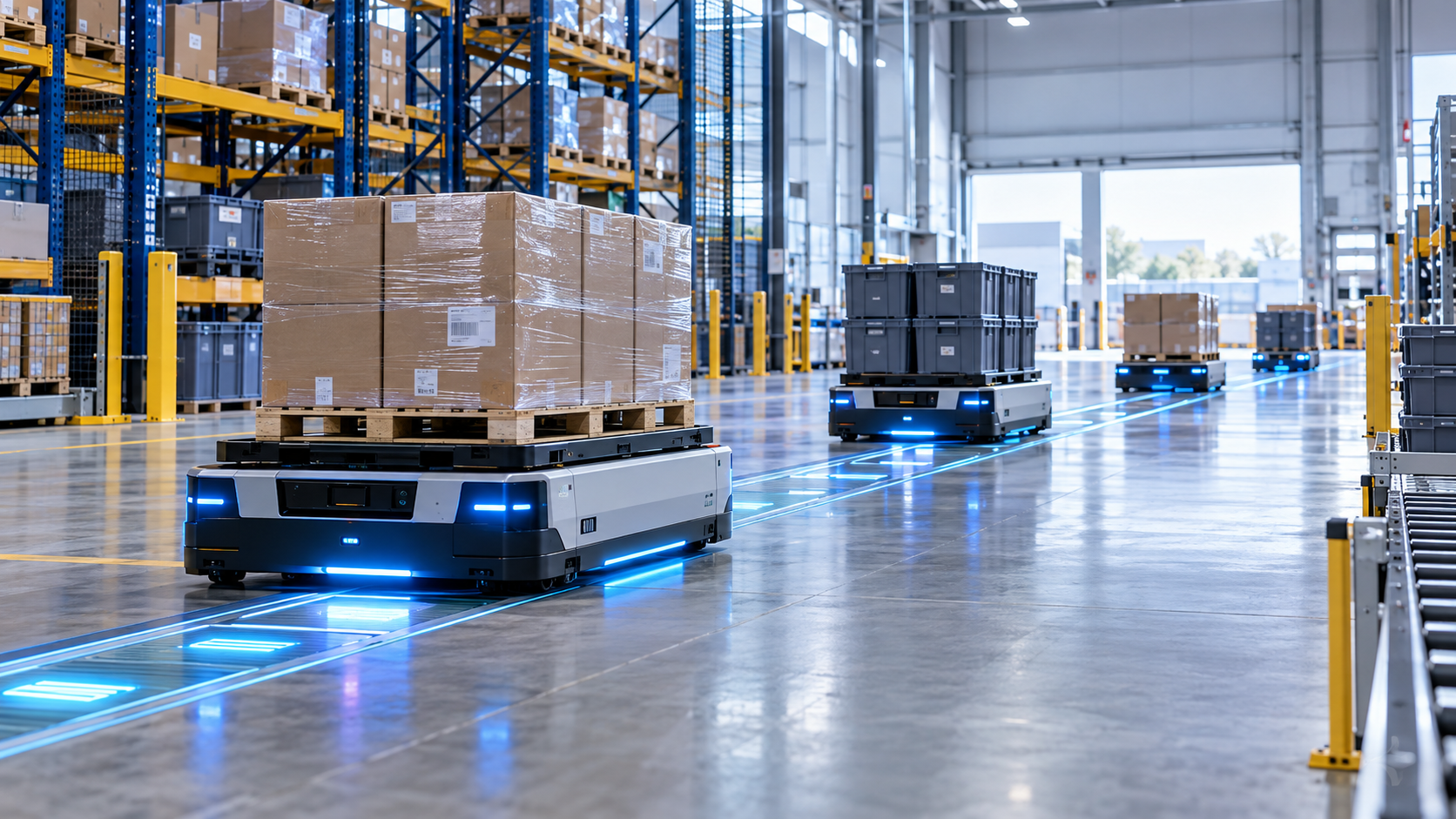
For years, mobile robot performance has been described through specifications.
Maximum speed. Payload. Navigation accuracy. Battery capacity. Charging time.
These numbers matter. But they do not answer the question that ultimately matters to an operation:
How much productive work does the fleet actually deliver?
That distinction becomes increasingly important as mobile robotics scales.
The International Federation of Robotics reported that more than 102,000 transportation and logistics service robots were sold in 2024, a 14% year-over-year increase. At the same time, AMR manufacturers are designing systems specifically for continuous and 24/7 operations.
The industry is clearly optimizing for more automation, more utilization and more continuous flow.
But there is an important constraint hiding underneath all three:
Energy.
Robot speed is not fleet productivity
Consider two robots.
One travels at 2 m/s but periodically leaves the productive workflow to replenish its battery.
The other moves more slowly but remains continuously available.
Which one produces more value over an entire shift?
The answer cannot be found on a specification sheet.
Maximum speed measures what a robot can do while moving. Throughput measures what the operation actually receives over time.
The difference between the two is availability.
This is why charging should not be viewed purely as a battery-management issue. Every time a robot leaves its productive route for a charging mission, part of the installed automation capacity becomes temporarily unavailable.
The operation then has several choices: accept the lost capacity, schedule charging more intelligently, add spare robots, or increase the fleet size to compensate.
All of them have economic consequences.
The industry already understands the charging problem
This is precisely why opportunity charging has become an important feature in modern mobile robotics.
MiR, for example, describes opportunity charging as part of its strategy for supporting continuous operation, and its MiR1200 Pallet Jack is designed with a reported charging ratio of 1:14. OMRON similarly publishes both runtime and recharge specifications for its AMRs, including approximately 19.6 minutes to charge its MD Series from 20% to 80%.
These are meaningful improvements.
They reduce the disruption associated with traditional charging.
But opportunity charging still optimizes around the same fundamental architecture:
The robot consumes energy, and at some point the operation must create an opportunity to replenish it.
Power-in-Motion asks a different question.
What if replenishing energy did not need to become a separate operational event?
From charging events to energy within the workflow
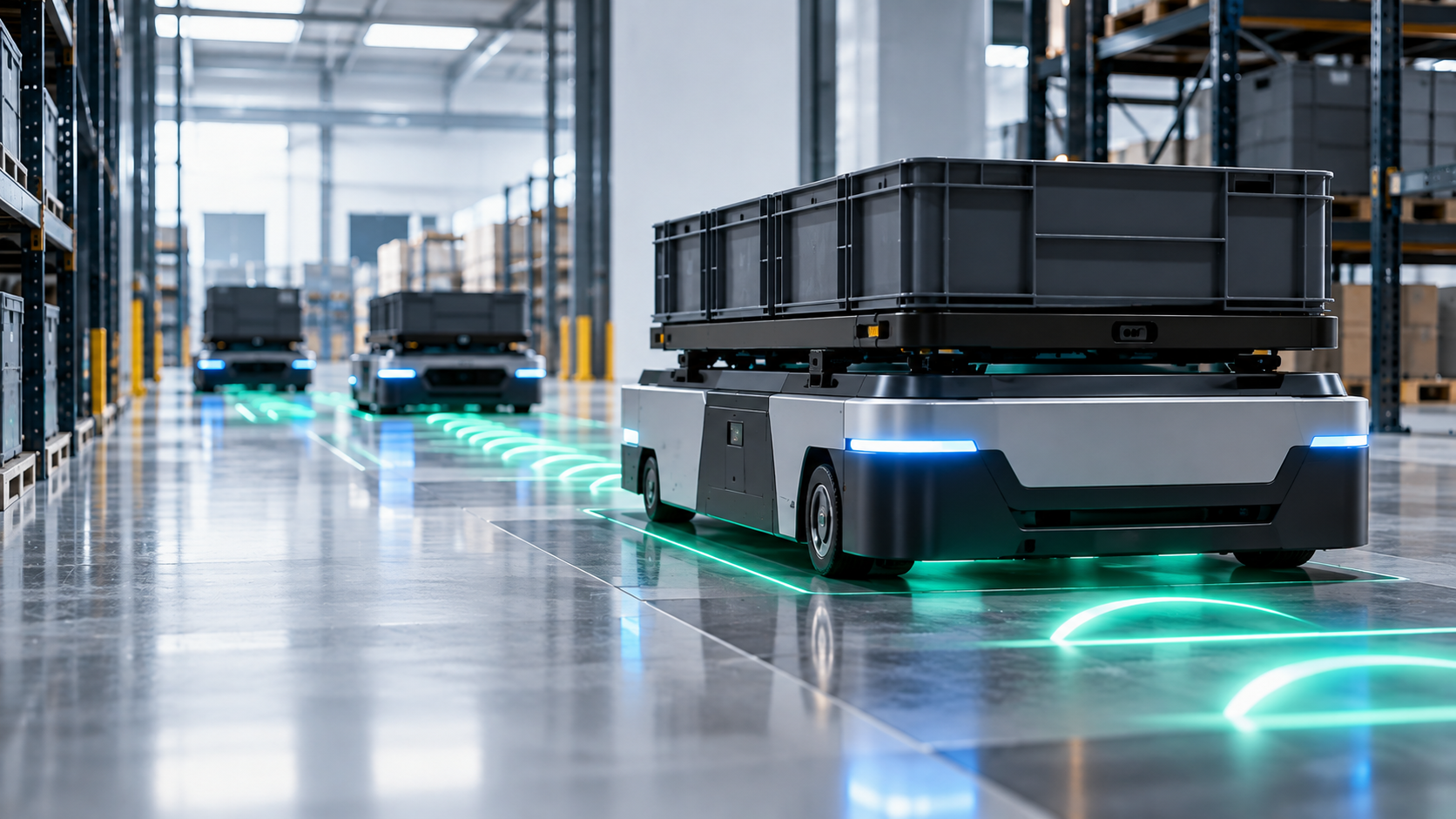
CaPow’s approach is to place energy delivery directly within the robot’s existing operational path.
Strategically positioned Power-in-Motion zones provide the robot with small amounts of energy during its normal workflow. The system is designed around the routes the robots already use rather than asking the operation to create dedicated charging missions.
The objective is not simply faster charging.
It is to prevent the robot from reaching the point at which a charging mission becomes necessary.
In a Hyundai Glovis operation evaluated with CaPow, approximately 15% of fleet time was associated with charging. With Power-in-Motion, the robots maintained their state of charge while performing the same tasks, enabling 100% fleet uptime during the evaluated operation and recovering the productivity otherwise lost to charging.
That distinction matters.
Once energy replenishment becomes part of the productive process, the economic discussion moves beyond batteries and chargers.
It becomes a question of asset utilization.
Uptime changes the fleet equation
Imagine an operation requires the productive capacity of 85 robots at any given time.
If approximately 15% of a 100-robot fleet is unavailable because of charging, purchasing 100 robots may be the practical way to maintain that output.
Remove that lost availability and the economics change.
This is how CaPow approaches ROI calculations. In an example presented by CaPow CEO Prof. Mor Peretz, a 100-robot operation that could avoid approximately 15 additional robots creates an asset-saving opportunity against which the Power-in-Motion investment can be evaluated. The objective is for the system cost to remain below the value of the robotic assets it makes unnecessary.
This is a fundamentally different ROI discussion from reducing electricity consumption or shaving minutes from charging time.
The potential value comes from several places:
More throughput from the existing fleet.
More available robot-hours can translate directly into more productive missions.
Fewer robots required for a given throughput target.
If unavailable robots were previously being compensated for through fleet oversizing, greater availability can change future CapEx requirements.
Less dedicated charging infrastructure.
Traditional charging requires hardware and locations robots can access.
Productive floor space recovered.
Charging areas and the maneuvering space around them compete with inventory and operational processes for valuable facility space.
Reduced energy-related orchestration.
When robots do not need dedicated charging missions, fleet management has fewer non-productive activities to schedule around demand.
Throughput is a system property
This leads to a broader point about how mobile robotics should be evaluated.
A warehouse does not purchase meters per second.
It purchases movement of goods.
A manufacturer does not purchase battery capacity.
It purchases continuity of production.
And an operator does not ultimately care how impressive an AMR looks on an individual specification sheet if the overall system cannot convert that capability into consistent output.
As mobile robot adoption continues to grow, the next stage of optimization will increasingly happen at the system level.
Navigation, orchestration, workflow design and energy cannot be treated as unrelated layers.
They collectively determine how much of an operation’s installed robotic capacity becomes productive capacity.
The fastest robot may still be the right robot.
But speed alone is not the metric that determines the business case.
The more important question is how much of every shift that robot spends doing the job it was purchased to do.
And that is why the future of mobile robotics will not be defined only by how robots move.
It will also be defined by how they are powered while moving.