
Warehouse automation has reached an inflection point.
For years, the dominant strategy was simple: add more robots, add more software, optimize each layer independently. And for a while, that worked.
But today, something isn’t adding up.
Facilities with advanced robotics, modern WMS platforms, and significant investment in automation are still leaving 10% to 40% of operational time unproductive.
The problem is no longer a lack of technology.
It’s how that technology works together.
The Shift: From Optimization to Orchestration
In a recent roundtable discussion with industry leaders including Mor Peretz, the conversation moved beyond automation itself and toward a more fundamental question:
Are warehouses truly optimized – or just coping better with inefficiencies?
Traditional optimization focuses on improving individual components:
- Faster robots
- Better software
- More data
But modern operations are far more complex.
A single order may require multiple pick flows, synchronized packing, and precise timing across limited dock capacity. Even small misalignments create cascading inefficiencies.
This is where orchestration becomes critical.
Orchestration is not about adding more tools.
It’s about aligning decisions, systems, and physical operations in real time.
Watch the Episode
The Hidden Cost of Downtime
One of the most overlooked constraints in warehouse performance is downtime.
Not just system downtime – but operational waiting time:
- Robots waiting for tasks
- Workers waiting for robots
- Orders waiting for synchronization
Even in high-performing facilities, downtime can represent a significant share of lost productivity.
And yet, many operations still treat downtime as unavoidable.
At CaPow, we challenge that assumption.
Downtime is not a given. It’s a design choice.
The Energy Constraint No One Talks About
While much of the industry focuses on software orchestration and AI-driven decision-making, a more fundamental constraint often goes unnoticed:
Energy.
Most mobile robot fleets are still built around a stop-and-charge model:
- Robots leave productive workflows to recharge
- Charging infrastructure consumes valuable floor space
- Fleet sizing is inflated to compensate for unavailable robots
As Mor Peretz noted in the discussion, many warehouses are effectively optimizing around charging constraints instead of removing them.
This has deeper implications than it seems.
When energy is treated as a limitation, it shapes:
- Route planning
- Task allocation
- Fleet size
- Facility layout
In other words, it silently defines the entire system.
Rethinking Energy as Infrastructure
A different approach is emerging.
Instead of treating energy as a periodic interruption, leading operators are starting to view it as infrastructure.
This shift changes everything.
When robots receive power during normal operation:
- Charging stops disappear
- Routes become shorter and more efficient
- Queue times drop significantly
- Throughput increases without adding robots
In real-world scenarios, reducing queue times alone can dramatically improve flow efficiency.
This is the principle behind CaPow’s Power-in-Motion technology:
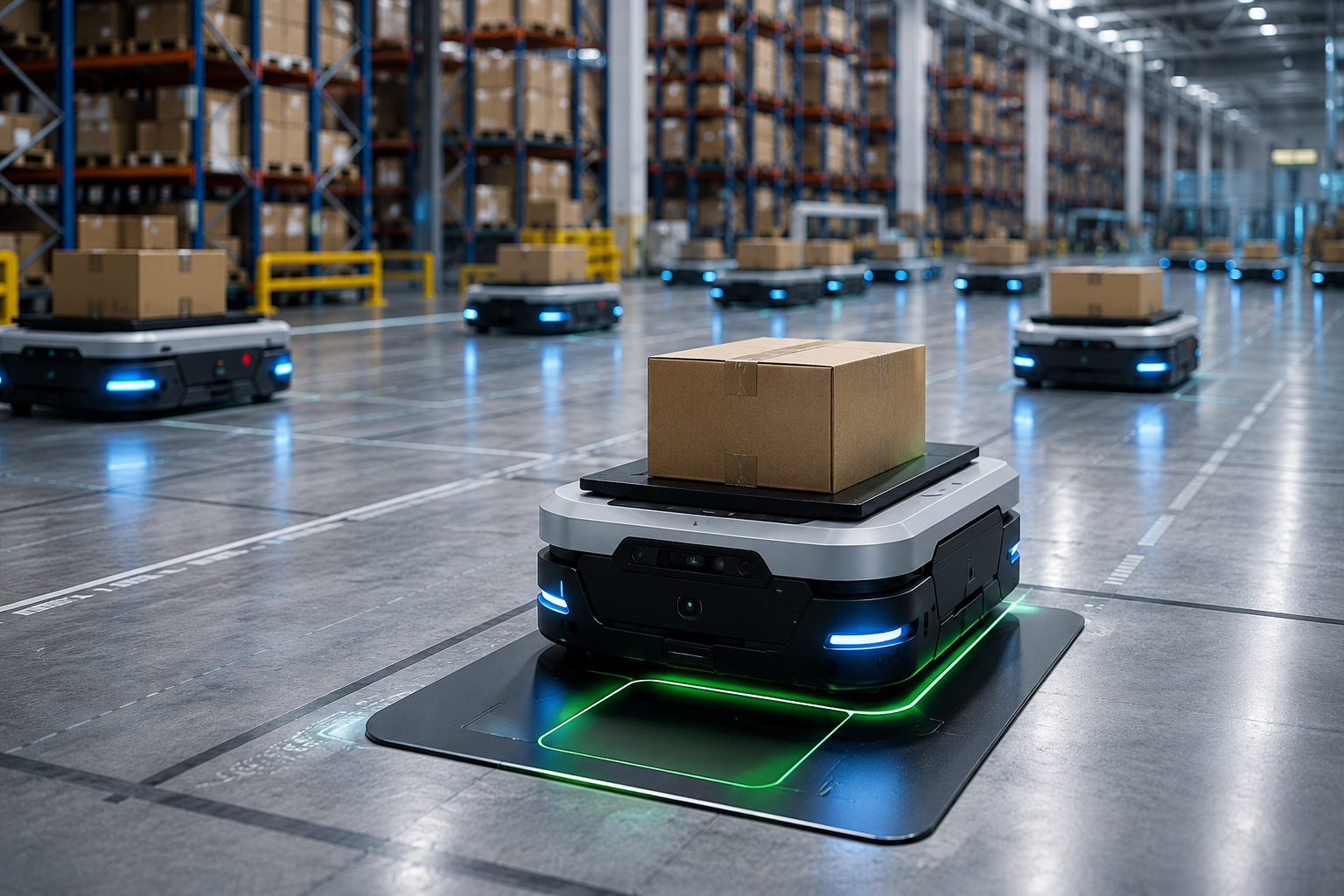
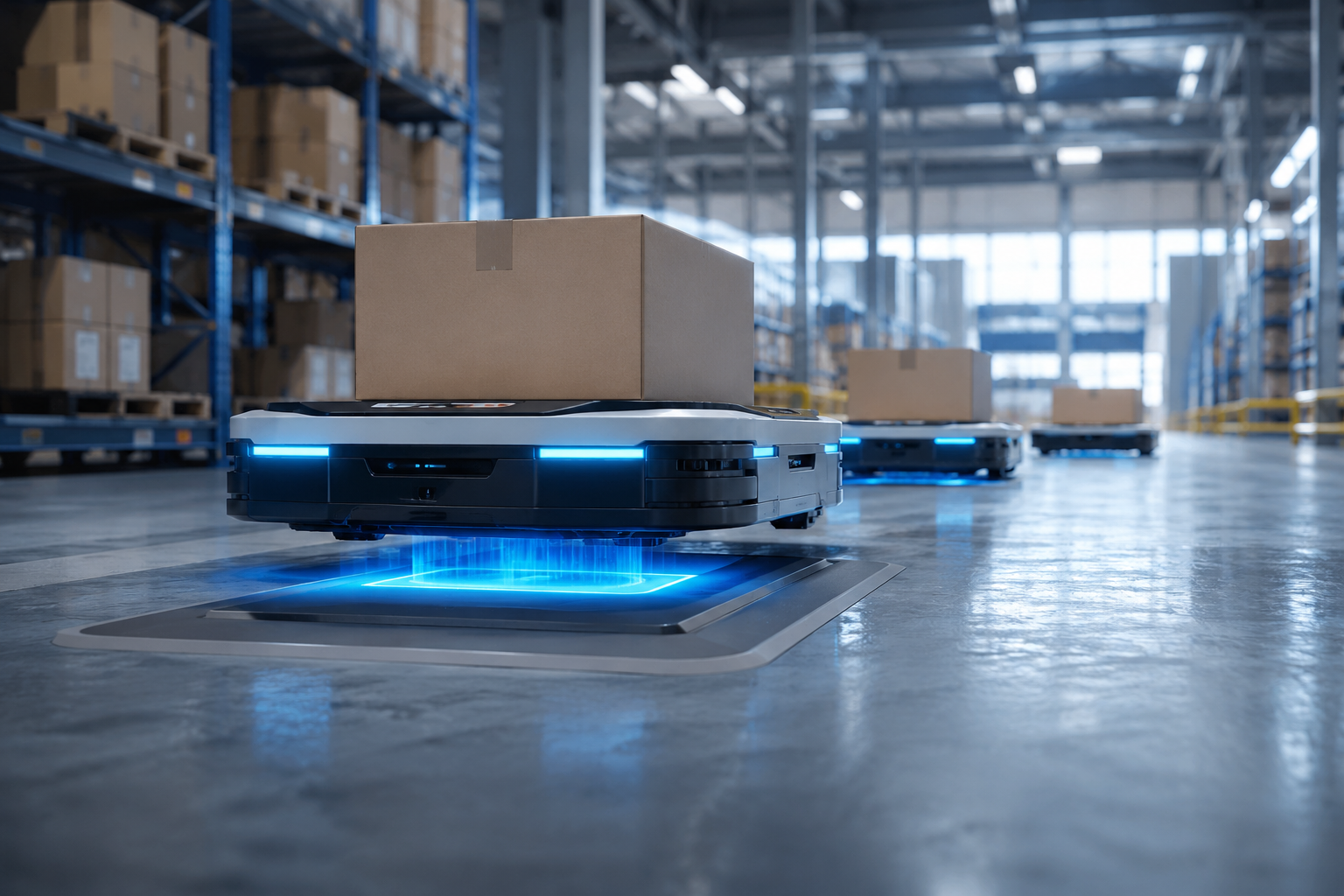
Mobile robots receive power while they move – eliminating the need for charging downtime.
The result is not just incremental improvement.
It’s a structural change in how warehouses operate.
Why More Robots Isn’t the Answer
When performance drops, the instinct is often to add capacity:
- More robots
- More workers
- More systems
But this approach introduces new complexity:
- Higher maintenance costs
- Increased coordination challenges
- More congestion on the floor
As highlighted in the roundtable, adding resources without orchestration often amplifies inefficiencies rather than solving them.
A better approach is to first maximize the performance of existing assets.
That means:
- Improving flow before adding capacity
- Eliminating bottlenecks instead of compensating for them
- Aligning decisions across systems
Only then does additional automation create real value.
The Role of Data – and Its Limits
Data is often positioned as the foundation of modern warehouse optimization.
And it is essential.
But data alone does not drive performance.
As discussed in the roundtable:
- Many organizations move from being data-poor to data-rich
- But remain insight-poor and action-poor
The real challenge is not collecting data.
It’s connecting data to decisions – and decisions to execution.
Without that link, even the most advanced analytics fail to impact operations.
The Real Bottleneck: Change, Not Technology
One of the most important insights from the discussion is often overlooked:
Technology is not the hardest part. People are.
Even the best systems fail if:
- Adoption is slow
- Training is complex
- Integration disrupts operations
This is why seamless integration is critical.
Solutions that require major operational changes face resistance.
Solutions that fit naturally into existing workflows get adopted.
At CaPow, this principle drives everything:
- Platform-agnostic integration
- Minimal disruption to operations
- No need to redesign workflows
Because real impact comes from what gets used – not what gets installed.
What the Next Phase Looks Like
Looking ahead, warehouse performance will be defined by a different set of capabilities:
1. Velocity over visibility
Not just knowing what’s happening – but acting on it instantly.
2. System-level thinking
Optimizing the entire operation, not individual components.
3. Decision automation
Moving from human-managed processes to machine-driven execution, with humans supervising.
4. Energy continuity
Ensuring that physical operations are never interrupted by power constraints.
A New Standard for Warehouse Performance
The industry is moving toward a new baseline:
- Higher throughput without increasing fleet size
- Reduced dependency on charging infrastructure
- Continuous operation by design
- Systems that adapt in real time
This is not about incremental gains.
It’s about redefining what “normal” looks like.
As Mor Peretz summarized in the discussion:
“Downtime is a choice. We have to stop stopping.”
Listen to the Full Discussion
Read the Full Roundtable Article
For a deeper dive into the discussion, read the full article on The Supply Chainer:
https://www.thesupplychainer.com/post/roundtable-discussion-from-warehouse-optimization-to-decision-orchestration-the-next-phase-of-int