For years, the focus in advanced technologies has been clear: compute.
More GPUs, larger models, faster processing.
That narrative is still valid – but it is no longer sufficient.
What is becoming increasingly clear, both in industry discussions and infrastructure planning, is that compute does not scale independently.
It scales with energy.
And that shift is not a risk.
It is one of the largest opportunities being created in the current technology cycle.
The inflection point: AI is becoming energy-defined
NVIDIA CEO Jensen Huang has been explicit about this shift.
He stated that “you can’t sustain… AI without energy,” highlighting the direct dependency between AI growth and power availability.
He has also described the industry as “power-limited,” noting that future data centers will be constrained not by compute, but by energy capacity.
At the same time, he characterized modern AI infrastructure as “gigawatt factories,” reflecting the scale of electricity required to operate them.
Importantly, Huang framed the stack itself as starting from energy, stating that “it starts at energy, then chips.”
This is a structural shift.
The market signal: when constraints shift, capital follows
When a system-level constraint emerges, markets tend to respond quickly.
That is already visible.
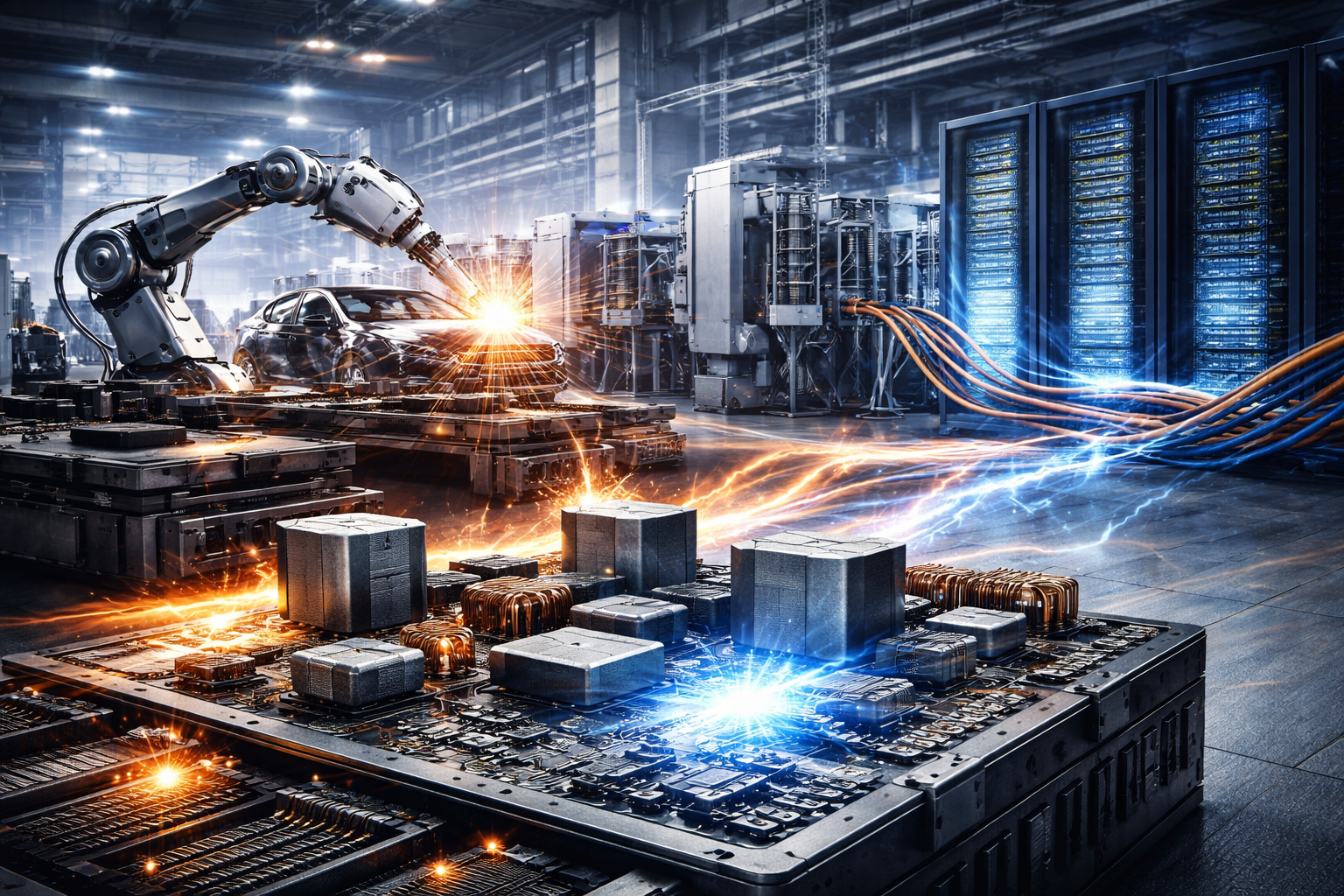
As more attention shifts toward energy consumption, grid capacity, and power efficiency, interest is expanding beyond compute providers toward the technologies that enable energy delivery.
This includes:
- Power conversion systems
- High-efficiency semiconductors (SiC, GaN)
- Infrastructure that reduces losses and improves utilization
The logic is straightforward.
If AI continues to scale – and all indicators suggest it will – then the infrastructure required to power that scale becomes a growth market in its own right.
This is why more analysts and investors are starting to look at energy efficiency and power electronics as core enablers of the AI economy.
Beyond AI: the same pattern is emerging in robotics
This dynamic is not limited to data centers.
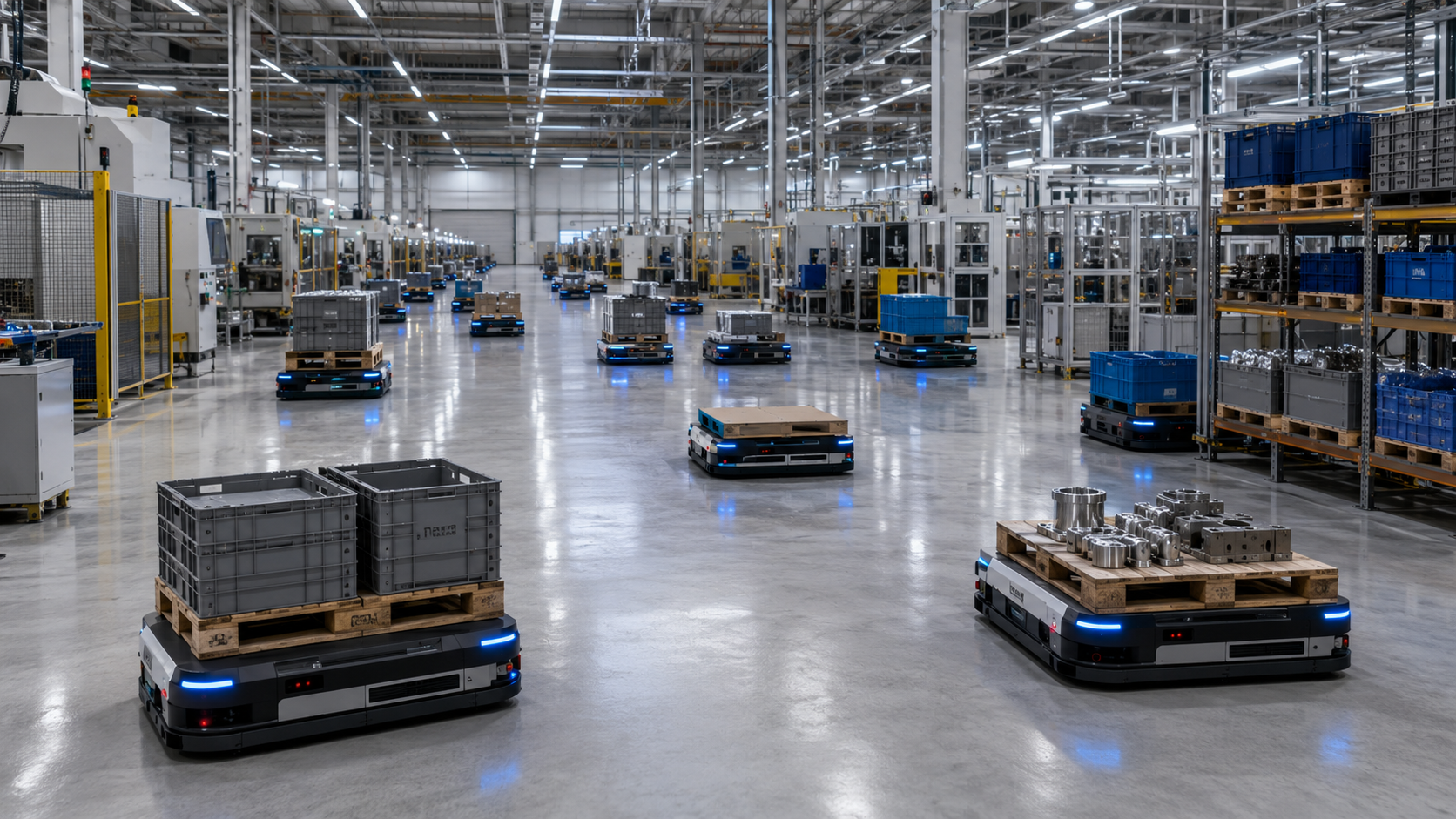
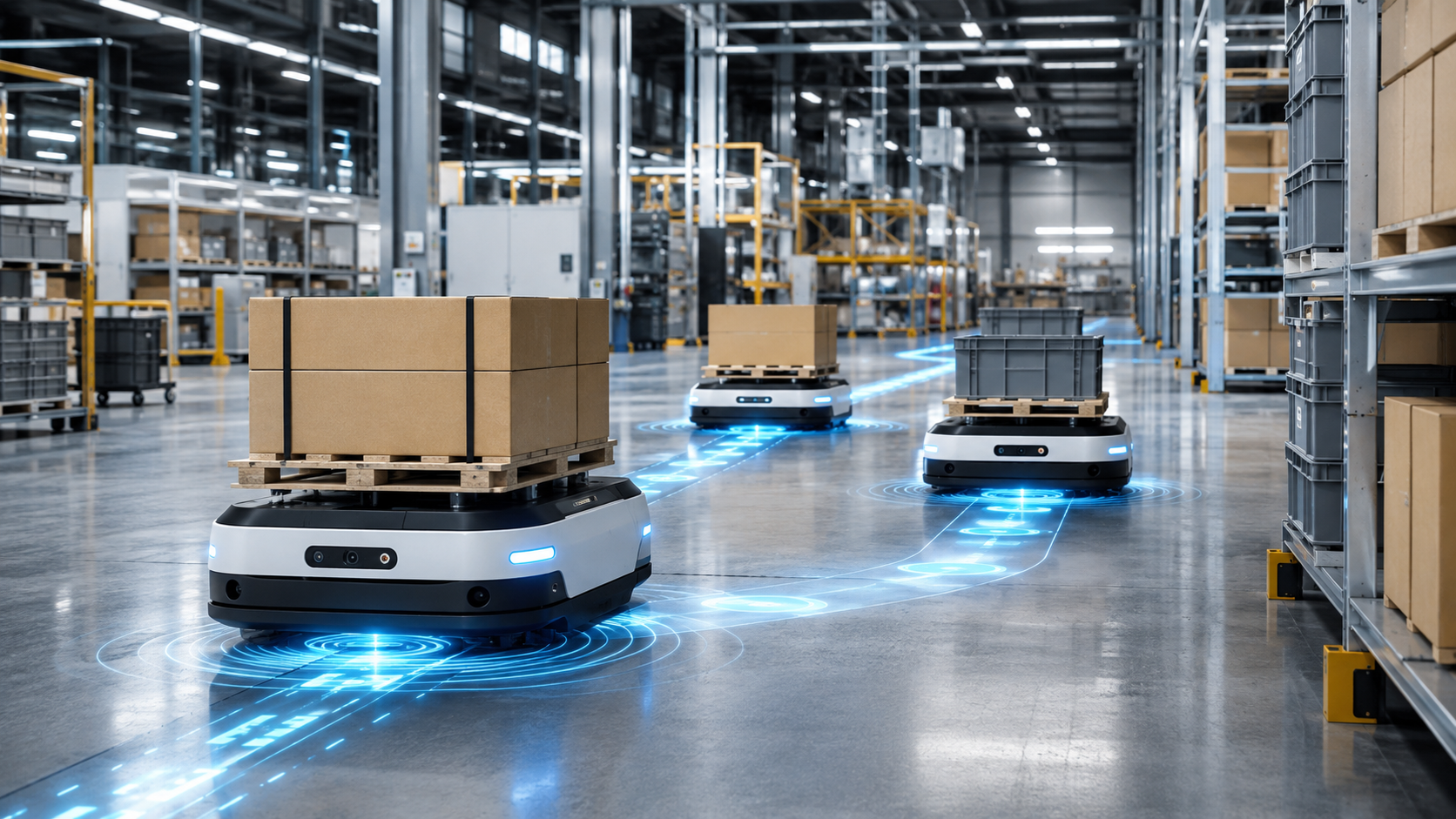
It is already visible in robotics, particularly in automotive manufacturing and logistics.
As robotic fleets scale:
- Energy availability impacts throughput
- Charging cycles impact utilization
- Power delivery impacts system efficiency
At small scale, these are operational details.
At large scale, they define system performance.
The constraint is no longer the robot.
It is how the robot is powered.

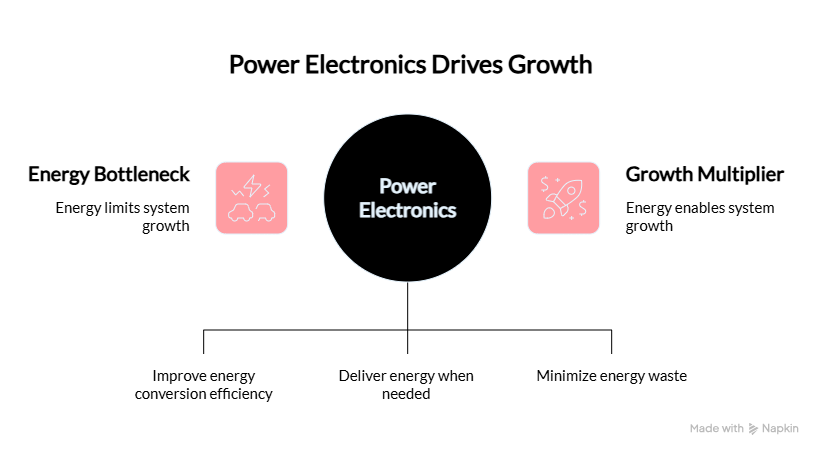
From bottleneck to growth engine
This is where the narrative shifts.
Energy is often framed as a limitation.
In reality, it is becoming a growth multiplier.
Power electronics – including advanced conversion, real-time delivery, and efficiency optimization – is moving from a background component to a central layer of the technology stack.
This layer determines:
- how much compute can be utilized
- how efficiently systems operate
- how far automation can scale
In that sense, it is not just supporting innovation.
It is enabling it.
The broader implication
Every major technology wave has a foundational layer that defines its scale.
For the internet, it was connectivity.
For cloud, it was compute infrastructure.
For AI and robotics at scale, it is increasingly clear:
It will be energy.
And more specifically – how efficiently that energy is delivered and used.
Final perspective
The question is no longer whether AI and robotics will scale.
They will.
The more relevant question is:
Which technologies will enable that scale to happen efficiently and sustainably
That is where the next phase of growth is already forming.
And it is happening at the level of power.