 Booth A901 -
Why the Next Wave of Value Comes From Using Robots More
For a long time, automation strategy followed a familiar pattern.
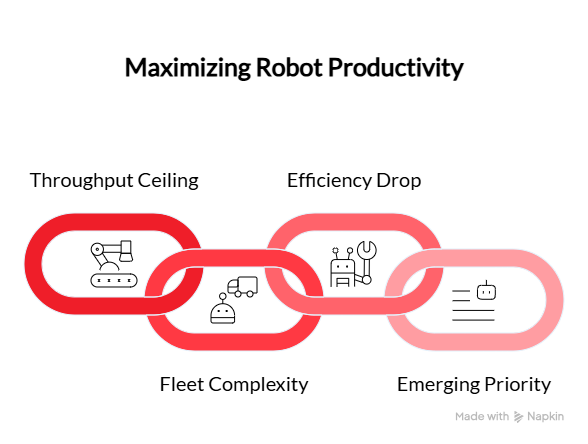
When throughput hit a ceiling, companies added robots.
When fleets grew complex, facilities expanded.
When efficiency dropped, new hardware entered the conversation.
In 2025, that logic has started to shift.
Across warehouses, manufacturing floors, and fulfillment centers, a different priority is emerging:
maximize the productivity of every robot already in operation.
From Ownership to Utilization
Industrial robots are durable assets.
In many operations, they are underutilized long before they become obsolete.
What limits them is rarely mechanical wear.
It is how often they stop, where they stop, and how much infrastructure is built around those stops.
This is why retrofit has become central to modern automation thinking.
Not as a technical upgrade, but as a way to reset the economics of an existing fleet.
Second-Hand Robots Are a Signal
The growing interest in second-hand industrial robots reflects a broader realization:
robots retain value far longer than traditional planning models assume.
But the real opportunity is not just in buying used robots.
It is in making robots interchangeable across operations.
When a robot can operate without being constrained by fixed charging locations or downtime schedules:
- it can be reassigned to new workflows
- redeployed across facilities
- repurposed when demand shifts
Robots that would normally be retired, sold, or sidelined become flexible production assets again.
Reuse and repurpose is the strategy.
Retrofit Unlocks a New Type of Flexibility
When energy delivery is embedded into the operational flow rather than treated as a separate activity, something fundamental changes.
Robots stop being tied to:
- specific routes
- specific stations
- specific utilization windows
Instead, fleets become fluid.
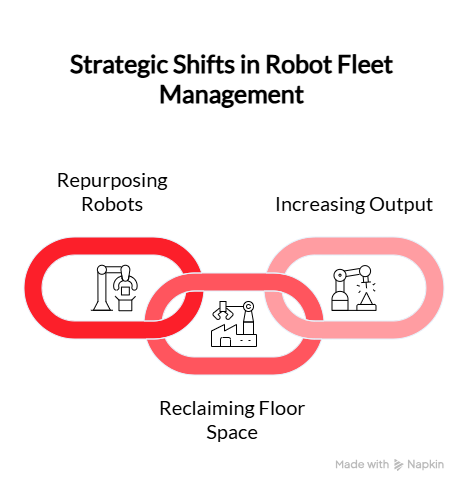
This enables three critical shifts:
1. Repurposing Robots Across Operations
Robots freed from charging dependencies can be moved where demand exists today, not where infrastructure was designed years ago.
A robot leaving one process does not exit the system.
It enters another.
2. Reclaiming Floor Space for Revenue-Generating Use
Charging zones consume prime operational real estate.
When those zones disappear, the space does not sit idle.
It becomes:
- additional picking or staging areas
- new production lines
- higher-density layouts
It is capacity creation inside the same footprint.
3. Increasing Output Without Increasing Fleet Size
As robots spend more time working and less time waiting, throughput grows without proportional increases in robot count.
Fewer robots, working more consistently, outperform larger fleets built around interruptions.
Utilization Is Becoming the New KPI
More operators are shifting their focus from:
“How many robots do we have?”
to:
“How much work does each robot actually perform?”
This is a subtle but powerful change.
High utilization means:
- higher throughput per asset
- lower operational overhead
- reduced capital pressure
- longer effective robot lifespans
It also changes procurement behavior.
Purchasing decisions slow down because existing assets are delivering more value.
Infrastructure Is Where the Shift Is Happening
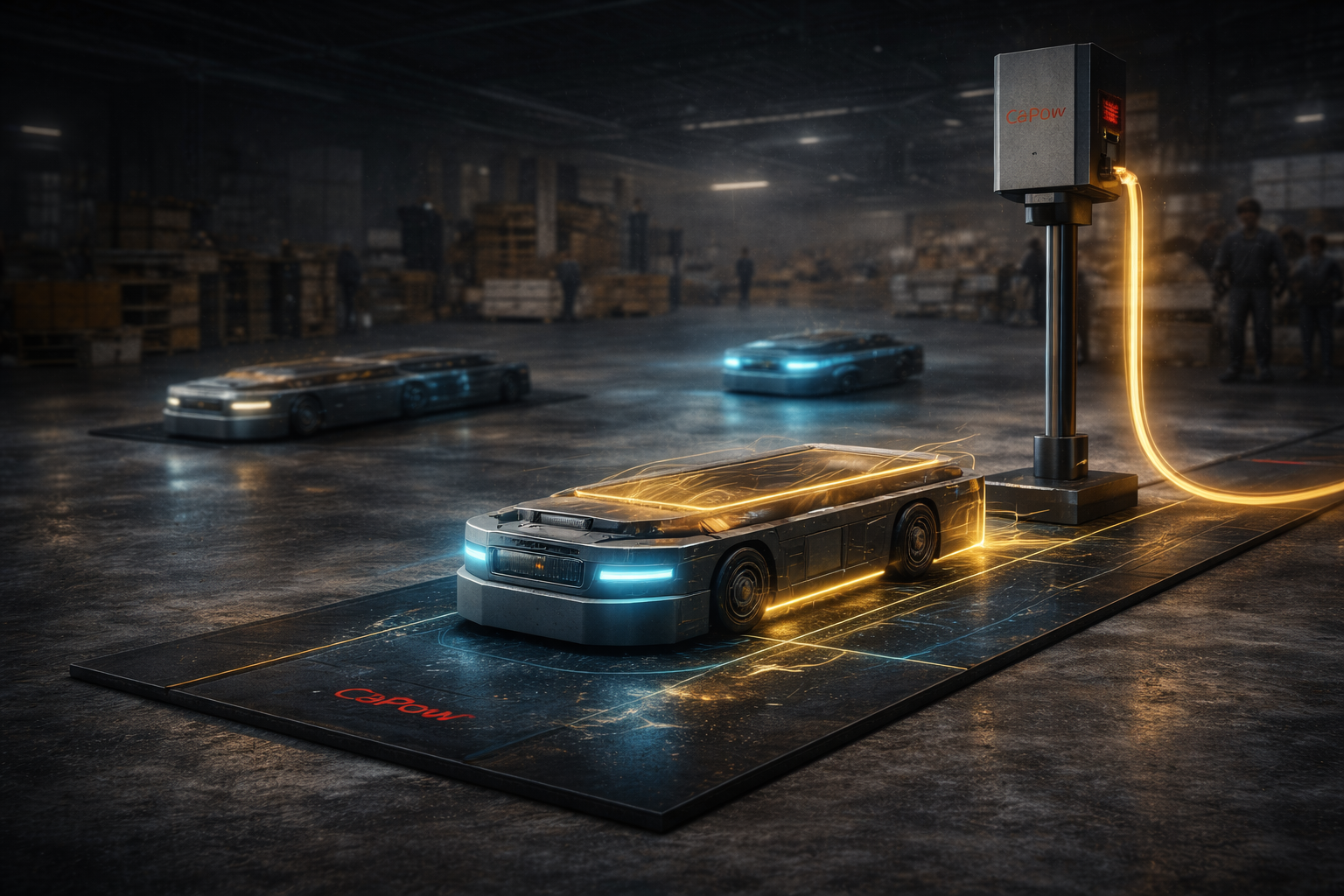
CaPow operates at the infrastructure layer of this transition.
By enabling robots to receive power while moving, without stopping or entering dedicated charging zones, operations are rethinking how fleets are deployed, reused, and scaled.
The impact is not limited to one robot generation or one use case.
It applies to:
- existing fleets
- second-hand robots
- mixed environments
- future expansions
What changes is not the robot.
What changes is the system it operates within.
A Quiet Trend With Compounding Effects
This shift shows up gradually:
- fewer robots ordered despite higher volumes
- layouts evolving without expansion
- robots staying in service longer
- operations adapting faster to change
Organizations that recognize this early gain a structural advantage.
Those that don’t will eventually notice something else:
others are producing more, with less.
Automation Is About Unlocking Efficiency
The next phase of automation growth will be driven by maximizing utilization, and repurposing intelligently.
Retrofit makes that possible.
Reuse makes it sustainable.
Infrastructure makes it scalable.
And that is where the real efficiency gains are now being found.