 Booth A901 -

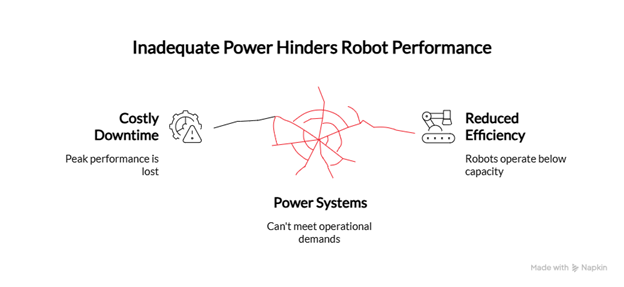
Robots are transforming how businesses move, build, and fulfill. From autonomous mobile robots (AMRs) to automated guided vehicles (AGVs), automation is reshaping logistics, manufacturing, and distribution. But despite advances in software and AI, many robotic fleets still suffer from a critical weakness: power systems that can’t keep up with operational demands.
In 2026, energy infrastructure isn’t just an engineering detail, it’s the difference between peak performance and costly downtime.
This article explores core power technologies, introduces cutting-edge systems like CaPow’s Power-in-Motion, and shares practical guidance on how to future-proof your fleet’s energy strategy.

Understanding the Basics: Traditional Robot Power Systems
Most mobile robots today rely on three main energy delivery methods:
1. Battery-Powered Charging
Lithium-ion and lead-acid batteries dominate the market. Robots return to docks or designated areas to recharge when their batteries are depleted.
Advantages:
- Established technology
- High energy density
Disadvantages:
- Downtime during charging
- Fire and overheating risks with Li-ion
- Battery degradation over time
- Need for redundant robots to maintain throughput
One tier-1 automotive manufacturer reported fleet inflation of 25% – buying 10 extra robots – just to maintain production during charging cycles.
2. Stationary Wireless Charging
These systems use electromagnetic induction or magnetic resonance to transfer energy wirelessly when robots pause over charging pads.
Advantages:
- No physical contact
- Reduces wear on connectors
Disadvantages:
- Robots still need to stop
- Requires tight alignment tolerances (often around 30 mm)
- Vendor-locked and expensive

3. Fuel Cells and Solar
Rare for indoor operations. Fuel cells add complexity and solar is not viable inside facilities.
The Shift: Advanced Energy Systems for 2026
Receiving Power While in Motion
One of the most disruptive innovations in robotics energy is enabling robots to receive power without stopping.
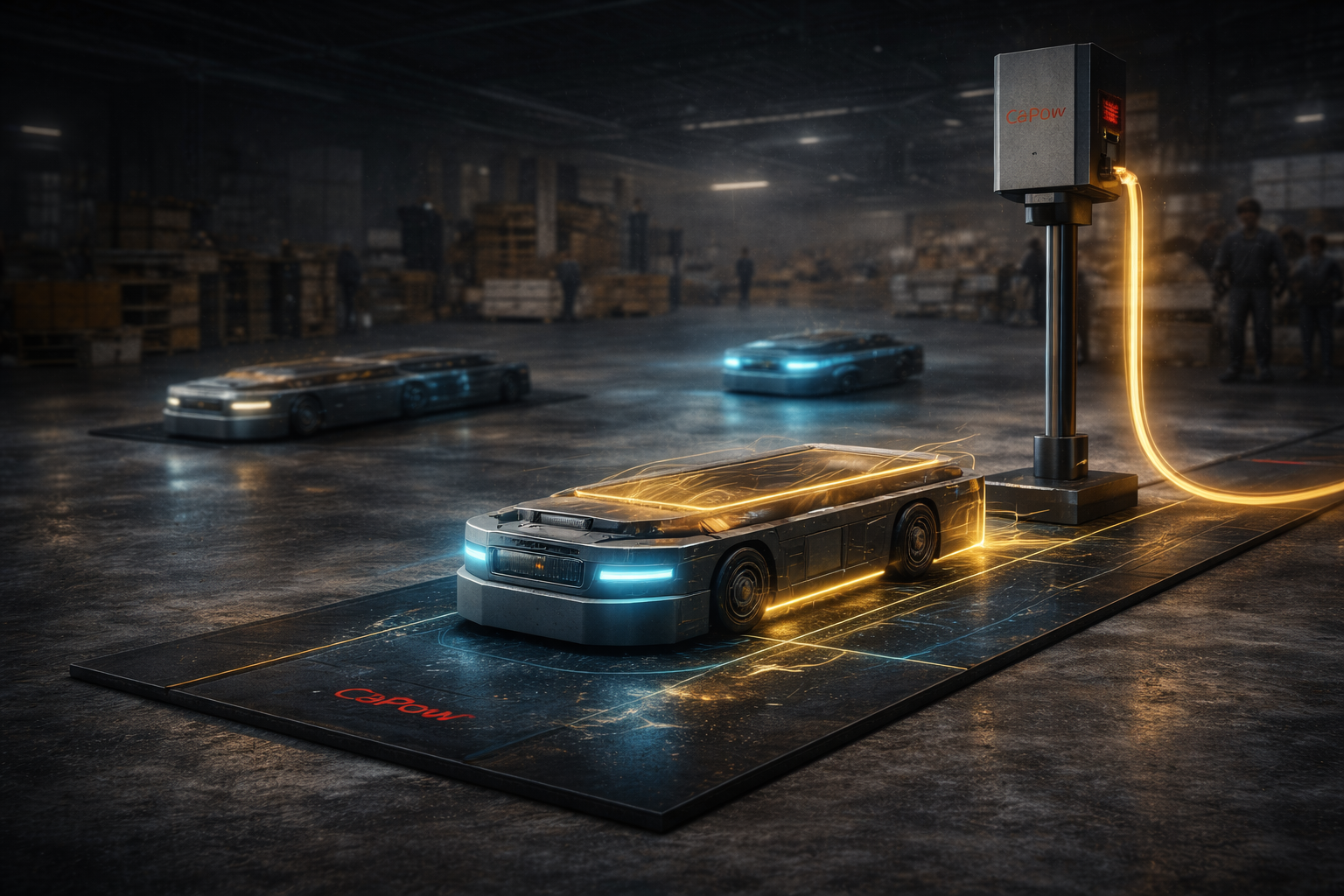
CaPow’s Power-in-Motion system delivers energy to robots as they move, eliminating the need for traditional charging events.
Key features include:
- Capacitive wireless energy transfer (safe, non-radiative)
- Continuous power delivery even with misalignment
- full power maintained as long as the robot covers at least 50% of the floor antenna surface
- full power maintained as long as the robot covers at least 50% of the floor antenna surface
- Up to 80 mm Z-axis clearance
- Supports any battery type or battery-free configurations
- Retrofit-friendly and robot-agnostic across AMR/AGC/AGV/ASRS platforms
Robots equipped with Power-in-Motion achieve 100% availability, eliminating charging stops and improving ROI.
Customers have reported up to 50% reduction in automation-related production losses and up to 32% lower total cost of ownership (TCO).
Smart Energy Management with GEMS
Power delivery is only part of the equation. Monitoring and optimizing energy usage across a fleet is essential.
CaPow’s Genesis Energy Management System (GEMS) provides:
- Real-time energy data across the fleet
- Alerts and predictive maintenance insights
- Integration with warehouse and fleet management systems
Energy becomes a measurable, manageable operational asset – not a hidden cost.
10 Key Considerations When Choosing a Power System
- Downtime tolerance – Can your operation afford any stops?
- Fleet size pressure – Are you adding robots just to offset charging cycles?
- Energy visibility – Do you know how power flows in your fleet?
- Alignment sensitivity – Can your system tolerate real movement and misalignment?
- Safety – Are there overheating or fire risks?
- Battery strategy – Is there an opportunity to spec down batteries?
- Infrastructure costs – Does your system require structural floor changes?
- CaPow requires no excavation, thanks to modular floor antennas.
- Compatibility – Can it work across robot vendors and models?
- Scalability – Does performance degrade as the fleet grows?
- ROI impact – Are you achieving uptime without inflating TCO?
CaPow’s Genesis solution checks all ten boxes.
Why It Matters More Than Ever
Operations leaders know that automation isn’t just about having robots—it’s about keeping them productive. Every minute spent charging, every square foot allocated to charging rooms, and every redundant robot added to compensate for downtime hurts efficiency and profitability.
Power systems have become a strategic differentiator.
By enabling robots to receive power while moving and by managing energy proactively through GEMS, CaPow delivers:
- 100% uptime
- Up to 45% operational efficiency gains (if used internally; not for external claims unless validated)
- Up to 32% TCO reduction
It’s not about charging faster.
It’s about never stopping.
If your robots still need to pause to power up, your operation is already behind.