Introduction – Energy Is the New Bottleneck
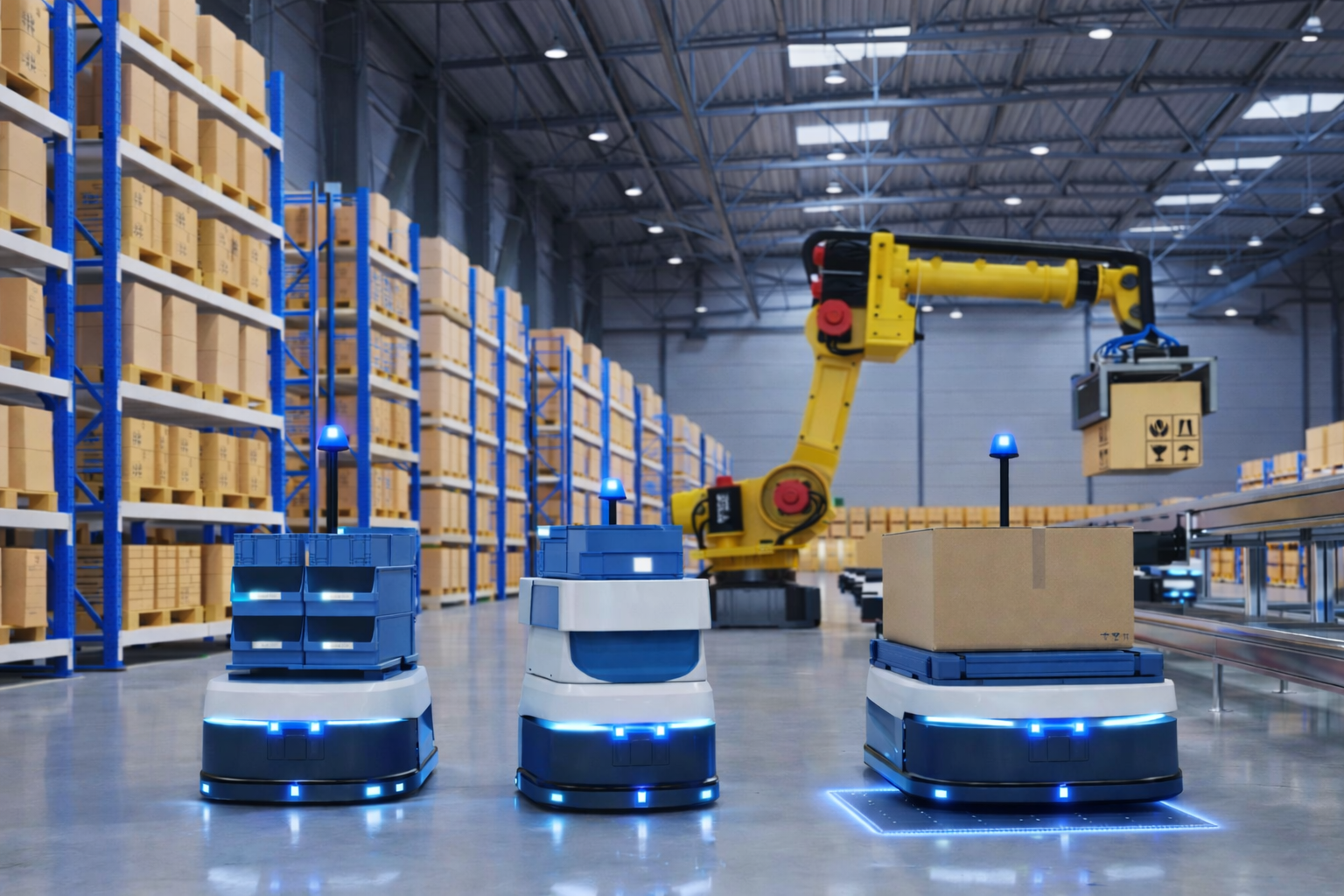
Industrial mobile robotic fleets have entered a new phase. Navigation is mature. Autonomy is improving fast. Fleets are scaling. Yet one constraint quietly limits throughput, cost efficiency, and sustainability: energy.
Across warehouses, manufacturing floors, and fulfillment centers, mobile robots still spend a meaningful portion of their operational life not working, but waiting. Waiting to charge. Waiting for alignment. Waiting for batteries to recover. The result is hidden energy waste, inflated fleet sizes, and higher operational costs that compound over time.
As automation becomes business critical in 2026, energy optimization is no longer a secondary engineering concern. It is an operational and financial lever.
This article breaks down how organizations can think about energy efficiency in industrial robotics today, and what practical strategies matter most as fleets scale.

1. Why Energy Optimization Matters More Than Ever
Energy consumption in robotics affects far more than electricity bills.
The financial impact
- Charging downtime reduces effective robot utilization
- Extra robots are often purchased to compensate for unavailable ones
- Battery degradation drives replacement costs and maintenance overhead
- Charging infrastructure consumes valuable floor space
In large fleets, even small inefficiencies translate into millions in total cost of ownership over time.
The operational impact
- Bottlenecks appear during peak demand
- Throughput becomes unpredictable
- Layout flexibility decreases due to fixed charging zones
- Scaling automation requires more complexity instead of more output
The sustainability impact
- Excess energy use conflicts with green manufacturing goals
- Battery-heavy systems increase material consumption and disposal challenges
- Inefficient energy delivery undermines broader ESG initiatives
Energy optimization is therefore not just about saving power. It is about unlocking capacity that already exists.

2. Key Components That Shape Energy Efficiency
Energy performance in robotic systems is shaped by several interconnected layers. Optimizing one while ignoring the others rarely delivers meaningful results.
Mobile Robot Fleets
Modern motors and variable frequency drives are more efficient than ever, but they still rely on consistent power availability. Stop-start cycles and deep discharge patterns reduce their real-world efficiency.
In mobile robot fleets, this inefficiency is amplified by frequent stop-start behavior driven by charging cycles. Each interruption forces motors and drives to repeatedly ramp up and down, reducing effective duty cycles and lowering overall system efficiency in continuous, multi-shift operations.

Power storage
Lithium-ion batteries dominate today’s fleets, but they introduce trade-offs:
- Limited duty cycles
- Charging constraints
- Degradation over time
- Safety and thermal management requirements
In mobile robot fleets operating at scale, these challenges are driven less by battery chemistry itself and more by energy architecture – how, when, and where power is delivered during operation.
As fleets grow, battery management becomes an operational system of its own.
Charging infrastructure
Traditional charging stations assume robots should stop working to receive energy. This assumption defines layouts, workflows, and fleet sizing, often locking inefficiencies into the system.

Energy management software
Most operations lack a real-time view of how energy flows across the fleet. Without this visibility, energy remains reactive rather than optimized.
True efficiency emerges when these components are designed as a single system, not as isolated decisions.
For mobile robot fleets, this means lacking robot-level energy orchestration – the ability to understand and manage energy availability dynamically across moving assets in real time.

3. Practical Strategies for Energy Optimization in 2026
1. Rethink the stop-to-charge model
One of the biggest energy inefficiencies in robotics is not consumption, but interruption.
Energy systems that require robots to stop working introduce:
- Lost productive time
- Queueing at chargers
- Underutilized assets
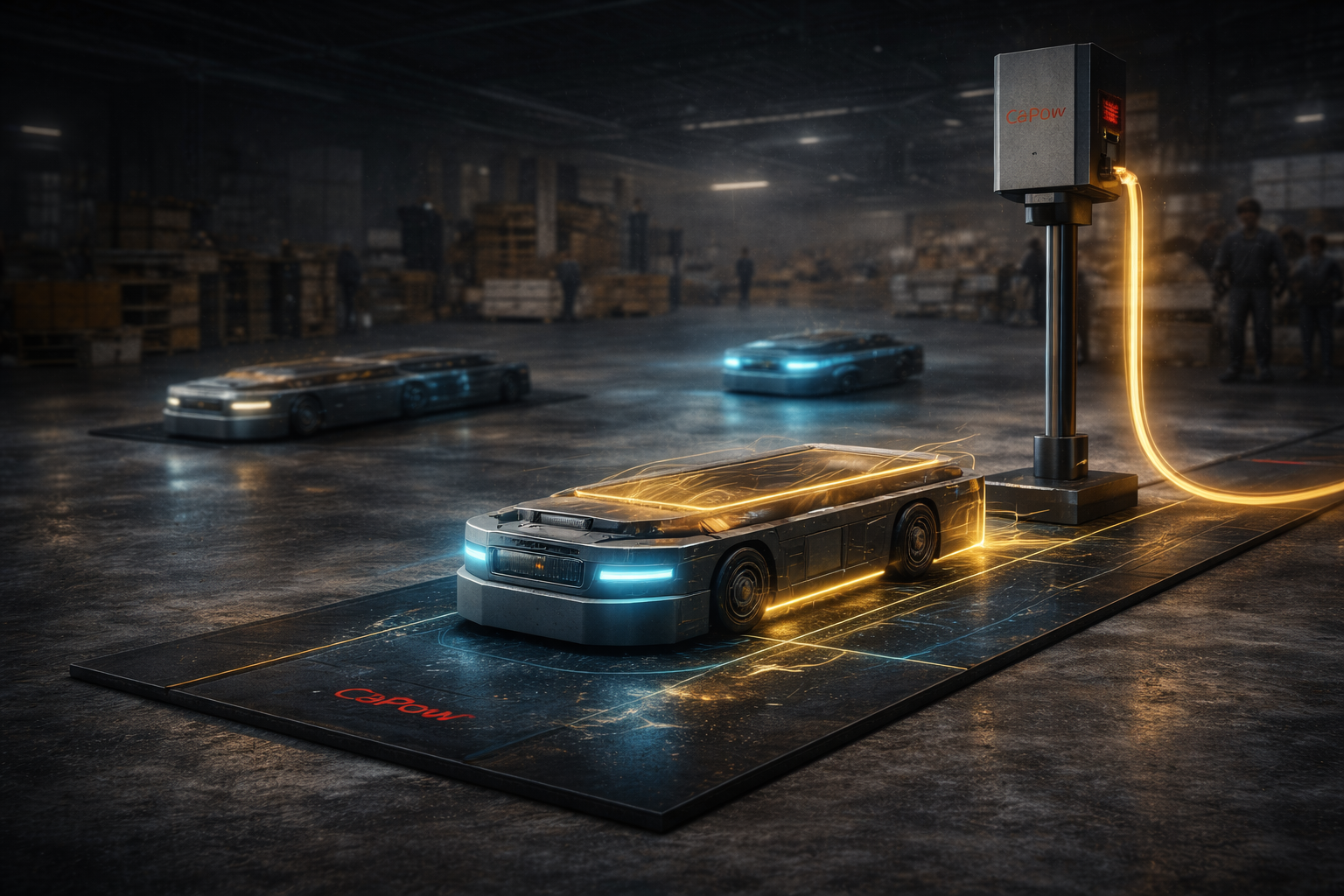
In-motion power delivery challenges this model by enabling robots to receive power while moving along their normal routes. Energy becomes continuous rather than episodic, removing downtime from the equation.
2. Design for energy flow, not battery capacity
Many fleets attempt to solve energy constraints by increasing battery size or charging speed. This often increases cost, weight, and degradation without addressing root causes.
A more effective approach is designing how energy flows through the operation:
- Where robots naturally pass
- When power is needed most
- How misalignment and variability are handled
Energy systems that tolerate movement and misalignment reduce friction without forcing operational changes.
3. Reduce over-provisioning
Over-purchasing robots to compensate for charging downtime is common and expensive.
Optimized energy delivery allows:
- Higher utilization per robot
- Smaller fleets achieving the same throughput
- Lower capital expenditure
- Simpler maintenance planning
In many deployments, improving energy availability unlocks capacity equivalent to adding robots, without adding robots.
4. Integrate energy into fleet intelligence
Energy should be managed like traffic or task allocation.
Advanced energy management systems enable:
- Real-time visibility into energy use
- Predictive insights based on routes and workloads
- Better planning of peak demand scenarios
When energy becomes data, it becomes optimizable.
5. Design layouts with energy in mind
Charging zones often consume prime operational real estate.
By embedding energy delivery into the floor or along existing robot paths:
- Floor space is reclaimed
- Layout flexibility increases
- Scaling becomes simpler
Energy infrastructure should adapt to operations, not constrain them.
4. Real-World Impact – From Theory to Operations
In real deployments, energy optimization delivers measurable outcomes:
- Higher effective uptime without increasing fleet size
- Reduced operational variance between peak and average demand
- Lower total cost of ownership over time
- Improved sustainability metrics without performance trade-offs
The most successful operations treat energy as a strategic layer, not a utility.
Practical Checklist – Optimizing Robot Energy Use
Use this checklist to assess your current readiness:
- Do robots stop working to receive power?
- Is charging downtime measured as lost throughput, not just minutes?
- Are extra robots purchased to compensate for unavailable ones?
- Does charging infrastructure limit layout flexibility?
- Is energy consumption visible at the fleet level?
- Are misalignment and positioning common charging issues?
- Does energy planning account for peak demand, not averages?
- Are batteries sized to compensate for infrastructure limits?
- Is energy treated as part of system design or an afterthought?
- Could continuous energy delivery simplify operations?
If more than three answers raise concerns, energy optimization likely represents untapped value.
Conclusion – Energy as a Competitive Advantage
In 2026, the difference between good automation and great automation will not be autonomy alone. It will be how efficiently energy is delivered, managed, and utilized.
Operations that eliminate energy-related downtime gain:
- Predictability
- Scalability
- Higher return on automation investment
Energy optimization is no longer about marginal gains. It is about removing structural inefficiencies that have been accepted for too long.
Organizations that address energy as a system today will define the next generation of industrial robotics performance.
Want to go deeper?
Many operations are surprised by how much capacity is already available once energy constraints are removed. A focused energy assessment can reveal where efficiency gains are hiding in plain sight.