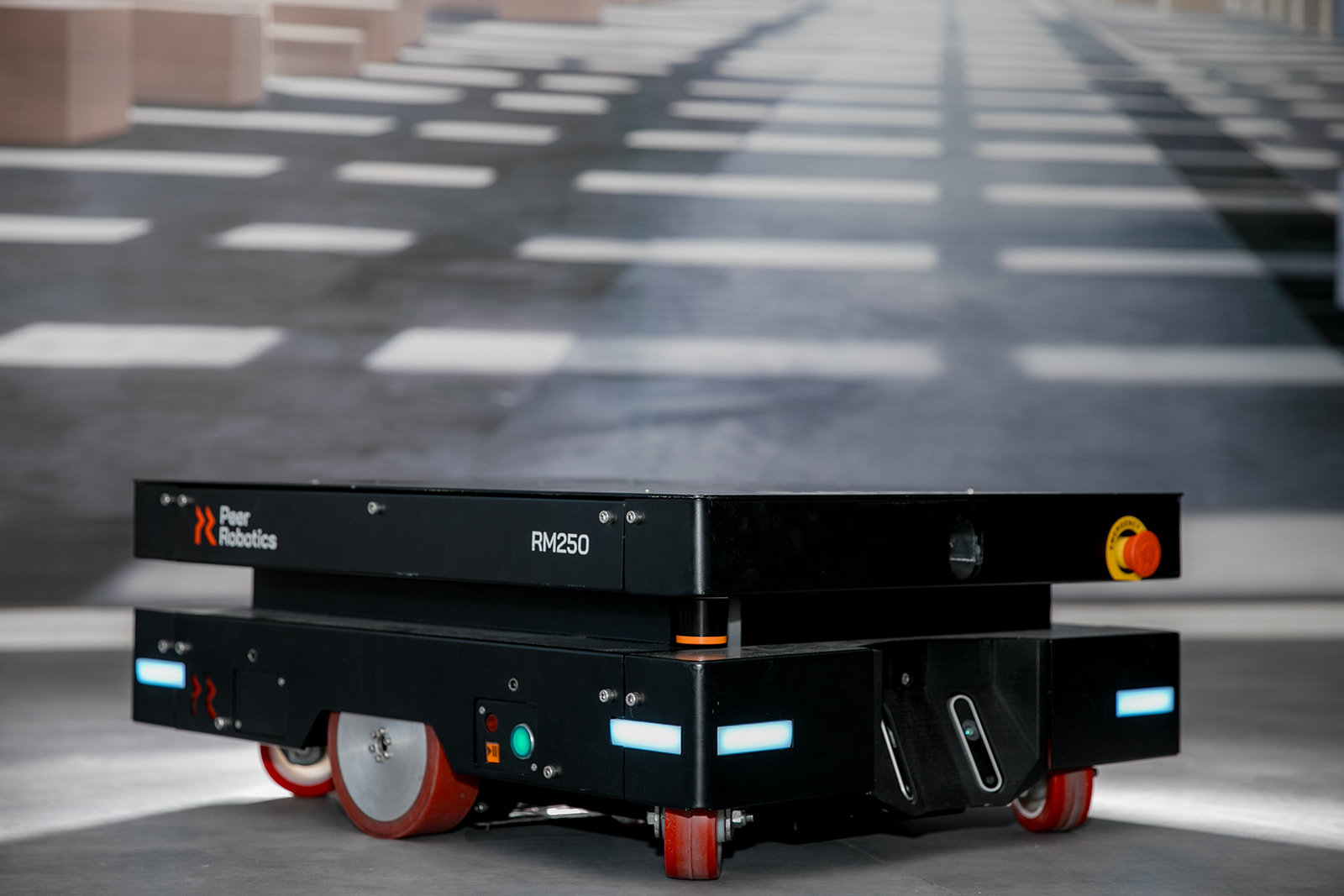
In 2025, the conversation around robotic automation began to change in a meaningful way.
For years, downtime had been treated as a fixed parameter – something to mitigate, schedule around, or absorb by deploying more robots than actually needed. This year, across logistics centers and industrial operations, that assumption started to erode.
The shift wasn’t loud. It didn’t arrive as a declaration.
It emerged through how fleets were designed, how facilities were laid out, and how operators began measuring performance.
At CaPow, 2025 reflected a broader realization taking shape across the market: robot fleets are moving toward continuous operation as a baseline, not an exception.
Energy Moves to the Center of Fleet Design
“CaPow’s technology solved a very obvious issue every robotics user faces. It’s unlike anything we’ve seen in the market – and its simplicity made it an easy sell for us.”
– Macrovey
As automation scales, energy is no longer a background consideration. It directly shapes throughput, space utilization, and return on investment.
Throughout 2025, conversations with partners and customers increasingly centered on a simple but powerful insight: when robots receive power while they move, planning changes. Fleet size is no longer dictated by charging cycles. Facility layouts are no longer constrained by charging zones. Utilization becomes a design variable rather than a limitation.
This reframing is subtle, but structural. It signals a shift from optimizing around downtime to designing systems where stopping is no longer assumed.
Continuous Operation Becomes Operational Reality
“With power-on-the-go, we’ve witnessed unparalleled operational flexibility, eliminating downtime and maximizing throughput.”
– Nick Anderson, MiR
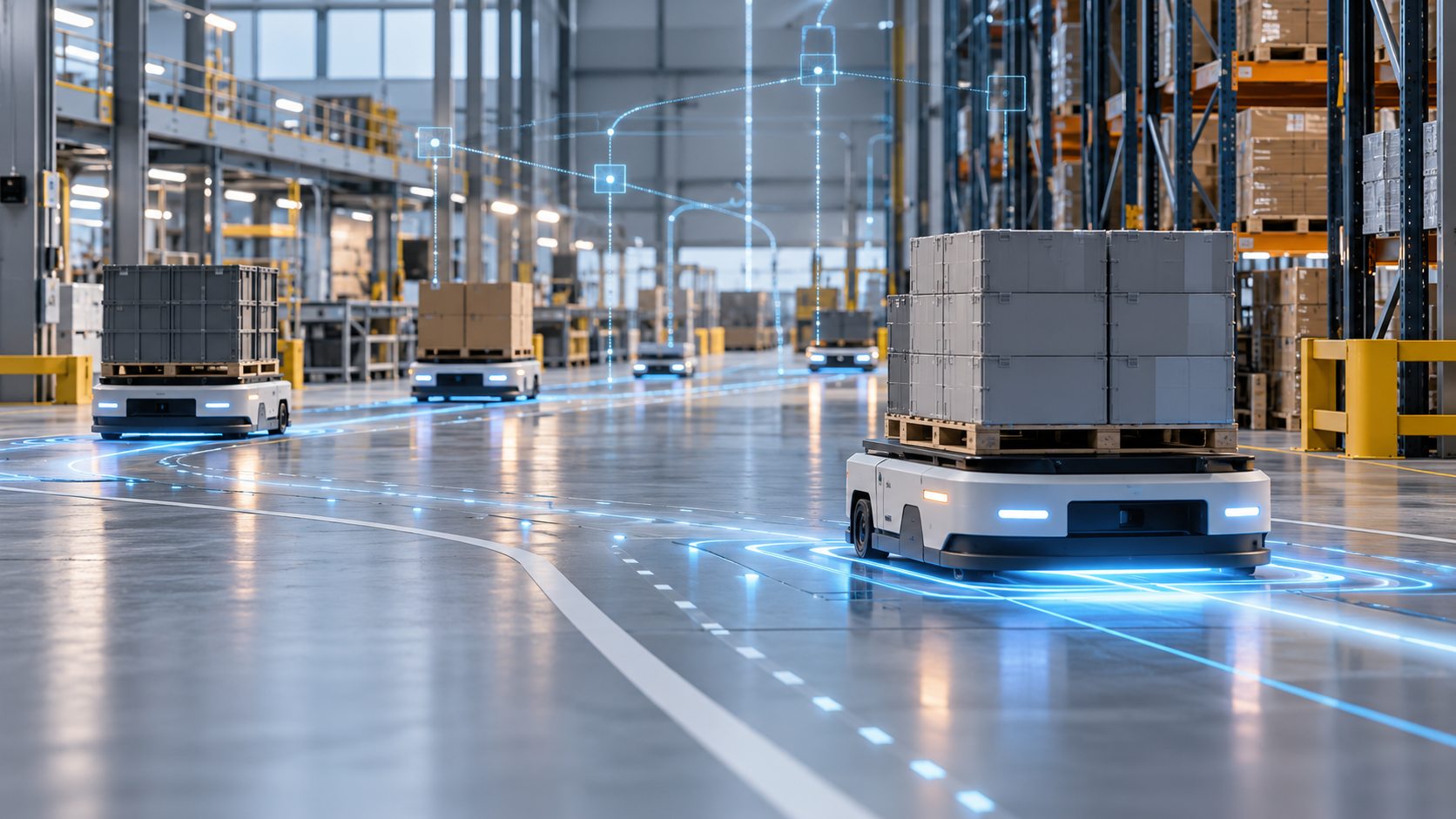
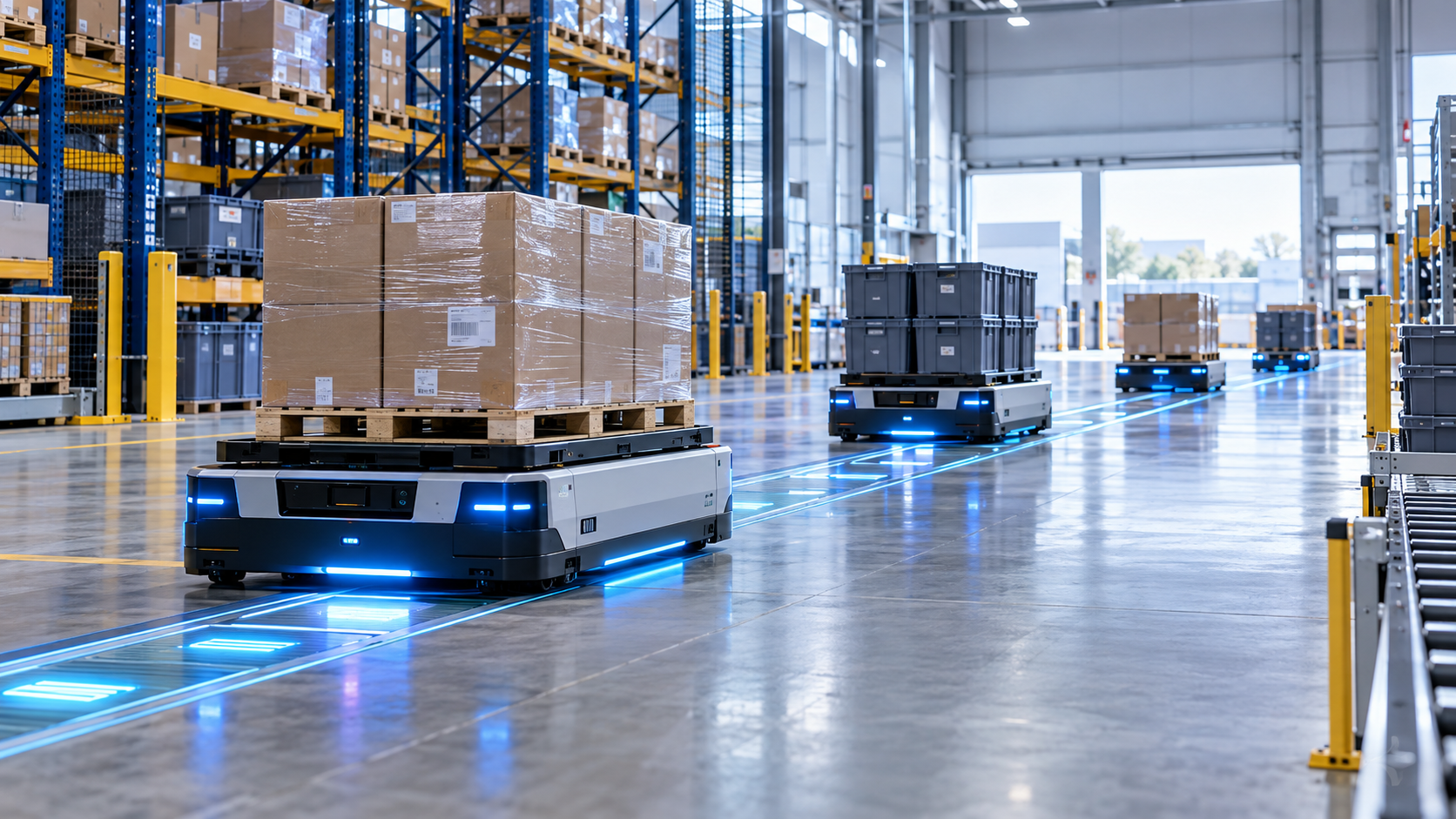
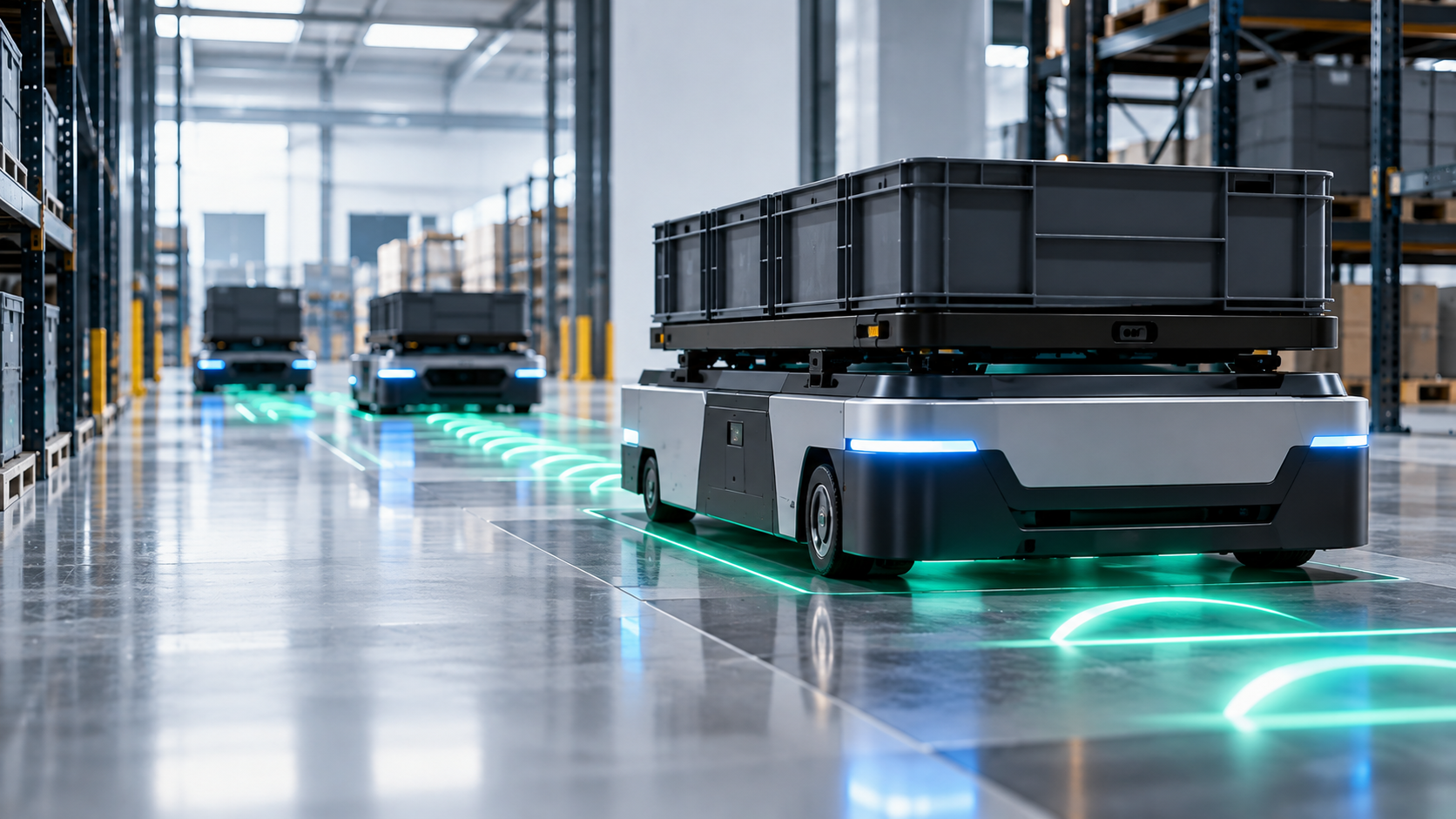
Live deployments during 2025 demonstrated what continuous power looks like under real operational conditions. Mobile robots remained productive across shifts and peak periods without rotating out of service, and without requiring oversized fleets to compensate for idle time.
The implications extend beyond uptime metrics. Continuous operation reshapes throughput ceilings, reduces redundancy, and allows operators to extract more value from each deployed robot – within the same physical footprint.
This is not a theoretical future. It is already influencing how new facilities are designed and how existing ones are upgraded.
Scalability Demands Adaptive Energy Systems
“Adaptability in energy solutions is the foundation for scalable robotics. It’s about enabling businesses to evolve seamlessly.”
– Rishabh Agarwal, Peer Robotics
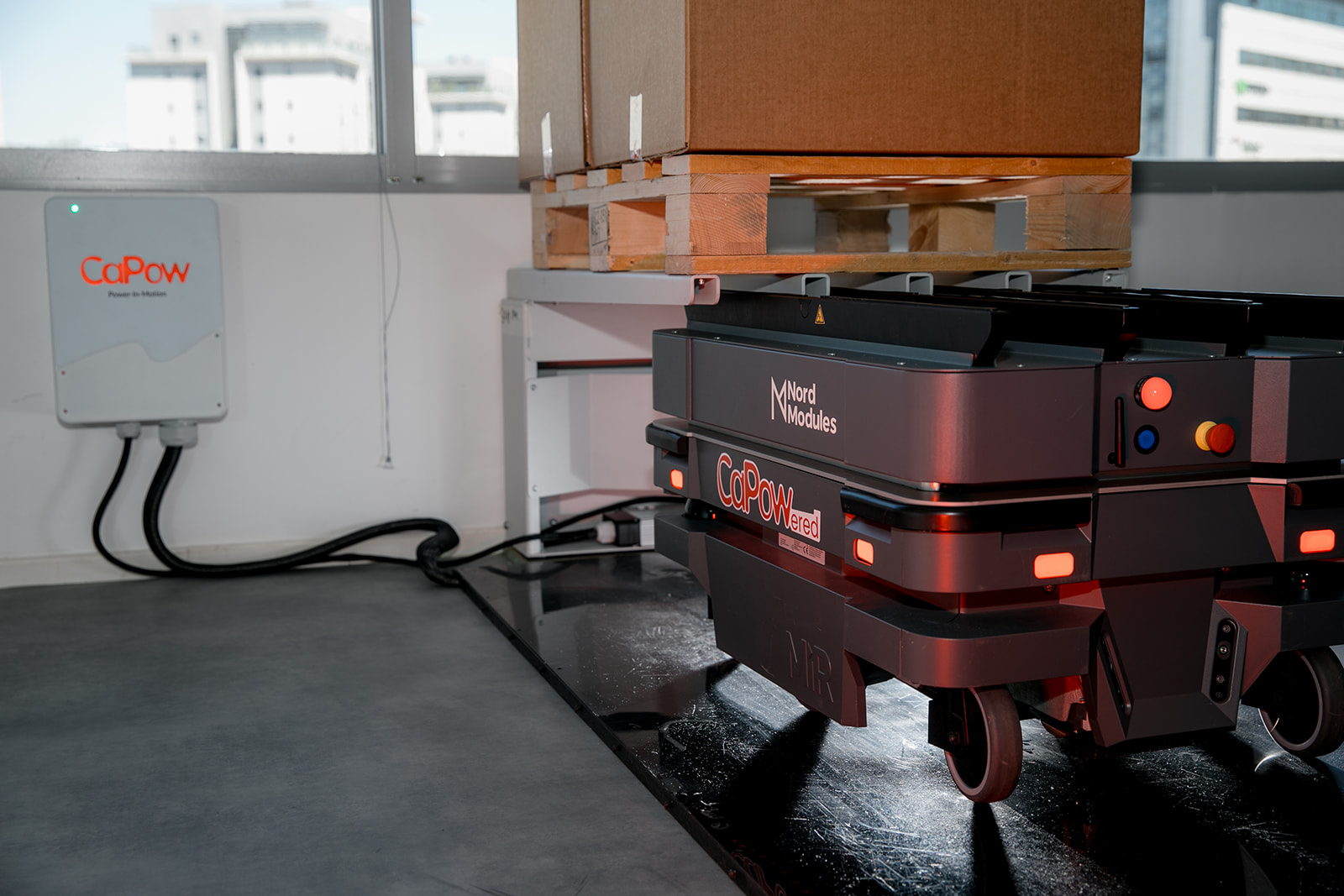
As robotic automation moves deeper into core operations, scalability depends less on hardware capability alone and more on system adaptability. Energy delivery must tolerate movement, misalignment, growth, and change – without introducing new points of friction.
In 2025, CaPow’s partnerships reflected this understanding. Collaborations were built around a shared view that energy systems should evolve alongside operations, not constrain them. Continuous, adaptable power is becoming an enabling layer for scale.
Readiness at Industrial and Global Scale
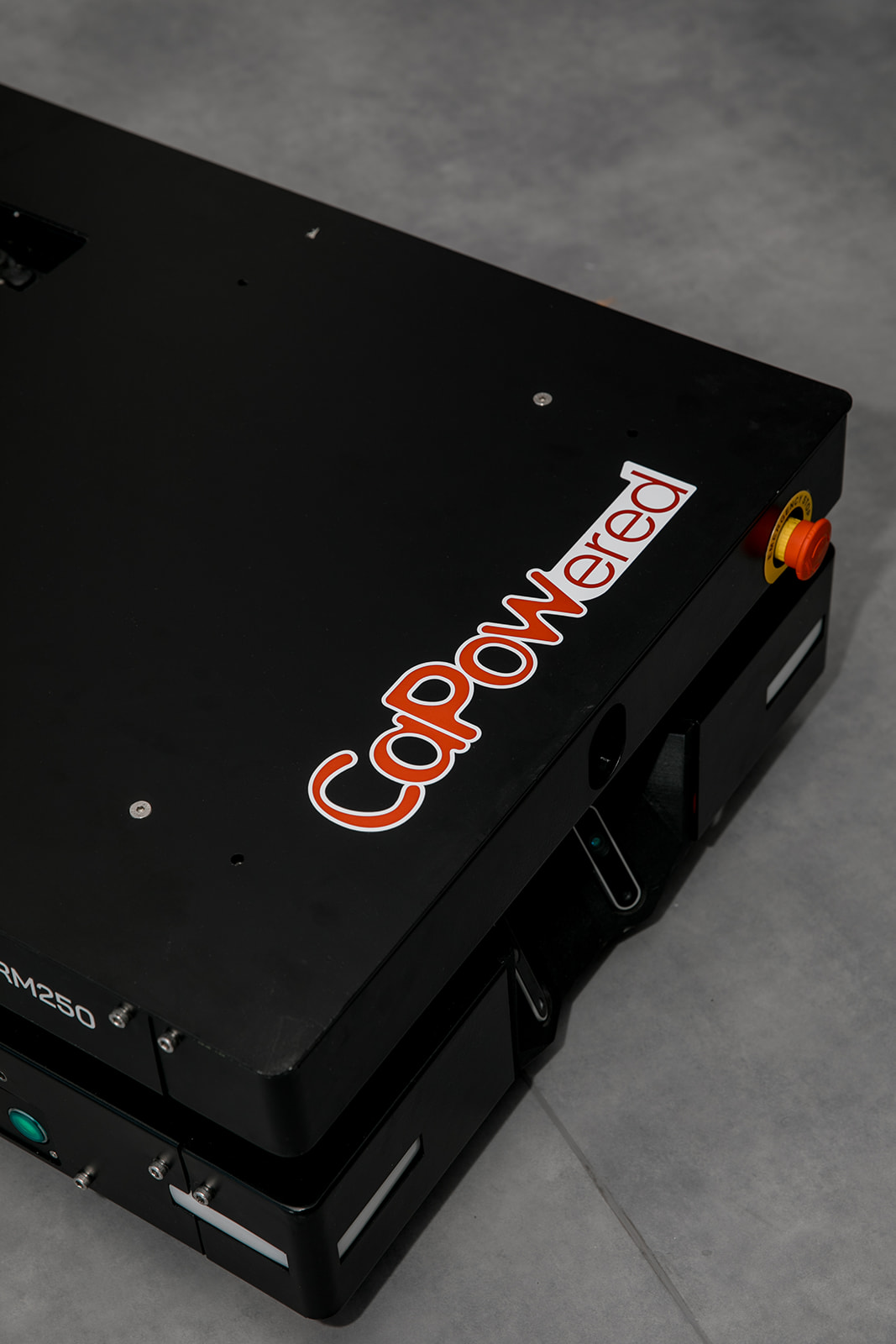
The achievement of CE approval for the Genesis Power-in-Motion system marked an important milestone in aligning technological maturity with global deployment requirements. Beyond regulatory compliance, it reinforced confidence that continuous power delivery is ready for industrial environments at scale.
As adoption expanded across regions and use cases, energy delivery increasingly entered the automation conversation as a first-order design decision – not an afterthought.
Looking Ahead
The direction is becoming clear.
Robot fleets are being designed with the expectation of continuous operation. Downtime is no longer treated as a given, but as a constraint to be designed out. Energy delivery is moving from infrastructure to strategy.
At CaPow, 2025 reflected this shift not through statements, but through how the market engaged, built, and deployed.
Non-stop automation is no longer a vision.
It is becoming the standard fleets are built toward.